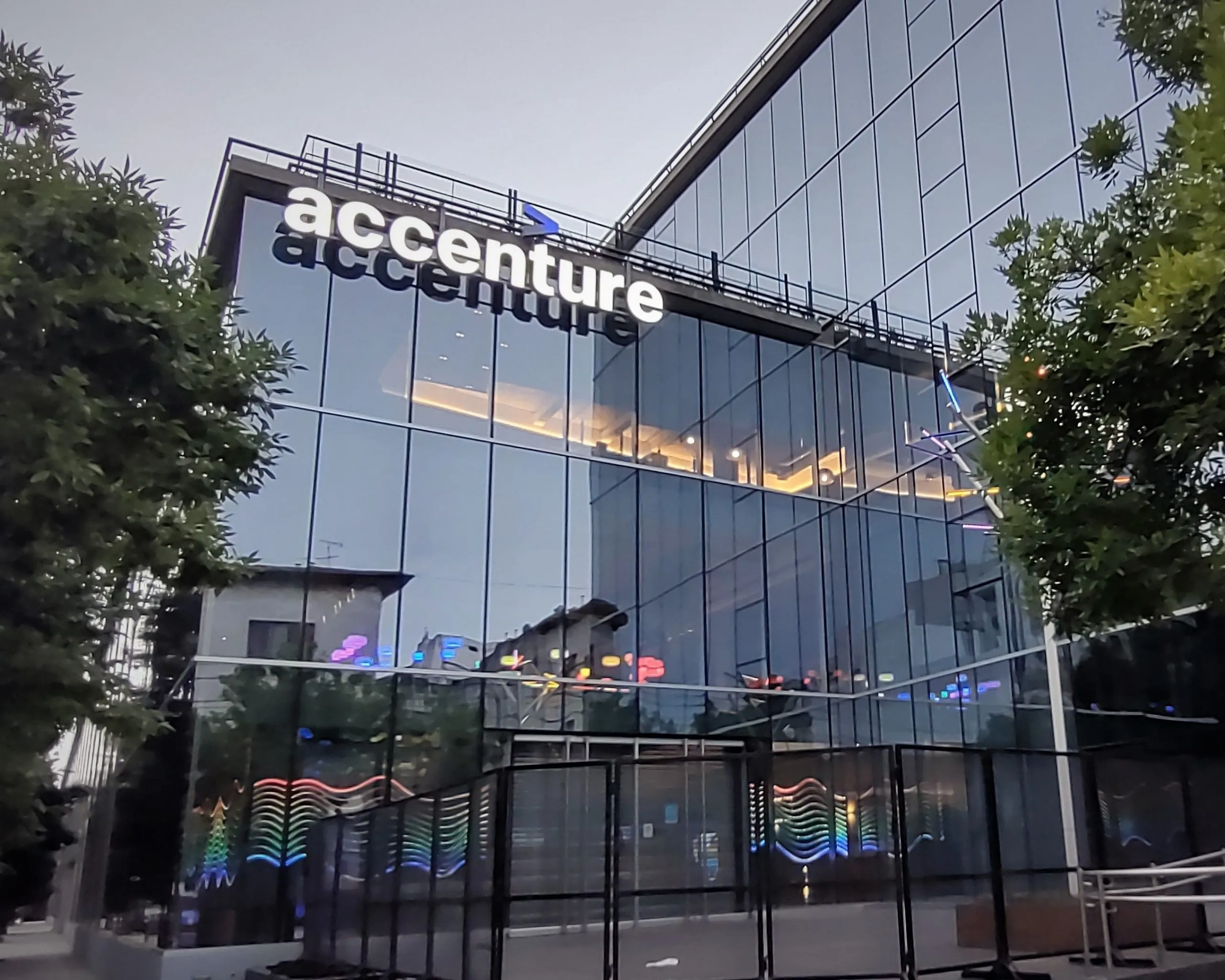
Accenture plans new Andhra Pradesh campus, aims to add 12,000 jobs in India

Accenture has proposed building a new campus in Visakhapatnam, in the southern Indian state of Andhra Pradesh, with plans to eventually create 12,000 jobs, sources told Reuters. The move would significantly expand its presence in India, which is already Accenture’s largest global hub with over 300,000 employees out of 790,000 worldwide.

The proposal seeks around 10 acres of land under a new Andhra Pradesh policy offering large firms leased land at a token rate of 0.99 rupees ($0.0112) per acre in exchange for job creation. The request is currently under government review but is expected to be approved, according to officials familiar with the matter.

The state recently approved similar projects by Tata Consultancy Services (TCS) and Cognizant, which together plan to generate about 20,000 jobs in Visakhapatnam. Cognizant has pledged $183 million, while TCS has earmarked about $154 million for its facility.

Accenture has not disclosed its planned investment, but if approved, the Visakhapatnam campus would mark another step in the tech sector’s push into Tier-2 Indian cities. Companies are expanding beyond major hubs like Bengaluru and Hyderabad to tap lower land, wage, and rental costs, while benefiting from easier local hiring.

The expansion also comes as the Indian IT sector faces global headwinds:

  • U.S. President Donald Trump’s new $100,000 H-1B visa fee could hurt Indian firms, which are the largest users of the program.

  • A proposed 25% U.S. outsourcing tax could lead clients to delay or renegotiate contracts, adding further uncertainty.

Despite these challenges, India remains a cornerstone of global IT operations, and Andhra Pradesh is positioning itself as a rising destination for major technology investments.
Morgan Stanley to add crypto trading to E*Trade via Zerohash partnership

Morgan Stanley will enable cryptocurrency trading on its E*Trade platform starting in the first half of 2026, the bank confirmed Tuesday. The service will launch through a partnership with Zerohash, a digital asset infrastructure provider.

At rollout, E*Trade clients will be able to trade bitcoin, ether, and solana, with the potential for more tokens to be added later. A Morgan Stanley spokesperson said the move reflects growing client demand for access to digital assets alongside traditional investments.

The expansion comes as the global crypto market swells to about $3.9 trillion, led by bitcoin ($2.25 trillion) and ether ($506 billion), according to CoinMarketCap. Once dismissed as speculative, crypto has become a mainstream asset class, attracting Wall Street banks, brokers, and retail platforms.

Morgan Stanley’s push follows rivals:

  • Robinhood offers trading in a wide range of tokens.

  • Charles Schwab provides ETFs tied to bitcoin and ether.

The supportive regulatory stance under President Donald Trump has also accelerated Wall Street’s embrace of crypto products.

Meanwhile, Zerohash announced it reached unicorn status after raising $104 million in a funding round led by Interactive Brokers, with Morgan Stanley, SoFi, and others also investing.

By integrating crypto into E*Trade, Morgan Stanley is positioning itself to compete directly with retail trading platforms while tapping into one of finance’s fastest-growing markets.

Hikvision to appeal Canadian court ruling upholding shutdown order

Chinese surveillance camera maker Hikvision said Tuesday it will challenge a Canadian Federal Court decision that upheld Ottawa’s order for the company to cease operations in Canada on national security grounds.

The court dismissed Hikvision’s bid to overturn the June shutdown order, siding with the Canadian government’s argument that the firm’s activities could pose security risks.

A Hikvision spokesperson rejected the claim, saying: “We remain steadfast in our position that our products and technology do not pose a national security threat, and there is no evidence that indicates they have ever presented such a risk to Canada.” The company has notified Ottawa of its intent to pursue arbitration under a 2014 bilateral investment treaty.

Hikvision’s Canadian unit employs 66 staff and sells products through local distributors. While the shutdown order blocks direct operations, it does not explicitly ban the sale of Hikvision products in Canada.

The dispute unfolds against the backdrop of worsening Canada–China relations. Ottawa recently imposed a 100% tariff on Chinese EVs and a 25% tariff on Chinese steel and aluminum, while Beijing retaliated with 75.8% duties on Canadian canola seed imports pending an anti-dumping probe.

The Hikvision case could become another flashpoint in an already fraught trade and diplomatic relationship.