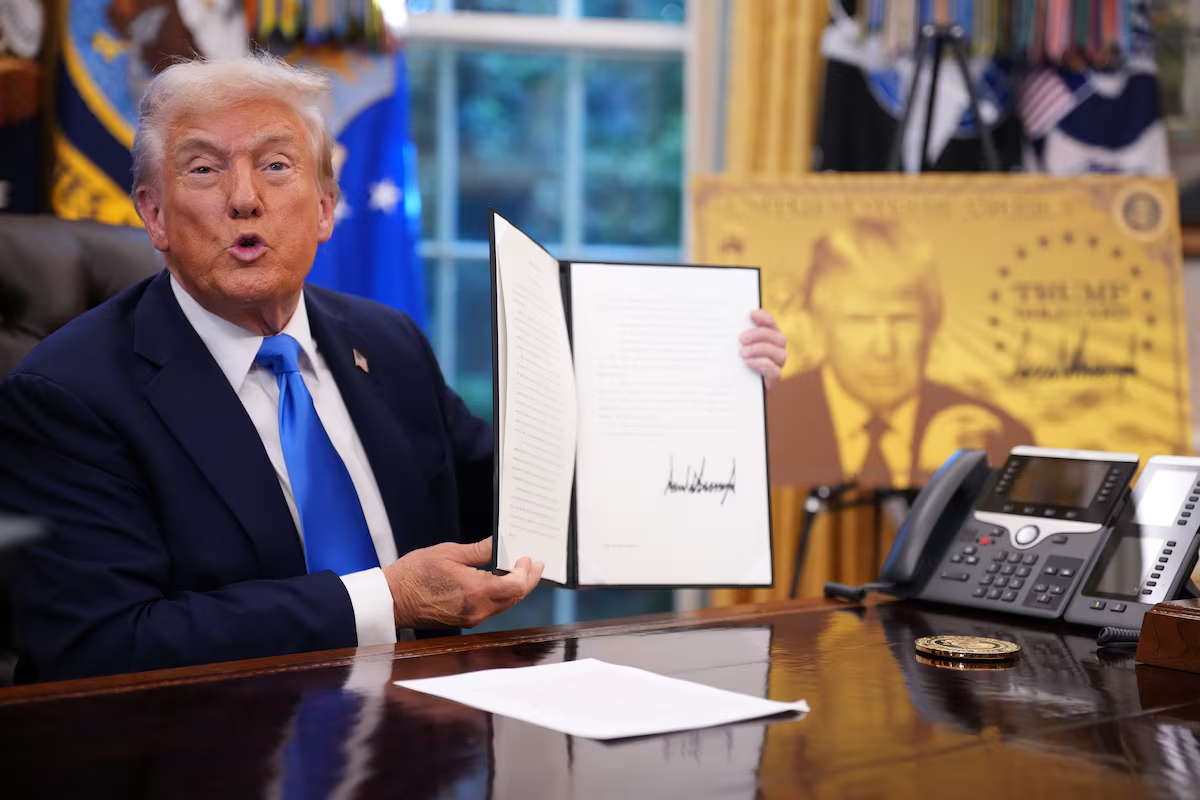
Trump slaps $100K annual fee on H-1B visas, rattling U.S. tech sector

The Trump administration on Friday announced a sweeping change to the H-1B visa program, saying companies will now have to pay $100,000 per year per visa—a move critics warn could devastate the U.S. tech industry’s access to global talent.

Commerce Secretary Howard Lutnick framed the move as part of Trump’s broader immigration crackdown, urging firms to “train Americans” instead of hiring foreign workers. But tech giants including Microsoft, Amazon, and JPMorgan quickly advised employees on H-1B visas to remain in the U.S. or return before the new fees take effect at midnight Saturday.

The H-1B program, which provides 85,000 visas annually for specialized workers, has long been dominated by Indian nationals (71% of approvals in 2024) and Chinese professionals (11.7%). In the first half of 2025 alone, Amazon received approval for more than 12,000 H-1B visas, with Microsoft and Meta securing over 5,000 each.

Under the new rules, the cost of a three-year H-1B stint would balloon to $300,000 per worker, compared with just a few thousand dollars under the current system. Analysts say this could force smaller firms and startups to offshore high-value work, weakening the U.S. in the global AI and tech race against China.

Industry figures voiced alarm. Venture capitalist Deedy Das warned the change “creates disincentive to attract the world’s smartest talent,” while eMarketer analyst Jeremy Goldman said Washington risks “taxing away its innovation edge, trading dynamism for short-sighted protectionism.”

The announcement sparked immediate financial fallout: shares of Cognizant sank nearly 5%, while Infosys and Wipro slipped 2–5% in U.S. trading.

Meanwhile, Trump also signed an executive order creating a “gold card” residency program, offering permanent U.S. residency for those who can pay $1 million upfront.

Legal experts questioned the fee’s validity, noting Congress only authorizes visa fees to cover administrative costs, not as a revenue generator. Still, the administration insists “all the big companies are on board.”


Optus pledges cooperation after deadly emergency call outage sparks outrage

Australia’s Optus, the country’s second-largest telecom carrier, vowed Saturday to cooperate fully with government and police investigations after a 13-hour outage of emergency call services coincided with the deaths of three people, including an eight-week-old infant.

The outage, caused by a firewall upgrade gone wrong, disrupted emergency access from 12:30 a.m. to 1:30 p.m. Thursday across parts of South Australia, Western Australia, and the Northern Territory, potentially affecting around 600 customers. Optus CEO Stephen Rue, in his second press conference since the incident, apologized again and said the company had completed welfare checks, handing unresolved cases to police.

Authorities confirmed the deaths of a baby boy and a 68-year-old woman in South Australia; a 74-year-old man in Western Australia also reportedly died during the outage. While the direct link between the failures and the fatalities is under investigation, the tragedy has fueled public anger and political scrutiny.

The Australian government labeled the failure “completely unacceptable” and pledged a full review. Optus, owned by Singapore Telecommunications (Singtel), is already under pressure after a series of crises: a 2022 cyberattack that compromised data of 9.5 million Australians, and a 2023 nationwide outage that led to a A$12 million fine and the resignation of former CEO Kelly Bayer Rosmarin. Rue, who took over in November 2024, faces mounting pressure to restore trust.

Optus said it has fixed the fault and will make the results of its internal investigation public. But with public outrage building, regulators are expected to push for stricter safeguards on telecom providers’ responsibility to guarantee emergency call access.

Comcast to cut jobs, streamline Xfinity unit in major reorganization

Comcast is preparing to cut jobs at its largest business unit, which includes the Xfinity internet, mobile, and pay-TV services, as part of a restructuring to centralize operations and strengthen its broadband business, a source told Reuters.

Beginning in January, Comcast will eliminate a layer of management between its regional offices and corporate headquarters, meaning regional leaders will now report directly to a newly appointed executive overseeing national operations. While the company has not disclosed the number of roles affected, the restructuring is expected to reduce headcount.

In a memo to employees, Comcast said customer-facing teams, such as those in retail and customer service, will not be impacted. “This change is not a reflection of anyone’s contributions — it is about simplifying how we work so we can compete more effectively,” the memo stated.

The move continues Comcast’s long-term strategy of centralizing functions including marketing, legal, and finance. It has also standardized broadband pricing nationally and introduced new five-year price-lock plans to stem customer churn.

The cuts come as Comcast grapples with subscriber losses in its broadband business, facing mounting competition from wireless carriers such as AT&T, T-Mobile, and Verizon. The unit also oversees Sky, Comcast’s European brand, and remains central to the company’s connectivity strategy.