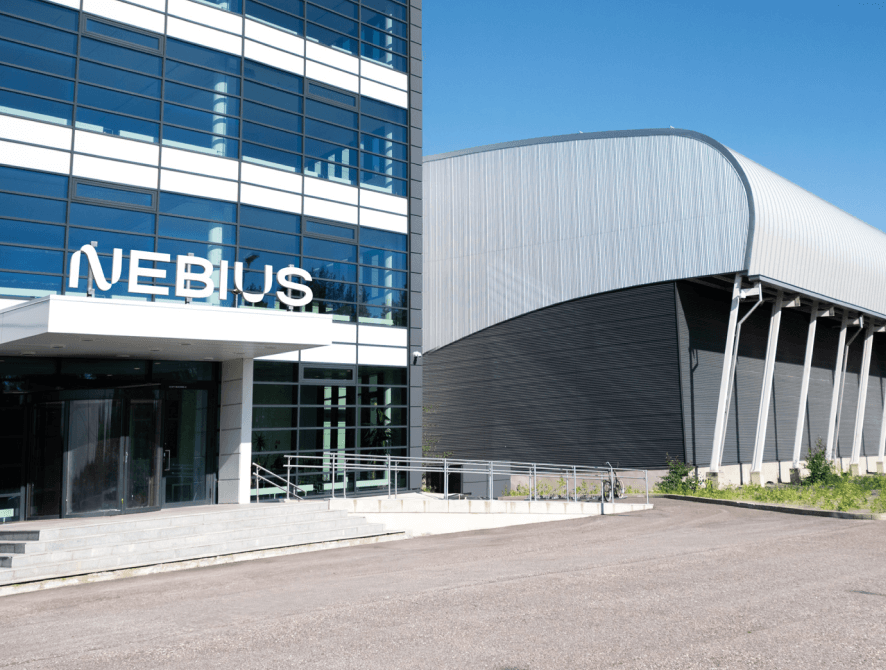
Nebius to Raise $3 Billion Following Landmark Microsoft Deal

AI infrastructure company Nebius Group announced Wednesday it will raise $3 billion to accelerate growth in its artificial intelligence cloud business, just days after striking a $17.4 billion deal with Microsoft.

The funding package includes a $2 billion private offering of convertible senior notes and a $1 billion underwritten public offering of class A shares. Goldman Sachs will serve as the lead book-running manager, joined by Morgan Stanley, BofA Securities, and Citigroup.

Nebius said the funds will be used to expand its compute and hardware capacity, secure land from reliable providers, and grow its data center footprint.

The announcement follows Monday’s news that Nebius will provide Microsoft with GPU infrastructure capacity for five years, a contract worth up to $19.4 billion if additional services are included. The deal sent Nebius’ Nasdaq-listed shares soaring 49% to a record high on Tuesday, though they slipped 5.6% in pre-market trading Wednesday. Year to date, shares have climbed an impressive 245%.

Nebius was formed after splitting assets from Russian tech company Yandex. Its rise highlights the surging demand for data center capacity worldwide, driven by the explosive growth of generative AI technologies.
Lyft and May Mobility Launch Robotaxi Service in Atlanta

Ride-hailing company Lyft and autonomous vehicle startup May Mobility have launched a pilot robotaxi service in Atlanta, marking the partnership’s first public deployment.

Starting Wednesday, customers using the standard Lyft app can hail Toyota Sienna minivans retrofitted by May Mobility to operate on routes in and around Midtown Atlanta. The fares will be comparable to regular Lyft rides.

The service begins with a small fleet, each vehicle staffed with trained in-vehicle operators who can answer passenger questions and take control if needed. This rollout highlights Lyft’s strategy to integrate self-driving options into its platform through partners such as Baidu in Europe and Mobileye, as competition intensifies in the robotaxi space.

Jeremy Bird, Lyft’s executive vice president of driver experience, said the fleet will expand gradually: “We’ll start in the single digits of cars, move up to dozens, and over time to hundreds and thousands.” Neither Bird nor May Mobility CEO Edwin Olson gave a specific timeline. Olson noted the vehicles use a redundant drive-by-wire system and a 360-degree sensor suite combining lidar, radar, and cameras.

The pilot will be integrated into Lyft’s hybrid marketplace, allowing passengers to choose between autonomous and conventional rides. Management of the fleet will be handled by May Mobility, rather than Lyft’s Flexdrive operations unit.

Last month, Lyft held an AV Driver Forum in Atlanta to brief drivers on the program, while both companies engaged with local and state officials to ensure smooth deployment.

Competition in the U.S. robotaxi sector is heating up. Waymo, owned by Alphabet, has expanded its paid autonomous services in major cities, Uber has partnered with tech firms for global self-driving deployments, and Tesla launched its first robotaxi service in Austin, Texas, as well as a ride-hailing program in the Bay Area earlier this year.

PsiQuantum Hits $7B Valuation, Secures $1B Funding and Partners with Nvidia

Quantum computing startup PsiQuantum announced Wednesday it has raised $1 billion in a Series E funding round, boosting its valuation to $7 billion, while also unveiling a collaboration with Nvidia to accelerate its quantum computing development.

Funding Details

  • Round size: $1 billion (Series E)

  • Valuation: $7 billion

  • Lead investors: BlackRock, Temasek, Baillie Gifford

  • New investors: Nvidia’s NVentures, Macquarie Capital, Ribbit Capital

Expansion Plans

The funding will support:

  • New sites in Brisbane, Australia and Chicago, Illinois

  • Deployment of large test systems to validate PsiQuantum’s design

Technology Edge

  • Photonic approach: Uses light particles on silicon chips

  • Built on semiconductor manufacturing and fiber-optic networking for scalability

  • Goal: Build the first million-qubit, fault-tolerant quantum computer

Nvidia Collaboration

  • Nvidia chips will help connect classical and quantum machines

  • Integration to improve PsiQuantum’s silicon-photonics quantum chips

  • Aimed at advancing software and hardware ecosystems for practical quantum applications

Applications of Quantum Computing

  • Drug discovery

  • Materials science

  • Cybersecurity breakthroughs

  • Potential to solve problems beyond the reach of AI and today’s supercomputers

Partnerships & Manufacturing

  • PsiQuantum has partnered with GlobalFoundries to fabricate its chips at the foundry’s New York facility.

Outlook

With Nvidia’s backing and $1B in fresh capital, PsiQuantum is positioning itself as a frontrunner in the global quantum race, moving closer to proving its designs and delivering scalable, commercial quantum computers.