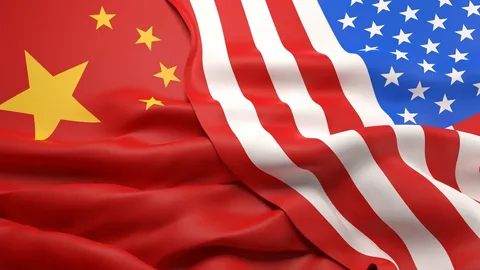
U.S. Investigates Malware Email Linked to China Targeting Trade Talks

U.S. authorities are probing a malware-laden email disguised as coming from Republican Representative John Moolenaar, aimed at infiltrating organizations connected to U.S.-China trade negotiations, the Wall Street Journal reported Sunday.

The July email was sent to trade groups, law firms, and government agencies, asking recipients to review draft legislation. Cyber analysts traced the malware to APT41, a hacking group widely believed to be linked to Chinese intelligence. Opening the attachment would have given hackers deep access to the targets’ systems.

Moolenaar, a vocal critic of Beijing and chair of a congressional committee on U.S.-China competition, said the incident was “another example of Chinese cyber operations aimed at stealing U.S. strategy,” adding: “We will not be intimidated.”

The attack coincided with sensitive trade talks in Sweden, which temporarily extended a tariff truce between Donald Trump and Xi Jinping until their expected November meeting at an Asian economic summit.

The Chinese embassy in Washington denied knowledge of the incident, stressing opposition to all cyberattacks while warning against “smearing others without solid evidence.”

The FBI confirmed it is working with partners to track those responsible. Meanwhile, the Capitol Police are investigating after staff on Moolenaar’s committee noticed unusual inquiries about the fake message.

The episode adds to mounting evidence of Beijing-linked cyber campaigns targeting U.S. institutions to gain insight into trade and national security deliberations.

Apple Hit With Lawsuit Over Use of Books in AI Training

Apple was sued Friday in federal court in Northern California by authors who accuse the company of illegally using copyrighted books to train its “OpenELM” large language models. The proposed class action, filed by writers Grady Hendrix and Jennifer Roberson, claims Apple copied protected works without consent, credit, or compensation.

“Apple has not attempted to pay these authors for their contributions to this potentially lucrative venture,” the lawsuit alleges. Neither Apple nor the plaintiffs’ lawyers immediately commented.

The case adds Apple to the growing list of tech giants—Microsoft, Meta, and OpenAI among them—facing litigation over whether training AI on copyrighted material constitutes infringement or fair use. On the same day, Anthropic agreed to a $1.5 billion settlement with authors who accused it of training its Claude chatbot on pirated books, a deal hailed as the largest copyright recovery in history.

According to the lawsuit, Apple’s models were trained on a known dataset of pirated books, allegedly including works by Hendrix and Roberson. The case seeks damages and legal recognition that Apple must compensate authors when their intellectual property is used to build AI systems.

The dispute underscores the escalating clash between AI developers and creators, as courts weigh how copyright law applies to massive datasets powering generative AI. With multiple cases now moving forward in U.S. courts, the outcome could reshape both the AI industry and protections for authors in the digital era.

Nvidia Warns U.S. GAIN AI Act Could Harm Competition, Echoes AI Diffusion Rule

Nvidia criticized the proposed GAIN AI Act on Friday, warning that it would restrict global competition and hurt the U.S. economy much like last year’s AI Diffusion Rule, which limited the export of high-performance chips.

The Guaranteeing Access and Innovation for National Artificial Intelligence Act, introduced as part of the National Defense Authorization Act, would require AI chipmakers to prioritize domestic orders before fulfilling foreign contracts. Exporters would also need licenses to ship chips above certain performance thresholds, specifically processors rated 4,800 or higher in total computing power.

In a statement, Nvidia argued the law addresses a non-existent issue:

“We never deprive American customers in order to serve the rest of the world. In trying to solve a problem that does not exist, the proposed bill would restrict competition worldwide in any industry that uses mainstream computing chips.”

The Act mirrors the AI Diffusion Rule enacted under President Joe Biden, which rationed computing capacity among allies while cutting off rivals like China. Both measures reflect Washington’s effort to secure U.S. access to advanced silicon and limit China’s AI capabilities, particularly amid concerns about its military applications.

The debate comes just weeks after President Donald Trump struck a deal with Nvidia allowing the company to resume certain AI chip exports to China in exchange for the U.S. government receiving a cut of sales—an unprecedented arrangement underscoring the geopolitical stakes around advanced semiconductors.

If enacted, the GAIN AI Act could reshape the global AI hardware supply chain, tightening U.S. control over who gets access to the most powerful chips.