
OpenAI’s Cash Burn Projected to Hit $115B by 2029 Amid Chip, Data Center Push

OpenAI has revised its financial outlook sharply upward, projecting it will burn through $115 billion by 2029, according to The Information. The new figure is about $80 billion higher than its earlier estimate, reflecting the surging costs of powering ChatGPT and other AI models.

The report says OpenAI expects to lose over $8 billion in 2024 alone, roughly $1.5 billion more than forecast earlier this year. The company anticipates that annual burn will balloon to $17 billion next year, rising to $35 billion in 2027 and $45 billion in 2028.

To rein in costs, OpenAI is pursuing vertical integration—developing its own AI server chips and data center infrastructure. Its first in-house chip, being developed in partnership with Broadcom, is expected in 2025 and will be used internally. On the infrastructure side, OpenAI has struck major agreements, including:

  • A $4.5 GW data center expansion with Oracle announced in July.

  • The Stargate project, a planned $500 billion, 10 GW buildout backed by SoftBank.

  • Expanded computing capacity through Google Cloud.

The staggering burn rate underscores the immense capital intensity of generative AI, where costs for cloud computing, GPUs, and electricity are skyrocketing. At the same time, it highlights OpenAI’s strategy to reduce reliance on external providers like Nvidia and Amazon Web Services by building a proprietary AI stack—from chips to data centers.

Roblox Unveils Short-Form Video App, Boosts Developer Payouts

Roblox announced Friday the launch of a short-form video app and a raise in creator earnings, as the gaming platform seeks to deepen engagement and expand beyond gameplay.

The new app, called “Roblox Moments”, is now in beta. Modeled after TikTok, it will allow users to capture, edit, and share clips of gameplay on a centralized platform. The move could redirect the billions of views Roblox-related content currently receives on YouTube and other sites back into Roblox’s ecosystem, amplifying engagement among its 111.8 million daily active users.

At its developer conference, CEO David Baszucki also announced an 8.5% increase in developer cash-out rates when converting in-game currency Robux into real money. The adjustment comes as Roblox leans harder into supporting its creator economy, which generated over $1 billion for developers in the past year, with more than 100 games surpassing $1 million annually.

Roblox has been evolving into a multifunctional platform—a space for gaming, socializing, advertising, and commerce. Earlier this year, it launched new advertising formats and struck a partnership with Google to grow its ad business and create additional revenue streams for creators.

By combining short-form content with more generous payouts, Roblox is positioning itself as both a creator-friendly platform and a competitor in the broader social media and entertainment space.

U.S. to Restrict Chinese Drone and Heavy-Duty Vehicle Imports Over Security Concerns

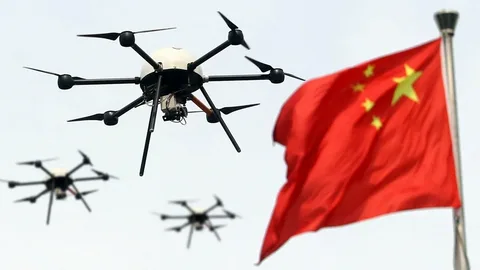
The Trump administration is preparing new rules that could restrict or ban imports of Chinese-made drones and medium-to-heavy duty vehicles, citing national security risks tied to foreign technology. The Commerce Department said Friday it expects to issue the regulations as soon as this month but did not provide details on the scope of the restrictions.

Chinese firms currently dominate the U.S. drone market, with DJI alone accounting for over half of all commercial drone sales. Washington has grown increasingly wary of Chinese technology embedded in vehicles and aircraft, warning that onboard computers, communications systems, flight controls, and data storage could expose U.S. infrastructure to espionage or cyberattacks.

The move builds on earlier measures targeting Chinese cars and trucks, with rules finalized in January under the Biden administration that will bar nearly all Chinese-made vehicles from the U.S. by late 2026. The Commerce Department has also opened national security probes into both drones and heavy-duty vehicles, which could pave the way for new tariffs.

Trump has already signed executive orders this year to boost domestic drone manufacturing and harden defenses against “threatening drones.” Meanwhile, Congress passed legislation in December, under Biden, that could eventually ban DJI and Autel from selling new drone models in the U.S.

The latest restrictions underscore bipartisan concern in Washington over supply chain dependence on China, as well as the push to secure strategic sectors like transportation and aerospace against foreign influence.