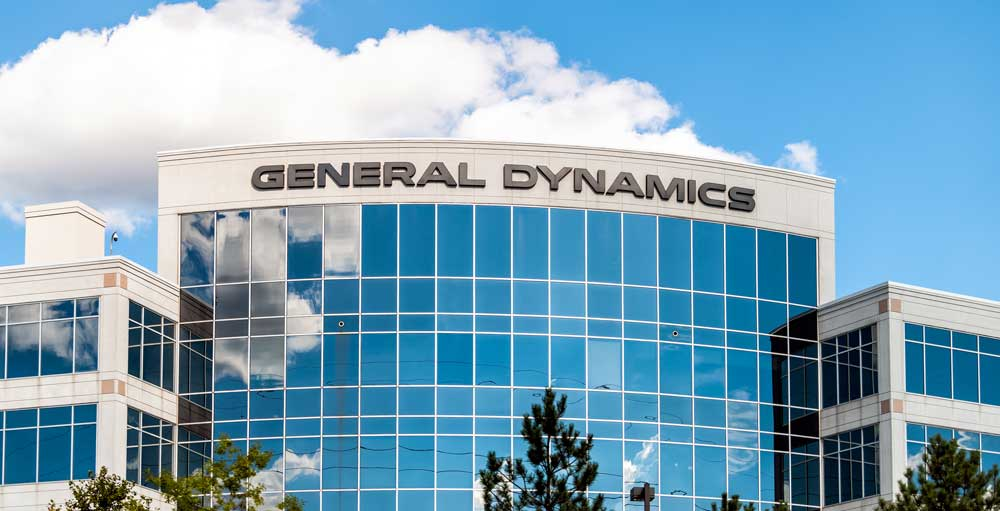
General Dynamics Wins $1.25 Billion IT Contract to Support U.S. Army in Europe and Africa

General Dynamics Information Technology (GDIT), the tech services arm of defense giant General Dynamics, announced it has been awarded a $1.25 billion contract to provide long-term IT and communications support for the U.S. Army’s operations in Europe and Africa.

The contract — part of the Enterprise Mission Information Technology Services 2 (EMITS 2) task order — was awarded in September and includes a five-month transition period followed by seven optional years of service.

Under the EMITS 2 program, GDIT will deliver a range of capabilities, including:

  • Enterprise IT and communications infrastructure,

  • Mission command support services,

  • Assistance for Army headquarters, subordinate commands, NATO units, and allied partners operating across both continents.

The new contract underscores GDIT’s expanding role as a core technology partner for U.S. defense operations abroad. It comes just one week after the company announced a separate $1.5 billion modernization contract with U.S. Strategic Command (STRATCOM), focused on improving efficiency and cutting costs through AI-driven integration and enterprise system upgrades.

GDIT President Amy Gilliland said earlier this year that the firm’s mission is to “deliver secure, resilient technology solutions that strengthen national defense operations globally.”

With the U.S. military increasingly emphasizing digital transformation, data security, and battlefield connectivity, GDIT’s dual contracts position the company as a central player in shaping how the Department of Defense deploys advanced IT and AI capabilities across global theaters.

AI Startup DualEntry Raises $90 Million to Challenge ERP Giants

New York-based AI startup DualEntry has raised $90 million in a Series A funding round led by Lightspeed Venture Partners and Khosla Ventures, aiming to shake up the entrenched enterprise resource planning (ERP) software market long ruled by heavyweights such as Oracle NetSuite, Sage, and Acumatica.

GV (Google Ventures) also joined the round, valuing the year-old company at $415 million — a sign of investors’ growing appetite for AI-driven enterprise tools that streamline operations and eliminate long-standing inefficiencies in business management systems.

REVOLUTIONIZING ERP MIGRATIONS

DualEntry’s main product is an AI-native ERP platform designed to automate financial workflows and drastically reduce the time and cost of system migrations. Its flagship capability, called “NextDay Migration,” can reportedly transfer a company’s historical financial data from legacy systems to DualEntry’s platform within 24 hours, compared to the months-long implementations typical in traditional ERP setups.

The company’s strategy targets mid-sized businesses — firms that have outgrown entry-level tools like QuickBooks but lack the resources or appetite for expensive, complex ERP overhauls.

“The process of moving to a traditional ERP can be clunky, expensive, and painful,” said CEO Santiago Nestares, who founded DualEntry after struggling with ERP migration in his previous company. “We built a platform that gets businesses live in 24 hours.”

RAPID GROWTH AND INVESTOR CONFIDENCE

Since its launch, DualEntry has attracted a diverse customer base — from startups to publicly listed companies — and plans to use the new funding to expand its 40-person team, accelerate product development, and scale internationally.

Lightspeed partner Ravi Mhatre said DualEntry’s approach replaces armies of consultants with automation:

“It takes an understanding of how complex ERP migration really is, and training AI to act as the data consultants that would normally handle the process. That drastically accelerates everything.”

A $500 BILLION MARKET RIPE FOR CHANGE

Analysts estimate the global ERP market is worth $500 billion, yet innovation has stagnated since the industry’s transition from on-premise to cloud systems. Many legacy providers still depend on third-party consultants charging by the hour, creating a slow and costly adoption cycle.

DualEntry’s model aims to disrupt that structure — not only by cutting costs but by enabling companies to deploy systems in days rather than quarters. With automation and AI at its core, investors say the startup is tapping into both the digital transformation wave and a looming talent shortage in accounting and financial operations.

If successful, DualEntry could redefine how businesses approach ERP — turning a process notorious for frustration and downtime into one measured in hours instead of months.

Dutch Court Orders Meta to Simplify Facebook and Instagram Timelines

A Dutch court has ordered Meta Platforms to change how it presents Facebook and Instagram timelines, ruling that users must be given a simple and direct way to opt out of personalized content based on profiling.

The decision, issued on Thursday, found that elements of Meta’s current design violate the EU’s Digital Services Act (DSA), a sweeping law intended to curb manipulative digital practices and increase user control over online platforms.

Under the ruling, Meta has two weeks to implement the changes in the Netherlands. Users must be able to select a chronological timeline or another non-profiled feed, and — critically — that choice must remain active instead of resetting when users close the app or browser.

The court said Meta’s practice of automatically reverting users to the algorithmic “recommended content” feed amounted to a “dark pattern”, a manipulative design that limits free choice and infringes on the right to freedom of information.

“People in the Netherlands are not sufficiently able to make free and autonomous choices about the use of profiled recommendation systems,” the court said.

The timing of the ruling was also significant: the court noted that these design practices could influence public opinion ahead of the Dutch general election on October 29, emphasizing the importance of media neutrality and user autonomy.

META TO APPEAL

Meta said it would appeal the decision, insisting it had already made substantial adjustments to comply with the DSA and had notified Dutch users about how to view non-personalized feeds.

“We introduced substantial changes to our systems to meet our regulatory obligations under the DSA,” a Meta spokesperson said. “Proceedings like this threaten the digital single market and the harmonized regulatory regime that should underpin it.”

Meta also argued that such rulings should be handled at the EU level rather than by individual member states, warning that fragmented national court decisions could undermine the DSA’s unified enforcement goals.

DIGITAL RIGHTS GROUP CELEBRATES

The Dutch digital rights organization Bits of Freedom, which filed the case, welcomed the court’s ruling.

“It is unacceptable that a few American tech billionaires can determine how we view the world,” said spokesperson Maartje Knaap, calling the decision a major victory for digital freedom and user rights in Europe.

The ruling marks a new milestone in the EU’s effort to hold global tech firms accountable under the DSA — and could inspire similar challenges in other member states as regulators and courts push for greater transparency and user control in digital platforms.