
OpenAI’s Valuation Soars to $500 Billion After Major Share Sale Involving SoftBank

OpenAI, the creator of ChatGPT, has achieved a staggering $500 billion valuation after employees and former staff sold $6.6 billion worth of shares to major global investors, according to a source cited by Reuters. This marks a sharp rise from its previous valuation of $300 billion, signaling the company’s explosive growth in both user base and revenue.

The deal involved sales to a powerful consortium of investors, including Thrive Capital, SoftBank, Dragoneer Investment Group, Abu Dhabi’s MGX, and T. Rowe Price. The company reportedly authorized the sale of more than $10 billion in stock on the secondary market, giving early employees and stakeholders the chance to cash out part of their holdings while maintaining OpenAI’s momentum in private financing rounds.

SoftBank, already a participant in OpenAI’s $40 billion primary funding round, has further strengthened its position with this deal. None of the involved firms immediately commented on the transaction.

Financially, OpenAI continues to outperform expectations. The company brought in around $4.3 billion in revenue during the first half of 2025, which is roughly 16% higher than its total revenue for the entirety of 2024, according to The Information.

The timing of this sale coincides with intensifying competition among global tech giants for AI talent and infrastructure dominance. Meta, for instance, is heavily investing in AI companies like Scale AI, and recently hired its 28-year-old CEO, Alexandr Wang, to spearhead its new superintelligence division—a move highlighting the escalating arms race in artificial intelligence innovation and expertise.

As OpenAI’s valuation hits half a trillion dollars, the company stands at the center of this rapidly transforming landscape—its technology, partnerships, and pace of growth redefining the frontier of modern computing.
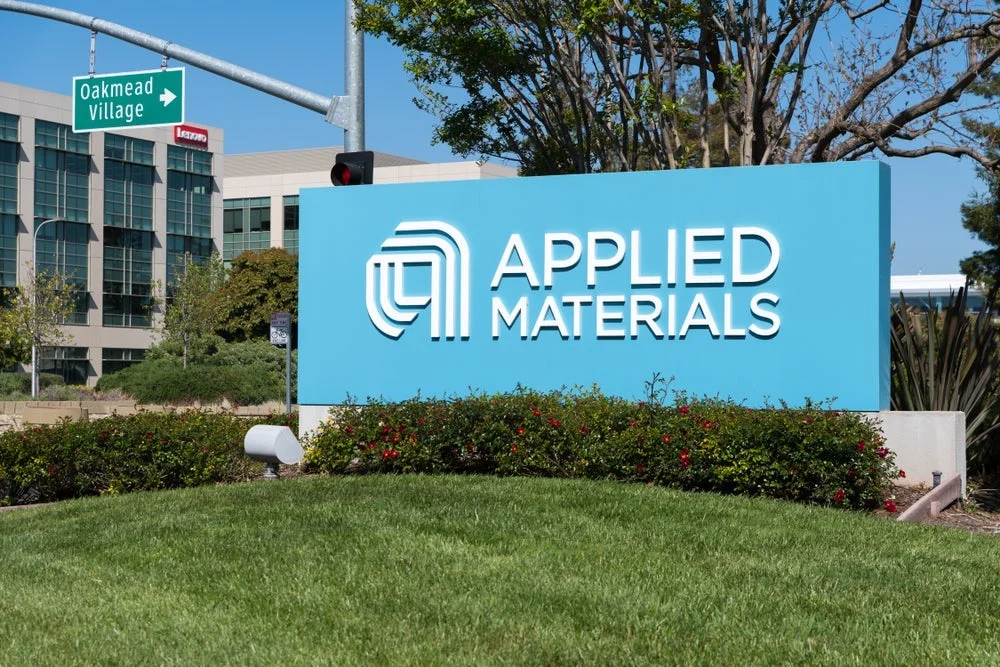

Applied Materials Warns of $600 Million Revenue Hit in 2026 After Expanded U.S. Chip Export Curbs

Applied Materials, one of the world’s largest semiconductor equipment makers, said it expects a $600 million revenue impact in fiscal 2026 after the U.S. government broadened export restrictions on technology shipments to China and its affiliates.

The company’s shares fell about 3% in after-hours trading on Thursday following a regulatory filing that detailed the potential hit. Applied Materials said the new rules will make it harder to export certain products and provide parts or services to specific China-based subsidiaries without a U.S. export license.

New U.S. Restrictions Target Loopholes

The U.S. Department of Commerce this week expanded its export blacklist to include majority-owned subsidiaries of already restricted companies. The move targets entities that have been using offshore affiliates to circumvent U.S. export controls on sensitive technologies, particularly in the semiconductor, aerospace, and medical equipment sectors.

The company estimated an additional $110 million impact on its fourth-quarter 2024 revenue, compounding challenges already caused by a slowdown in China and ongoing tariff pressures.

Broader Industry Pressure

Applied Materials, along with European chipmaking equipment supplier ASML Holding, has been hit by weak demand in China, where export curbs have limited access to advanced lithography and chip-manufacturing tools.

Analysts said the new rule could disrupt global semiconductor supply chains and increase the number of firms that will now need licenses to receive U.S.-origin components and services.

Washington’s Push for Domestic Chip Production

In a related policy move, U.S. Commerce Secretary Howard Lutnick said Washington was urging Taiwan to adopt a 50-50 manufacturing split with the United States, part of efforts to boost domestic chip production and reduce dependence on overseas supply chains.

Applied Materials’ Financial Outlook

Despite the looming headwinds, Applied Materials reported strong results for fiscal 2024, with revenue up 2.5% year-over-year to $27.18 billion. Third-quarter revenue rose 8% to $7.30 billion, surpassing market expectations of $7.22 billion, according to LSEG data.

However, the company’s August outlook had already signaled a cautious tone, citing “geopolitical uncertainty and weaker equipment spending” as persistent risks heading into 2025.

As the U.S.–China technology rivalry intensifies, Applied Materials’ latest warning highlights the growing cost of Washington’s export-control campaign, which is reshaping the global semiconductor landscape and testing the resilience of supply chains worldwide.

EA’s $55 Billion Buyout Highlights Industry Shift Toward Gaming IP Diversification

Electronic Arts’ (EA) record-breaking $55 billion leveraged buyout — led by Saudi Arabia’s Public Investment Fund (PIF), U.S. investment firm Silver Lake, and Jared Kushner’s Affinity Partners — marks one of the largest deals in entertainment history and a new strategic direction for the videogame industry.

The acquisition underscores a growing trend among gaming companies and investors: maximizing the value of popular gaming franchises (IP) through crossovers into film, television, and digital media.

Despite the videogame sector’s position as the world’s largest entertainment market, growth has slowed amid global inflation and cautious consumer spending. Publishers are now looking to extend the life and profitability of flagship titles like Battlefield, Apex Legends, and The Sims beyond consoles and PCs — into streaming platforms and movie theaters.

From Games to Screens: The New Gold Rush

The enormous success of Sony’s “The Last of Us” (2023) television adaptation demonstrated that gaming IP could thrive in mainstream entertainment. Following that, studios and publishers have accelerated their own crossover projects:

  • Amazon Prime’s “Fallout” series,

  • Warner Bros’ “Minecraft Movie”,

  • Riot Games’ “Arcane” Season 2,

  • Paramount Skydance’s “Call of Duty” film,

  • and sequels to Nintendo’s “Super Mario Bros.” and “Mortal Kombat” movies.

EA has already entered the arena with its upcoming “The Sims” film, produced in partnership with Amazon’s MGM Studios, and is preparing to launch its next flagship title, Battlefield 6.

Strategic and Cultural Ambitions

For Saudi Arabia’s PIF, the EA acquisition aligns with Crown Prince Mohammed bin Salman’s Vision 2030, aimed at transforming the kingdom into a global hub for gaming, sports, and culture. The fund already holds stakes in Nintendo, Take-Two Interactive, and Japanese animation studio Toei Co., and is expanding investments in cinema and digital media.

Jon Wakelin of Altman Solon noted:

“The PIF has shown heightened interest in entertainment assets with strong cultural resonance. Expect more focus on digital media and less on traditional TV or film models.”

Risks and Lessons from the Market

Analysts warn that while acquiring IP during a market slowdown offers long-term potential, it also carries risks. The case of Sweden’s Embracer Group, which overextended through acquisitions before splitting into three entities, illustrates how high production costs and weak creative output can quickly erode value.

“Consolidating IP during a down market has short-term benefits, but often runs into inefficiencies and devaluation,” said NYU professor Joost van Dreunen.

A New Era for Interactive Entertainment

As Raymond James analysts observed, “The value of high-end gaming IP is only increasing as players concentrate engagement among fewer, more iconic franchises.”

With the EA deal, the intersection of gaming, streaming, and global investment is redefining how the world’s most valuable entertainment properties are built — and who controls them.