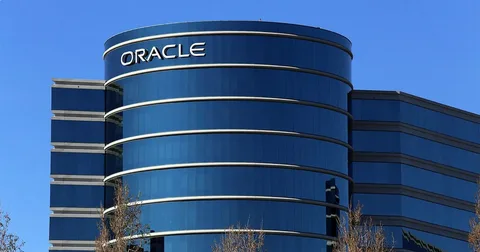
Oracle Confirms Extortion Campaign Targeting Its E-Business Suite Customers

has confirmed that some users of its E-Business Suite software have received extortion emails from hackers, validating a warning first issued by Google earlier this week. In a Thursday blog post, the California-based tech giant said its internal investigation revealed potential exploitation of previously known software vulnerabilities and urged customers to upgrade their systems immediately.

The company did not specify how many clients were impacted, but Google described the campaign as “high volume”, suggesting a broad wave of attacks against enterprise users.

Cybersecurity experts have linked the operation to the ransomware group Cl0p, a notorious Russia-linked or Russian-speaking collective that operates under a ransomware-as-a-service model—leasing its malware tools to other cybercriminals for a share of the profits. In a message to Reuters, the group said “Oracle bugged up,” but declined to provide further details.

According to Halcyon’s Ransomware Research Center chief Cynthia Kaiser, recent extortion demands connected to the campaign range from millions to tens of millions of dollars, with the highest reaching $50 million.

Trend Micro, a Japanese cybersecurity firm, previously labeled Cl0p as a “trendsetter for its ever-changing tactics,” noting its rapid adaptation to new vulnerabilities and defenses.

The attacks come amid a surge in corporate cyber-extortion incidents, targeting firms with complex enterprise software systems that handle sensitive financial and operational data. Oracle’s swift public acknowledgment—unusual in such cases—signals the seriousness of the threat and the company’s attempt to reassure customers that patches and updates remain their best defense.
U.S. Authorities Investigate Amazon Drone Crashes in Arizona

The U.S. National Transportation Safety Board (NTSB) and the Federal Aviation Administration (FAA) have launched investigations into two Amazon Prime Air delivery drones that crashed after colliding with a crane in Tolleson, Arizona, on Wednesday.

Amazon had started its drone delivery service in the Phoenix metro area’s West Valley in November 2024, allowing customers to receive small packages—up to 5 pounds (2.3 kg)—within an hour. The company paused drone operations in Arizona following the incident but said they would resume flights on Friday.

Amazon spokesperson Terrence Clark stated that the company’s internal review found no technical malfunction in the drones or their supporting systems. He emphasized that “safety is our top priority,” and announced new measures such as enhanced visual landscape inspections to better detect moving obstacles like cranes in future operations.

The accidents come as Amazon continues to push toward its ambitious goal of delivering 500 million packages per year by drone by 2030. The company has been steadily expanding its autonomous delivery network, including a 2023 partnership with Amazon Pharmacy to deliver prescription medications by drone in College Station, Texas.

Broader regulatory shifts are also underway. In August 2025, the U.S. Department of Transportation proposed updated rules allowing drones to fly beyond the visual line of sight of operators—an essential step toward mainstream drone delivery. Transportation Secretary Sean Duffy described the initiative as transformative: “It’s going to change the way that people and products move throughout our airspace… You may get your Amazon package—or even your Starbucks coffee—from a drone.”

The Tolleson incident underscores both the promise and complexity of integrating drones into everyday logistics, as regulators and industry leaders race to balance innovation with airspace safety.

Judge Rejects Elon Musk’s Bid to Move SEC Lawsuit From Washington to Texas

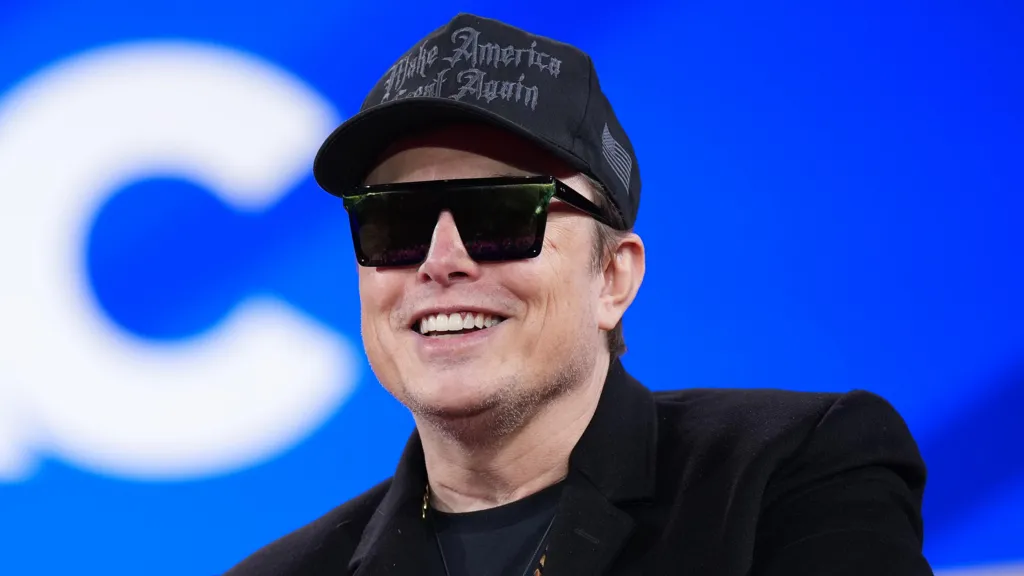
A U.S. federal judge has denied Elon Musk’s request to move a Securities and Exchange Commission (SEC) lawsuit from Washington, D.C. to Texas, rejecting his claim that the capital’s court location was overly burdensome given his packed schedule.

Judge Sparkle Sooknanan ruled on Thursday that while she acknowledges Musk’s demanding workload, his “considerable means” and frequent travel make Washington an appropriate venue. She also noted that Musk spends at least 40% of his time outside Texas, including significant periods in the capital, where he recently led the Department of Government Efficiency.

The judge emphasized that Texas courts face heavier caseloads, while her court could handle the matter with “reasonable alacrity.” Musk’s argument centered on his claim that he works 80 or more hours per week, often sleeping at his office or factories, and that defending himself in Washington would cause “substantial burdens.”

The SEC lawsuit, filed in January, accuses Musk of failing to timely disclose his acquisition of a 5% stake in Twitter (now X) in early 2022. The 11-day delay, according to the SEC, allowed him to buy over $500 million worth of shares at artificially low prices, saving him an estimated $150 million. The agency seeks a civil fine and the forfeiture of those gains, while Musk is attempting to have the case dismissed.

Musk, whose fortune reportedly surpassed $500 billion this week, resides in Austin, Texas, where his major companies—Tesla, SpaceX, and The Boring Company—are headquartered. He had also proposed moving the case to Manhattan, where former Twitter shareholders have filed a related lawsuit, but that request was likewise denied.

The case, titled SEC v. Musk, will proceed in the U.S. District Court for the District of Columbia under docket number 25-00105, setting the stage for another high-profile courtroom battle involving one of the world’s most controversial billionaires.