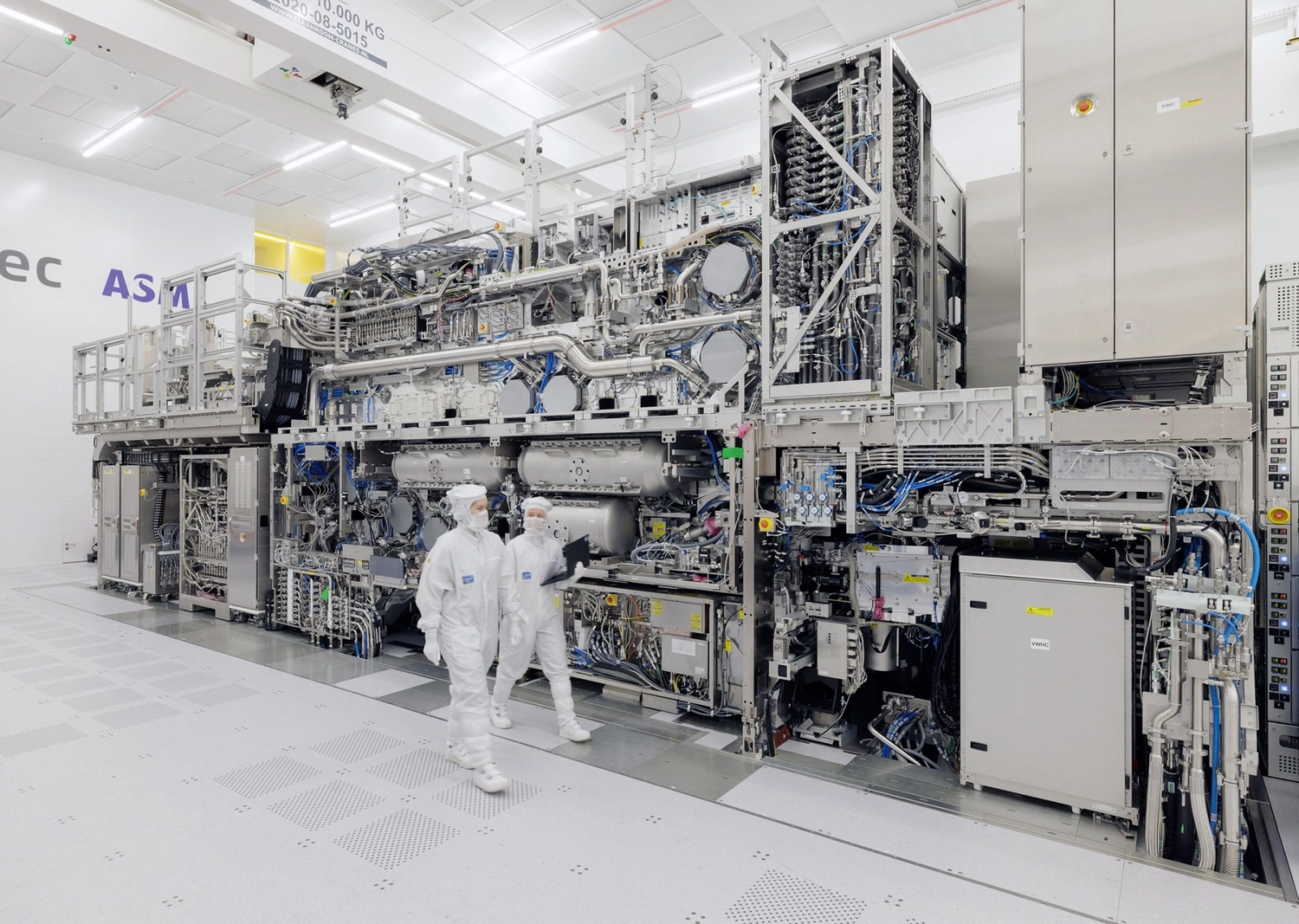
ASML said it expects Chinese sales to fall “significantly” next year, after having made up nearly half of company sales in 2024 and a third so far in 2025. CFO Roger Dassen said on a media call the decline was a “normalization” and not due to stockpiling amid the U.S.-China trade war. U.S.-led export restrictions mean ASML cannot sell its most advanced tools in China, a point of contention between the superpowers, with China recently tightening control of exports of rare earth metals. ASML said it would not be affected by those restrictions in the short term. ASML said sales will be, at worst, flat in 2026, from around 32.5 billion euros ($37.82 billion) in 2025. “We believe the bearish view of a worse than expected 2026 will be put to rest and the market will focus on the extent the company can grow in 2027”, JPMorgan analysts said. ASML’s lithography tools, key for making chip circuitry, are sold to TSMC of Taiwan (2330.TW), opens new tab – which makes most AI chips for Nvidia – and to other logic chip firms such as China’s SMIC (0981.HK), opens new tab and Intel (INTC.O), opens new tab. It also serves memory chip makers like Samsung (005930.KS), opens new tab, SK Hynix (000660.KS), opens new tab and Micron (MU.O), opens new tab. The company reported third-quarter net income of 2.12 billion euros, in line with the 2.11 billion euros analysts expected, according to LSEG IBES data.

ASML, the world’s leading manufacturer of chip-making machines, surpassed market expectations for new orders as global demand for AI technologies continues to surge. CEO Christophe Fouquet highlighted that the company is experiencing “continued positive momentum around investments in AI,” which is fueling growth in both advanced logic and memory chip sectors.

The Dutch tech giant reported net bookings of €5.40 billion for the third quarter, slightly above analysts’ forecasts, and confirmed a net income of €2.12 billion — matching market expectations. ASML’s shares have jumped 37% since September and rose an additional 3.2% in early trading to €873.80.

However, ASML warned that sales to China are expected to fall sharply next year after years of rapid growth. CFO Roger Dassen described the dip as a “normalization” rather than a response to U.S.-China trade tensions. U.S. export controls continue to prevent ASML from selling its most advanced lithography systems in China, though the company said recent Chinese restrictions on rare earth exports won’t affect it in the near term.

ASML now forecasts flat sales in 2026, around €32.5 billion, before growth resumes in 2027. Analysts at JPMorgan believe market concerns over a weaker 2026 will ease, shifting focus toward the company’s long-term expansion prospects. ASML’s customers include major chipmakers such as TSMC, Intel, Samsung, SK Hynix, and Micron, which all play critical roles in AI hardware development.
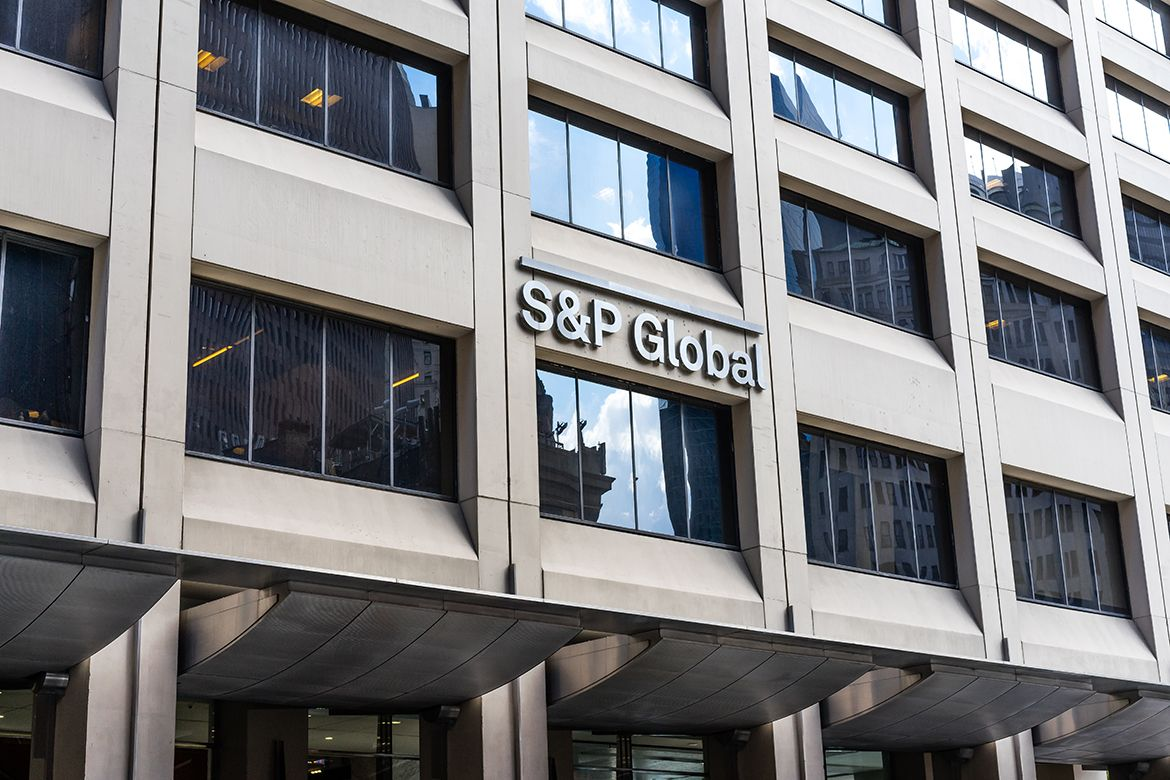

S&P Global to acquire private markets data firm With Intelligence for $1.8 billion

S&P Global has agreed to acquire With Intelligence, a London-based provider of private markets data and analytics, in a $1.8 billion deal, the company announced on Wednesday. The acquisition aims to expand S&P Global’s footprint in the rapidly growing private markets sector.

Founded in 1998, With Intelligence serves around 3,000 clients globally, offering analytics and intelligence for alternative investments, including private equity, credit, and infrastructure. The firm is expected to generate $130 million in revenue in 2025, with annual contract value growth projected in the high teens.

The transaction is expected to close in late 2025 or early 2026, and S&P Global said it anticipates the deal will add to adjusted earnings per share by 2027. Citi acted as the financial advisor to S&P Global, while Centerview Partners advised With Intelligence.

The move comes amid growing investor interest in private markets, as rising interest rates and limited exits have put pressure on valuations in public markets. As traditional markets show signs of volatility, investors are increasingly turning toward alternative assets for diversification and yield.

The acquisition aligns S&P Global with a broader industry trend. Major financial institutions such as BlackRock have made significant pushes into private markets, including its $12.5 billion acquisition of Global Infrastructure Partners, its $3.2 billion deal for Preqin, and its $12 billion purchase of HPS Investment Partners earlier this year.

Private markets also received a boost from U.S. President Donald Trump’s executive order in August, which seeks to expand 401(k) access to private equity and private credit investments.

MIT spinout Vertical Semiconductor raises $11 million to develop efficient AI power chips

Vertical Semiconductor, a startup spun out of the Massachusetts Institute of Technology (MIT), has raised $11 million in funding to commercialize a new generation of gallium nitride (GaN) power chips designed to deliver electricity more efficiently to artificial intelligence data centers, the company announced on Wednesday.

Led by Playground Global, the funding will help the company bring its vertical transistor architecture to market. The technology aims to reduce the massive energy losses that occur when power is converted from grid-scale voltages to the tiny levels needed by microchips—losses that typically generate significant amounts of heat instead of usable power.

“That is power you are not delivering to computing tasks—it straight turns into heat,” said Matt Hershenson, a partner at Playground Global.

AI data centers, which power tools like ChatGPT, consume enormous amounts of electricity—comparable to that of entire cities. As a result, chipmakers including Renesas, Infineon, and Power Integrations are partnering with Nvidia to develop next-generation GaN power chips.

Vertical Semiconductor’s innovation lies in stacking transistor components vertically rather than spreading them horizontally, making the chips smaller, more efficient, and cooler. The company plans to deliver prototypes this year and begin full production in 2026.

The firm was co-founded by MIT professor Tomas Palacios and researcher Joshua Perozek, whose doctoral work laid the foundation for the technology. CEO Cynthia Liao, formerly of MIT Sloan, said the company’s chips could offer data center operators step-change energy savings rather than incremental improvements.

“We do believe we offer a compelling next-generation solution that is not just a couple of percentage points here and there, but actually a step-wise transformation,” Liao said.