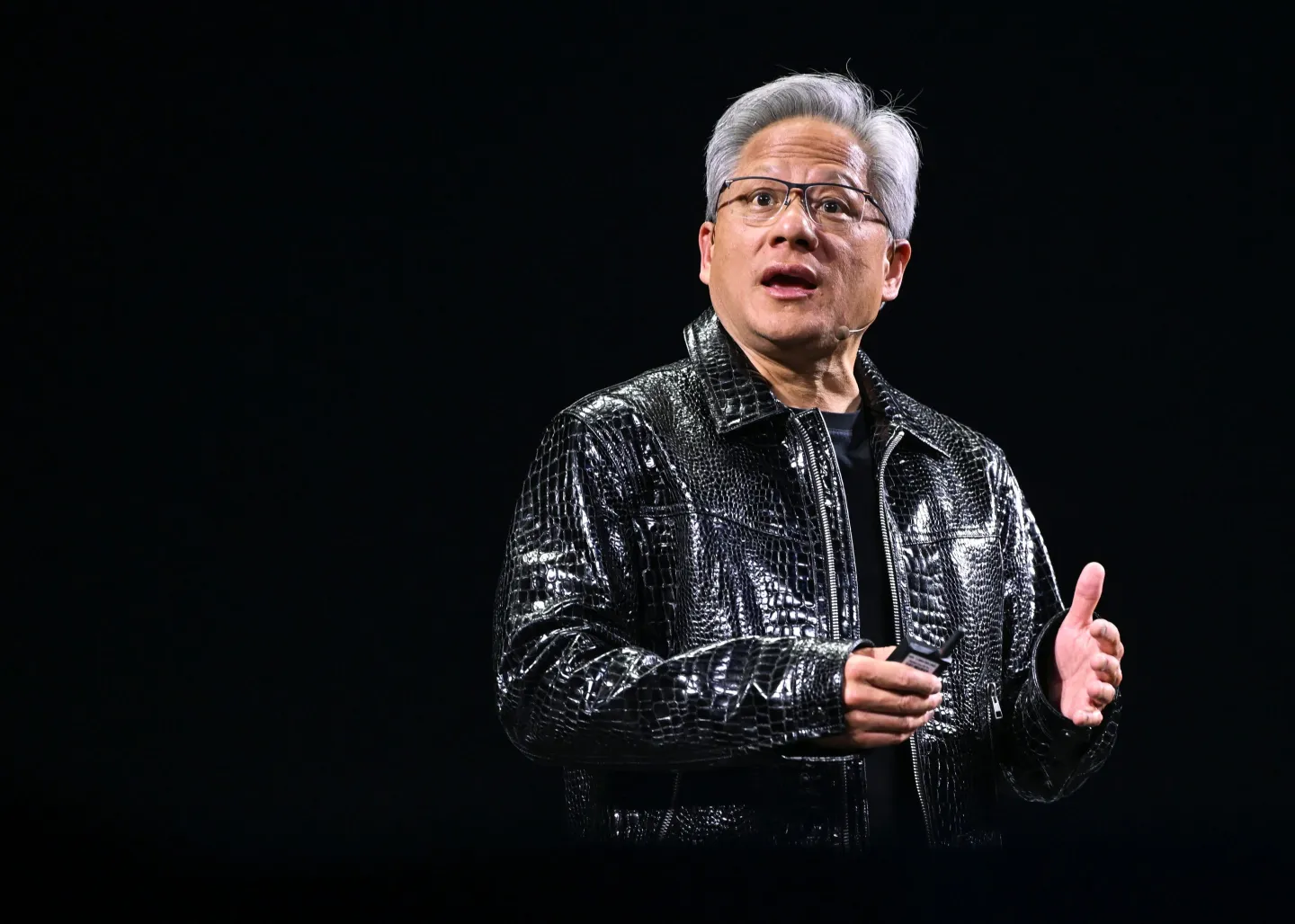
Nvidia CEO Jensen Huang Reports Surging Demand for Blackwell Chips

Nvidia CEO Jensen Huang said on Saturday that demand for the company’s cutting-edge Blackwell AI chips is “very strong,” as the semiconductor giant deepens its partnership with Taiwan Semiconductor Manufacturing Co (TSMC) to meet soaring global demand.

Speaking at an event hosted by TSMC in Hsinchu, Taiwan, Huang said Nvidia’s Blackwell platform — which integrates GPUs, CPUs, networking, and switching systems — requires an extensive supply of wafers and components. “We build the GPU, but we also build the CPU, the networking, the switches… there are a lot of chips associated with Blackwell,” he explained.

TSMC CEO C.C. Wei confirmed that Huang had “asked for wafers,” but declined to disclose quantities. “TSMC is doing a very good job supporting us,” Huang said, emphasizing that Nvidia’s record-breaking success “would not be possible without TSMC.”

In October, Nvidia became the first company to surpass a $5 trillion market value, prompting Wei to call Huang a “five-trillion-dollar man.”

When asked about supply challenges, Huang acknowledged there would be “shortages of different things,” though memory makers SK Hynix, Samsung, and Micron have expanded capacity to meet demand. Nvidia has already received next-generation memory samples from all three suppliers.

SK Hynix recently said it had sold out all production for 2026, forecasting a long-lasting chip “super cycle” driven by AI growth. Samsung is also in “close discussion” to supply HBM4 memory to Nvidia.

Huang reiterated that Nvidia has no active discussions to sell Blackwell chips to China, as U.S. restrictions remain in place.
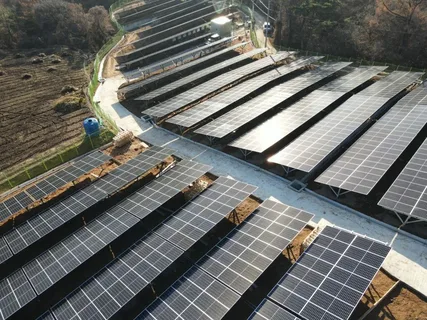
South Korea’s Qcells Cuts Pay and Hours for Georgia Workers Amid U.S. Customs Delays

South Korean solar manufacturer Qcells is cutting pay and working hours for about 1,000 employees at its Georgia plants, citing a shortage of imported materials detained by U.S. customs officials. The company will also lay off 300 temporary workers, it said on Friday.

The U.S. Customs and Border Protection (CBP) agency has been holding shipments of solar panel components over concerns that they may contain materials made with forced labor in China. The detentions are part of stepped-up enforcement of the Uyghur Forced Labor Prevention Act, which restricts goods linked to China’s Xinjiang region.

Qcells — a subsidiary of Hanwha Solutions — says none of its materials come from China and that it maintains robust supply chain audits and third-party documentation proving compliance. “Our latest supply chain is sourced completely outside of China,” said company spokesperson Marta Stoepker, adding that some detained shipments have already been released.

With production still slowed at its Dalton and Cartersville facilities, Qcells said the temporary cuts were necessary “to improve operational efficiency until production capacity returns to normal.” Employees will keep their benefits during the reduced schedule.

Despite the disruption, Qcells reaffirmed its commitment to expanding U.S. manufacturing. The company is completing a $2.3 billion solar plant in Cartersville, designed to produce solar ingots, wafers, and cells from polysilicon refined in Washington state — a move aimed at reducing reliance on imports.

“Our commitment to building the entire solar supply chain in the United States remains,” Stoepker said. “We will soon be back on track with the full force of our Georgia team delivering American-made energy.”

NASA Launches Twin Mars Probes to Uncover How the Red Planet Lost Its Atmosphere

NASA is preparing to send two identical probes to Mars in a groundbreaking effort to uncover how the Red Planet lost its atmosphere — and what that might mean for Earth’s future.

Billions of years ago, Mars had a thick atmosphere, liquid water, and Earth-like chemistry. But today, it’s a frozen, airless desert. The question scientists are asking is simple yet profound: what went wrong?

The ESCAPADE mission — short for Escape and Plasma Acceleration and Dynamics Explorers — will send twin satellites, nicknamed Gold and Blue, to orbit Mars in formation, offering the first-ever 3D view of its magnetic and atmospheric interactions.

The probes, each about the size of a mini-fridge, are scheduled to launch Sunday from Kennedy Space Center aboard Blue Origin’s New Glenn rocket, which will make only its second flight. Instead of the usual direct trajectory, ESCAPADE will take a unique route — looping around a Lagrange point for a year before slingshotting toward Mars, a maneuver that could revolutionize future interplanetary mission planning.

NASA and the University of California, Berkeley’s Space Sciences Laboratory designed the mission to explore how solar wind — the stream of charged particles from the Sun — has stripped away Mars’ atmosphere over time. Without a strong magnetic field like Earth’s, Mars was left vulnerable to this cosmic erosion.

By 2027, the orbiters will study how solar storms affect Mars’ magnetosphere in real time, helping researchers understand both planetary climate loss and how to protect future astronauts from harmful space radiation.

“This is a low-cost mission — about $70 to $80 million — but with enormous scientific value,” said Casey Dreier of the Planetary Society. “Understanding Mars’ atmospheric loss helps us grasp how delicate Earth’s own system really is.”

As NASA faces tightening budgets, ESCAPADE represents a new model: small, efficient missions tackling big scientific questions — and a reminder that studying Mars may teach us more about saving Earth than we expect.