Underwater Cables: The Hidden Arteries of the AI Boom and Global Internet

Deep beneath the oceans lies one of the most crucial — yet least visible — components of modern life: underwater communication cables. Nearly 95% of the world’s international data and voice traffic flows through this vast network of almost one million miles of fiber-optic lines connecting continents.

These cables carry everything from financial transactions and government communications to video calls, cloud services, and AI data transfers. As artificial intelligence grows more data-hungry, investment in subsea infrastructure is accelerating at record speed.

Between 2025 and 2027, global spending on subsea cables is expected to reach $13 billion, nearly double the investment made over the previous three years, according to TeleGeography.

“AI is increasing the need that we have for subsea infrastructure,” said Alex Aime, vice president of network investments at Meta. “Without that connectivity, you just have expensive warehouses.”

Tech giants are now the biggest investors. Meta’s Project Waterworth, a 50,000-kilometer cable linking five continents, will be the longest in the world. Amazon’s Fastnet, connecting the U.S. and Ireland, will deliver speeds equivalent to streaming 12.5 million HD movies simultaneously. Google has funded over 30 subsea systems, while Microsoft has invested in others to bolster its Azure cloud network.

But as global reliance on these cables deepens, so do concerns about security and resilience. Damaged or sabotaged cables can cut off entire nations — as seen when Tonga lost internet access after a volcanic eruption in 2022.

While most damage stems from accidents — fishing nets or dropped anchors — analysts have noted a rise in suspected sabotage near Taiwan and in the Baltic Sea, often coinciding with geopolitical tensions. In response, NATO launched “Baltic Sentry” in early 2025 to protect critical subsea infrastructure.

The U.S. Federal Communications Commission (FCC) has also tightened rules on foreign ownership of cable systems, citing threats from China and Russia. “We’re making it difficult to connect undersea cables directly from the U.S. to adversary nations,” said FCC Chair Brendan Carr.

From the 1850 telegraph line between Dover and Calais to AI-era fiber networks, subsea cables remain the unseen lifeline of global communication — and the quiet battleground of the world’s next digital conflict.
COP30: China’s Green Energy Power Play — How a Laos Wind Farm Reveals Its Global Strategy

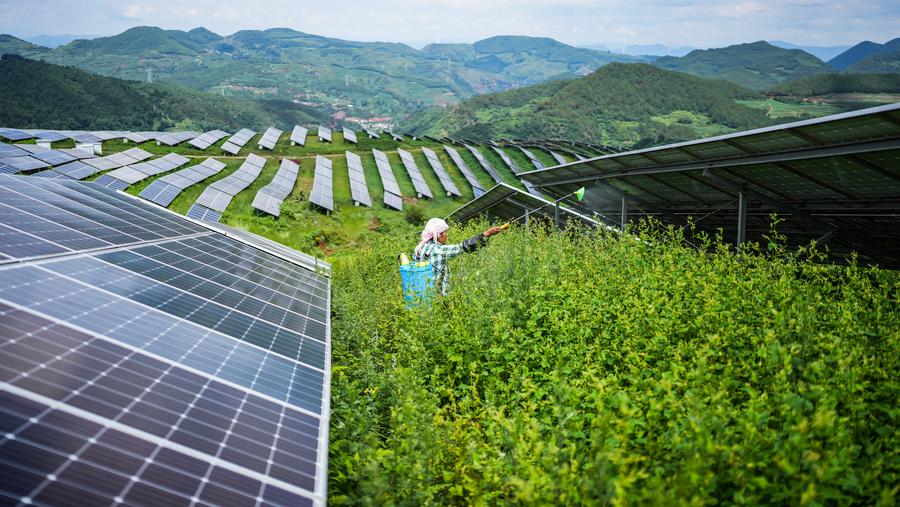
In the remote hills of Dak Cheung, southeastern Laos, a vast new wind power project is quietly reshaping both the region’s energy landscape and the global balance of power.

The Monsoon Wind Power Project, the largest in Southeast Asia, features 133 towering turbines stretching across an area twice the size of the Isle of Wight. It promises to deliver electricity to around one million households in neighboring Vietnam, marking a remarkable feat of engineering in one of Asia’s poorest regions.

Yet, while the site is led by a Thai consortium, its backbone is unmistakably Chinese — built by a state-owned Chinese company, using Chinese technology, and completed at record speed and low cost.

“It makes the project viable,” said Narut Boakajorn, the site’s general manager. “Otherwise, financing would not have been possible.”

This wind farm is a microcosm of China’s global dominance in green energy. The country now produces over 60% of the world’s mass-manufactured green technologies, including 80% of solar panels and 75% of electric vehicles, according to the International Energy Agency. Analysts estimate Chinese clean energy exports in 2024 alone could cut global carbon emissions by 1%.

But Beijing’s motivations go beyond climate stewardship. As China simultaneously builds coal plants and renewable infrastructure, its rapid green expansion looks more like a strategic bet on the future of global energy markets — and influence.

Developing nations like Laos, often enticed by low-cost technology and financing, have become the front line of this new form of soft power. While Laos’ wind project avoided the debt traps seen elsewhere, the country has already ceded control of most of its power grid to a Chinese firm amid financial struggles.

The symbolism is striking: in the same mountains once bombed by the U.S. during the Vietnam War, China is now building turbines — a new kind of influence rising from the ashes of an old one.

DNA Pioneer James Watson Dies at 97, Leaving a Legacy of Genius and Controversy

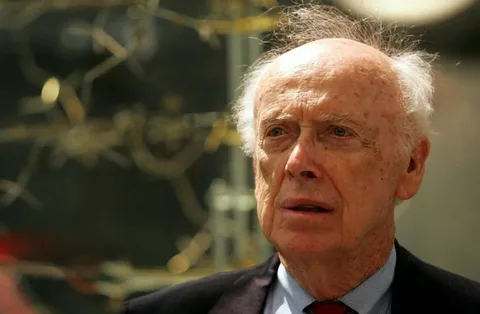
James Watson, the American molecular biologist who co-discovered the double-helix structure of DNA, has died at 97, leaving behind one of the most significant yet controversial legacies in modern science.

Born in Chicago in 1928, Watson was just 24 years old when, alongside Francis Crick and Maurice Wilkins, he uncovered the double-helix shape of deoxyribonucleic acid (DNA) — a discovery that fundamentally changed biology and earned the trio the 1962 Nobel Prize in Physiology or Medicine.

Their model revealed how genetic information is encoded and replicated, forming the foundation for later breakthroughs such as genetic engineering, gene therapy, and DNA-based identification. The elegant structure quickly became an icon of modern science — featured in art, culture, and even postage stamps.

Yet Watson’s later life was overshadowed by repeated offensive remarks about race and intelligence, which tarnished his reputation. In 2007, he sparked outrage after claiming that Black people were less intelligent than white people, remarks he later apologized for but later repeated in a 2019 documentary.

Following the initial controversy, he was suspended and forced to resign as chancellor of New York’s Cold Spring Harbor Laboratory, where he had worked for nearly four decades.

Despite his scientific brilliance, many in the research community distanced themselves from him in his later years. Dr. Francis Collins, former head of the U.S. National Institutes of Health, called Watson’s comments “deeply hurtful” and said, “I only wish his views on humanity had matched his scientific insight.”

While Watson’s discoveries remain central to genetics, his story serves as a stark reminder that scientific genius does not excuse prejudice. His contributions transformed our understanding of life — but his words left deep scars in the scientific community he helped to shape.