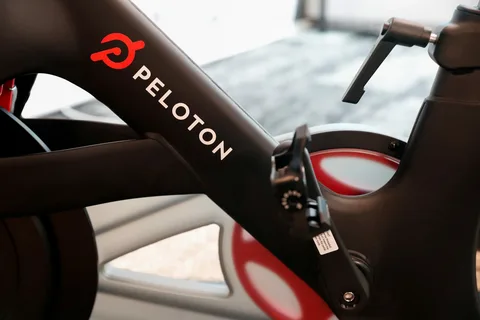
Peloton Shares Surge as CEO Peter Stern’s Turnaround Strategy Shows Early Success

Peloton Interactive’s shares rose 7% on Friday after the fitness technology company beat Wall Street’s revenue expectations, driven by its revamped product lineup, AI-powered features, and price hikes across both hardware and subscriptions. The results have strengthened investor confidence in CEO Peter Stern’s turnaround strategy, aimed at returning the brand to profitability.

Peloton reported quarterly revenue of $550.8 million, exceeding analyst forecasts of $539.82 million, according to LSEG data. The company’s renewed focus on cash flow improvement, debt reduction, and streamlined operations has begun to resonate with investors after several years of financial turbulence.

Since taking over in January 2025, Stern has prioritized reshaping Peloton’s identity beyond its pandemic-era boom, repositioning it as a sustainable, subscription-based fitness ecosystem. The latest relaunch introduced AI-driven workout recommendations and upgraded connected fitness equipment, marking Peloton’s most significant product refresh in years.

Analysts at J.P. Morgan called the results “encouraging,” citing improvements in profitability and free cash flow, while cautioning that it remains to be seen if these changes will deliver “durable revenue growth.”

The positive earnings sent Peloton’s stock to one of its best weekly performances this year. The company currently trades at a price-to-earnings ratio of 79.95, reflecting investor expectations of sustained earnings momentum.
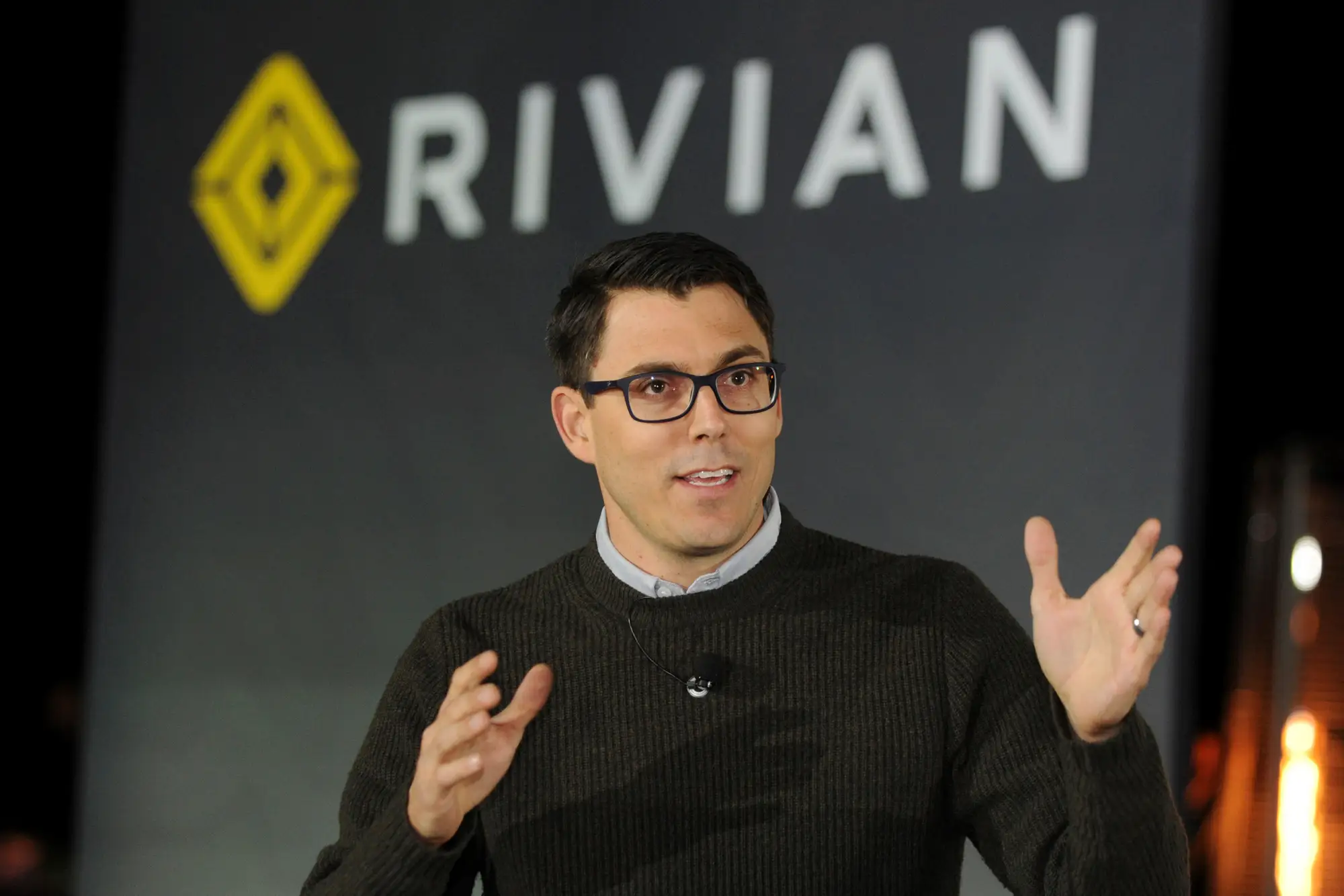
Rivian Awards CEO RJ Scaringe a $4.6 Billion Pay Package Modeled on Musk’s Tesla Deal

Electric vehicle maker Rivian has unveiled a massive $4.6 billion compensation plan for CEO RJ Scaringe, mirroring the structure of Elon Musk’s Tesla pay package. The deal, announced Friday, is one of the largest executive awards in history, tying Scaringe’s payout to ambitious profit and share price milestones over the next decade.

The move signals Rivian’s determination to retain its founder and keep him focused on growth as the company prepares to launch its smaller, more affordable R2 SUV next year — a key model aimed at competing with Tesla’s Model Y.

Rivian said the new plan replaces an earlier one issued in 2021 that was unlikely to be met. The updated package includes options to purchase 36.5 million shares at $15.22 each, vesting if Rivian’s stock hits price targets ranging from $40 to $140 a share over the next ten years. The company’s previous plan required share prices between $110 and $295, thresholds now deemed unrealistic amid market pressures and the removal of EV tax credits that have slowed sales.

The award also introduces operating income and cash flow goals over seven years. Rivian shares closed at $15.22 on Thursday — exactly the strike price for Scaringe’s new options.

“This plan keeps RJ incentivized to scale Rivian efficiently while aligning his success with shareholder returns,” said a company statement.

The EV startup recently laid off 600 employees, or 4.5% of its workforce, as part of cost-cutting efforts. Still, the company insists it is on track to improve profitability and expand production.

Separately, Scaringe was granted 1 million common units in Mind Robotics, a new Rivian spinoff focused on industrial AI technology. He will serve as chairman of its board and could earn up to a 10% stake once the venture turns a profit.

OpenAI’s Sam Altman Urges U.S. to Expand Chips Act Tax Credit for AI Development

OpenAI CEO Sam Altman on Friday called for the United States to broaden eligibility under the Chips Act’s Advanced Manufacturing Investment Credit (AMIC), arguing that expanding the incentive to include AI data centers, server production, and grid infrastructure is essential for maintaining U.S. leadership in artificial intelligence.

Altman’s comments follow a letter sent by OpenAI’s Chief Global Affairs Officer Chris Lehane on October 27 to White House Office of Science and Technology Policy Director Michael Kratsios, formally requesting that the AMIC cover AI infrastructure beyond semiconductor fabrication.

“The U.S. needs re-industrialization across the entire stack — fabs, turbines, transformers, steel, and much more,” Altman said on X (formerly Twitter). “That will help everyone in our industry, and other industries, including us.”

Altman emphasized that the request was “very different from loan guarantees to OpenAI,” clarifying that the company is not seeking direct federal funding for its operations. Earlier this week, he confirmed that OpenAI had discussed potential federal loan guarantees for chip factory construction, but not for data centers.

OpenAI has pledged to invest $1.4 trillion over the next eight years to expand its computational infrastructure, reflecting the skyrocketing demand for AI models and chips that power applications like ChatGPT.

As AI becomes a cornerstone of global technology competition, the Biden administration faces growing pressure to balance industrial policy and fiscal discipline. White House AI and crypto czar David Sacks recently reiterated that there will be no federal bailout for AI companies, underscoring Washington’s cautious stance despite mounting private-sector investment.