L’Oréal to Invest $383 Million in Indian Beauty Tech Hub

French cosmetics group L’Oréal said it will invest more than $383 million to establish a beauty technology hub in the southern Indian city of Hyderabad, strengthening its push into AI-driven innovation.

The company said the hub will serve as a global base for developing artificial intelligence-powered beauty solutions and is expected to create around 2,000 technology jobs by 2030. The investment, amounting to over 35 billion rupees, aims to accelerate the rollout of advanced digital tools across L’Oréal’s global portfolio.

The partnership was formalized at the World Economic Forum in Davos by L’Oréal CEO Nicolas Hieronimus and the government of Telangana, a state that has rapidly positioned itself as a major technology and investment hub in southern India.

The move reflects growing economic ties between India and France, whose bilateral trade reached $15 billion in 2024. Leaders including Indian Prime Minister Narendra Modi and French President Emmanuel Macron have been working to deepen cooperation, including efforts to modernize tax agreements in line with global transparency standards.
Taiwan’s GlobalWafers Prepares Phase Two Expansion at Texas Plant

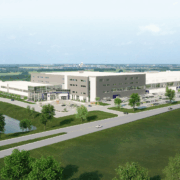
Taiwanese silicon wafer maker GlobalWafers is preparing for a second-phase expansion of its Texas manufacturing plant, pending customer commitments, chairperson Doris Hsu said on Wednesday.

The company opened a $3.5 billion facility in Texas last year and later announced plans to invest an additional $4 billion in the United States to meet rising demand. The site is GlobalWafers’ most advanced fully integrated 300mm silicon wafer plant and is currently the only advanced wafer manufacturing facility of its kind in the U.S.

Hsu said customers have begun asking about further capacity increases, noting that the first phase serves multiple clients and may not be sufficient. GlobalWafers is moving ahead with factory design work to shorten timelines once commitments are finalized.

GlobalWafers supplies TSMC, which is investing heavily in U.S. chip production. The expansion aligns with a recent U.S.-Taiwan trade deal aimed at strengthening local semiconductor supply chains.

UBTech Agrees Airbus Deal to Expand Robot Use in Aviation Manufacturing

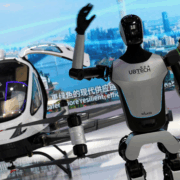
Chinese robotics company UBTech has signed an agreement with aircraft manufacturer Airbus to supply robots for use in aviation manufacturing, as humanoid robotics gains traction in industrial settings.

UBTech said Airbus has already purchased its latest industrial humanoid robot, the Walker S2, and that the two companies will work together to expand the application of humanoid robots across aerospace manufacturing scenarios. Airbus confirmed the cooperation but said it is currently in an early concept-testing phase.

Humanoid robots, designed to mimic human movement and behaviour, have become a strategic focus in China as policymakers and companies look to address challenges such as labour shortages, population decline and trade frictions with the United States. In recent years, Chinese-made humanoid robots have demonstrated advanced capabilities, including complex athletic movements and autonomous tasks.

The partnership with Airbus follows UBTech’s earlier agreement with Texas Instruments, highlighting growing international interest in the firm’s robotics technology. UBTech said total order value for its humanoid robots exceeded 1.4 billion yuan in 2025, and production capacity for industrial humanoid robots is expected to surpass 10,000 units in 2026.