James Webb Telescope Reveals Chaotic Early Formation of the Universe’s First Galaxies
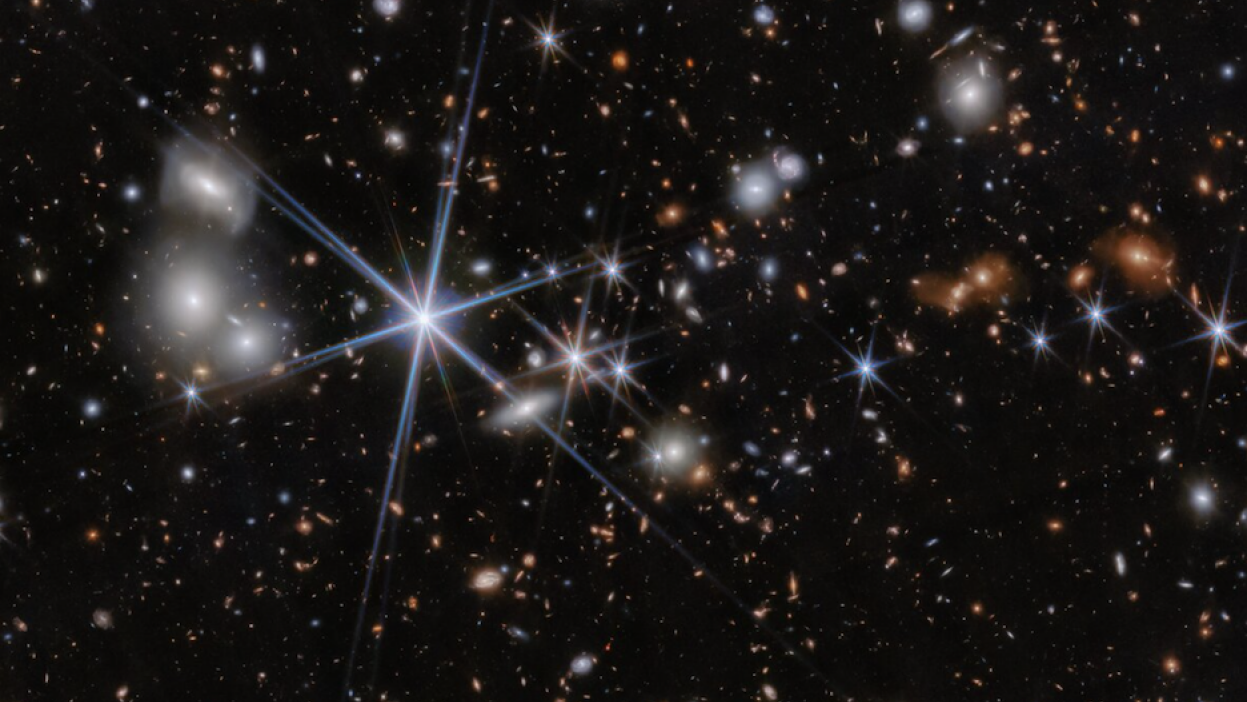
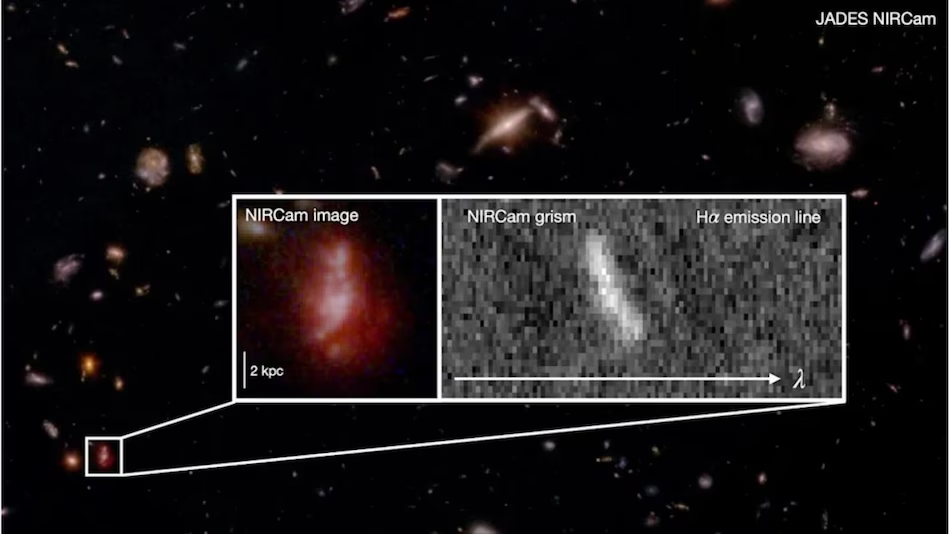
New observations from the James Webb Space Telescope (JWST) reveal that the first galaxies in the universe were far more chaotic and turbulent than the orderly spiral and elliptical galaxies we see today. Researchers at the University of Cambridge analyzed over 250 galaxies formed 0.8 to 1.5 billion years after the Big Bang, finding that most were clumpy, irregular, and dominated by turbulent gas motions. Unlike modern galaxies, these early systems struggled to settle due to intense gravitational forces and rapid star formation, which stirred their gas and prevented stable rotation.
JWST’s infrared cameras allowed scientists to trace the motion of ionized hydrogen gas in these early galaxies. Lead author Dr. Lola Danhaive described the observations, noting that almost all galaxies appeared “still chaotic, with gas puffed up and moving in all directions.” Only a small fraction showed signs of forming smooth, rotating disks. Earlier surveys had identified a few ordered galaxies, but by studying hundreds of smaller systems, the team confirmed that frequent mergers and bursts of star formation dominated galaxy growth in the early universe.
Over time, as star formation slowed and gas reservoirs were depleted, galaxies gradually stabilized and cooled. The JWST data cover the period from the epoch of reionization to the later “cosmic noon” of peak star formation, demonstrating how galaxies evolved from chaotic clumps into more structured systems. This transition marked the gradual formation of the orderly disks and spiral structures familiar in the present-day universe.
Dr. Danhaive emphasizes that the early bursts of star formation disrupted gas motion, keeping galaxies turbulent, while later periods of slower growth allowed them to accumulate mass steadily and form stable structures. In essence, the first galaxies underwent a dramatic transformation, evolving from disorderly, clumpy beginnings into the majestic, well-organized galaxies we observe in the cosmos today.