
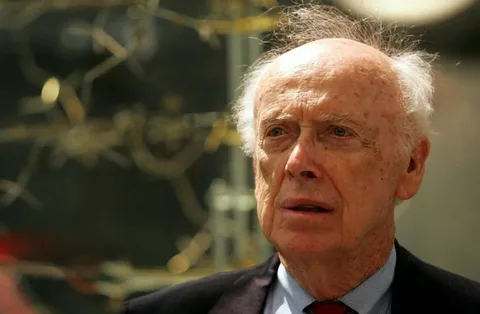
James Watson, the American molecular biologist who co-discovered the double-helix structure of DNA, has died at 97, leaving behind one of the most significant yet controversial legacies in modern science.
Born in Chicago in 1928, Watson was just 24 years old when, alongside Francis Crick and Maurice Wilkins, he uncovered the double-helix shape of deoxyribonucleic acid (DNA) — a discovery that fundamentally changed biology and earned the trio the 1962 Nobel Prize in Physiology or Medicine.
Their model revealed how genetic information is encoded and replicated, forming the foundation for later breakthroughs such as genetic engineering, gene therapy, and DNA-based identification. The elegant structure quickly became an icon of modern science — featured in art, culture, and even postage stamps.
Yet Watson’s later life was overshadowed by repeated offensive remarks about race and intelligence, which tarnished his reputation. In 2007, he sparked outrage after claiming that Black people were less intelligent than white people, remarks he later apologized for but later repeated in a 2019 documentary.
Following the initial controversy, he was suspended and forced to resign as chancellor of New York’s Cold Spring Harbor Laboratory, where he had worked for nearly four decades.
Despite his scientific brilliance, many in the research community distanced themselves from him in his later years. Dr. Francis Collins, former head of the U.S. National Institutes of Health, called Watson’s comments “deeply hurtful” and said, “I only wish his views on humanity had matched his scientific insight.”
While Watson’s discoveries remain central to genetics, his story serves as a stark reminder that scientific genius does not excuse prejudice. His contributions transformed our understanding of life — but his words left deep scars in the scientific community he helped to shape.