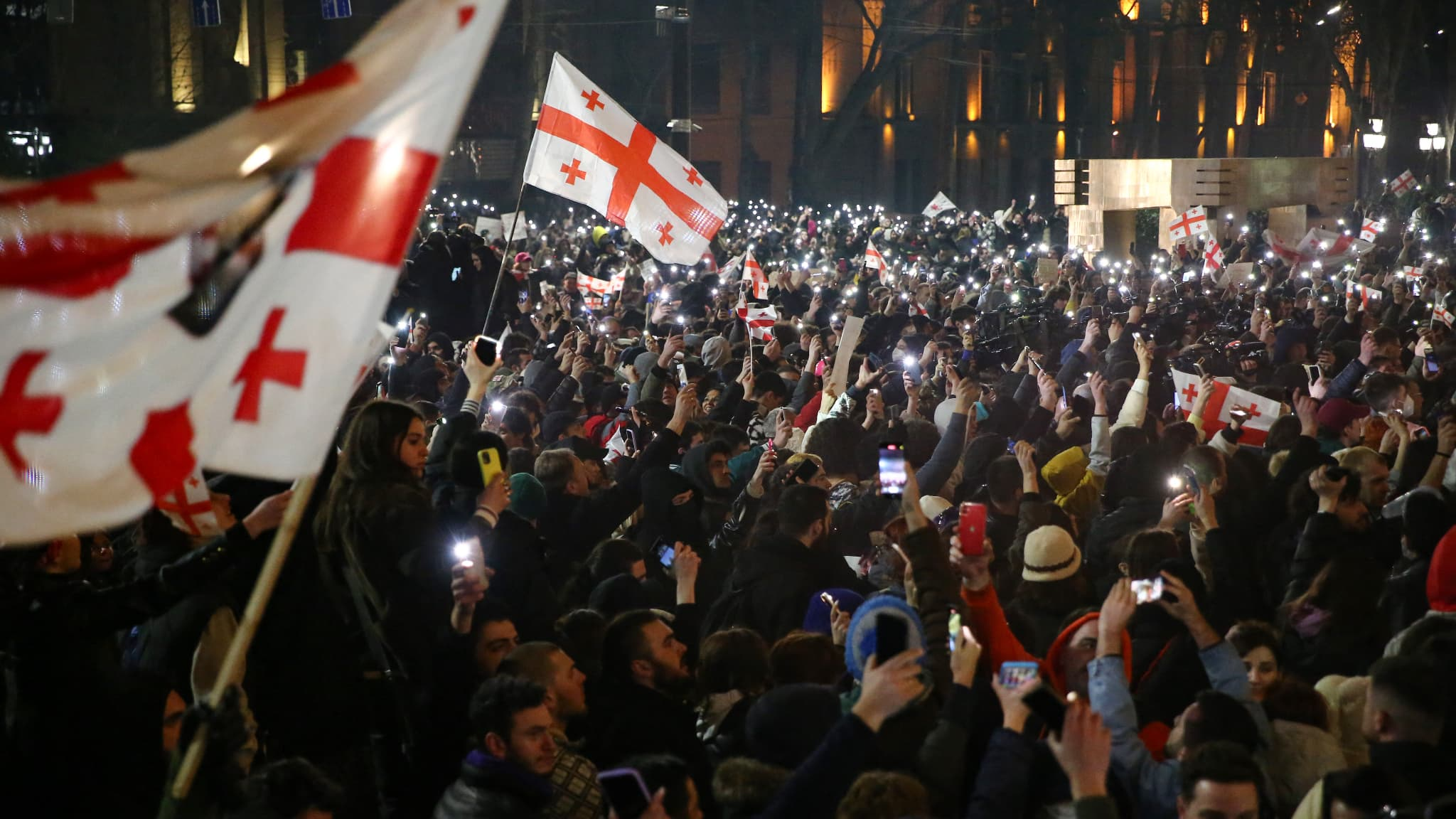
Georgia’s Upcoming Election: Fears of Authoritarianism and Russian Influence

As Georgia approaches its parliamentary elections on October 26, concerns are mounting about the potential return to authoritarian rule under the ruling Georgian Dream party. This anxiety is amplified by the party’s past actions and current rhetoric, drawing unsettling parallels to the Soviet era.

Historical Context and Contemporary Concerns

In Gori, the birthplace of Joseph Stalin, locals can recount tales of the dictator’s youth while glossing over the atrocities of his regime. Many older Georgians may hold nostalgic views of the Soviet past, but younger generations, who have only known democracy, reject this notion. They are alarmed by the creeping authoritarianism as Georgian Dream, led by oligarch Bidzina Ivanishvili, seems increasingly aligned with Kremlin-style governance.

The party has abandoned its pro-European stance over the last decade and appears willing to take extreme measures to maintain power. Ivanishvili, who has resurfaced as the party’s honorary chairman, has openly threatened political opponents and has supported legislation that mimics repressive Russian laws, including a controversial “foreign agent” law that critics argue stifles dissent.

Ivanishvili’s Rhetoric and the Political Landscape

Ivanishvili’s recent speeches have adopted a tone reminiscent of Stalinist propaganda, labeling opposition members as traitors. “It’s incredible how much of this old Bolshevik, Stalinist language is back,” noted Natalie Sabanadze, a former Georgian ambassador to the EU. His assertion that Georgia should apologize to Russia for the 2008 war has sparked outrage among many, particularly younger voters who remember the Russian invasion.

With 20% of Georgia’s territory occupied by Russia, the prospect of aligning closer to the Kremlin is a significant concern for those seeking a pro-European future. Observers warn that if Georgian Dream remains in power, the country could regress towards a one-party state reminiscent of Belarus.

The Role of the European Union

In response to Russia’s aggression in Ukraine, the EU granted Georgia candidate status, reflecting a desire to curb Russian influence in the region. However, many believe this was a move to bolster public support for EU integration rather than an endorsement of Georgian Dream. Ivanishvili’s intentions regarding EU membership remain questionable, as joining would require significant reforms and relinquishing some of his party’s power.

The fragmented opposition, particularly the pro-Western United National Movement (UNM), is hopeful of forming a coalition should the election outcome favor change. However, there are fears that Ivanishvili will attempt to cling to power in the face of electoral defeat, potentially leading to widespread protests and unrest.

A Crucial Election Ahead

With the election just days away, the stakes are high. President Salome Zourabichvili has called for a pro-European victory, asserting that polls show a majority of the populace opposes Georgian Dream. Yet, with Ivanishvili’s history of manipulating political narratives, many remain skeptical about the election’s integrity.

Georgians have expressed their willingness to resist any authoritarian backslide, but the atmosphere of fear and intimidation is palpable. With Ivanishvili hinting at a “Nuremberg trial” for opposition members and police brutality against protestors, the potential for violence looms large.

Conclusion: A Fork in the Road

As the nation prepares to vote, the choices made by the electorate and the subsequent response from the government will shape Georgia’s trajectory. The looming question is whether the country can maintain its democratic aspirations or if it will succumb to the shadows of its past. Observers like Sabanadze caution that while Georgians are determined to resist authoritarianism, the fight for their future may not be easy.

Pennsylvania Nuns Falsely Accused of Voter Fraud Speak Out

In Pennsylvania, a Republican canvasser’s claims of widespread voter fraud sparked controversy after he alleged that 53 voters were registered at an address linked to a local Catholic church, yet no one lived there. The truth? Those voters are actually 55 nuns residing at the Benedictine Sisters of Erie.

A Misunderstanding Turns Viral

Cliff Maloney, founder of The Pennsylvania Chase, shared his findings on X, suggesting a scandal of electoral fraud. However, the nuns’ bustling monastery, which has been a community staple since the 1850s, paints a very different picture. Sister Annette Marshall reflected on the absurdity of the situation, stating, “We’ve always been very vocal about peace and justice… But I’ve never heard us accused of fraud.”

The Benedictine Sisters have deep roots in Erie, moving to their current facility in 1969, partly funded by their own musical group reminiscent of “Sister Act.” Their dedication to community service has earned them a respected place in Erie.

Combating Misinformation

Maloney leads a conservative initiative to encourage mail-in voting among Republicans, while also spreading baseless allegations about election security. Local officials are actively countering the misinformation that runs rampant on social media, including Maloney’s accusations. Pennsylvania Secretary of State Al Schmidt publicly commended Sister Stephanie Schmidt for standing up against disinformation.

Maloney did not respond to requests for comment from CNN.

Navigating Election Season

As Pennsylvania approaches another critical election cycle, the eyes of the nation are fixed on Erie County, which has swung between Democratic and Republican candidates in recent elections. Sister Stephanie emphasized that while they encourage voting, the Benedictine Sisters maintain a nonpartisan stance, allowing each sister to vote according to her conscience.

Many sisters have already submitted their ballots, while others plan to vote in person on Election Day. Despite their busy lives—often filled with social work and community involvement—they remain dedicated to participating in the democratic process.

Responding to Accusations

Following Maloney’s claims, the sisters strongly refuted the assertion that they are non-existent. Sister Diane Cook recounted how they would have readily provided a list of residents had the canvasser made an effort to engage with them. “We’re not a group that’s just going to let them walk all over us like that,” she declared.

With rising tensions surrounding mail-in voting and electoral integrity, accusations of fraud can have serious implications. Maloney’s narrative gained traction when retweeted by America PAC, further amplifying the false claims.

A Call for Accountability

The Benedictine Sisters understand the ramifications of social media and have publicly called for Maloney to retract his statement. They expressed that a simple apology could resolve the matter, but Sister Cook remains skeptical of his willingness to acknowledge the error.

“I’d like to get him out here and show him the house and get him to understand what the community does,” she said, underscoring their commitment to transparency and community engagement.

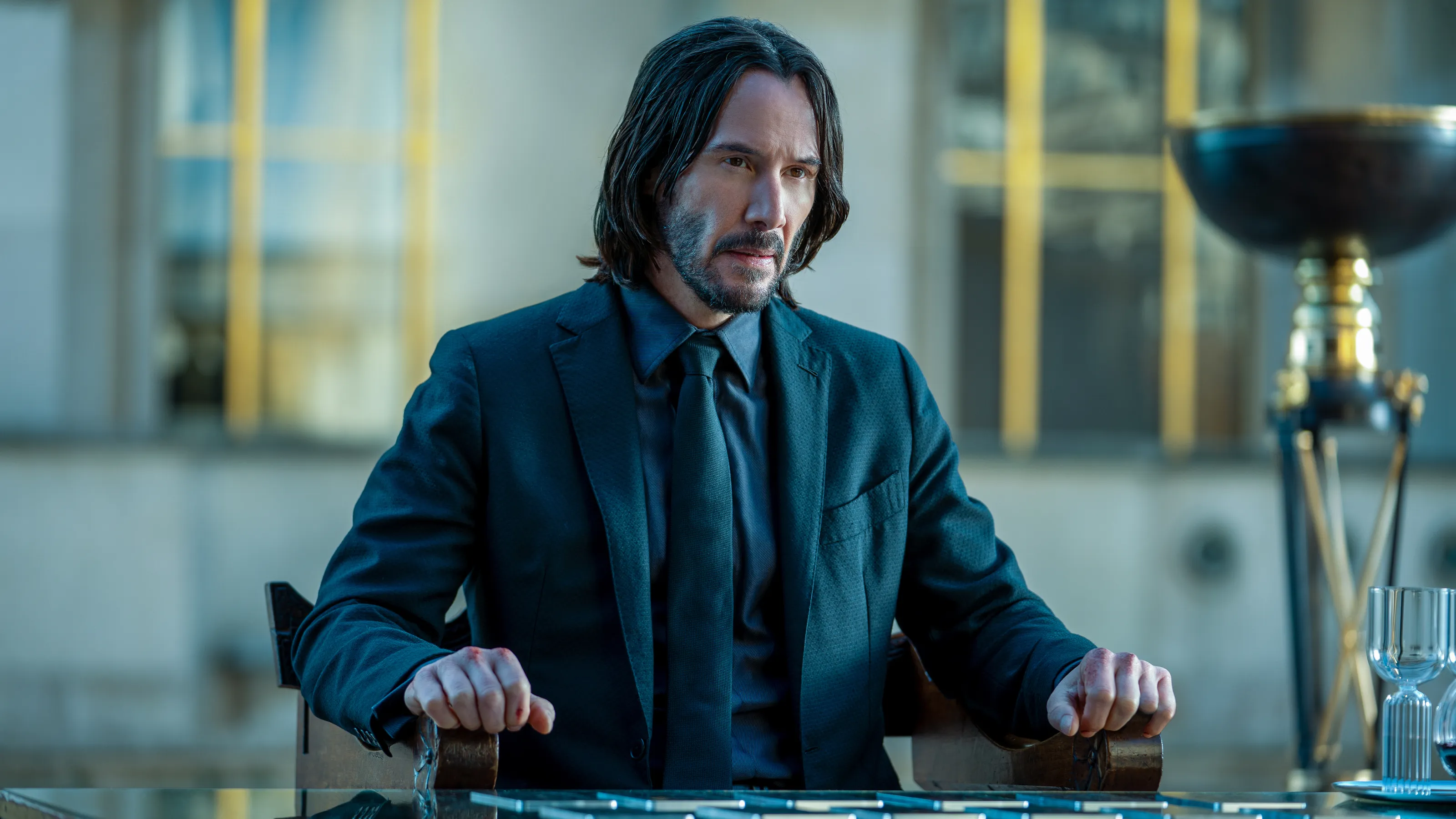
Eva Longoria’s $6 Million Investment Saved ‘John Wick,’ Directors Reveal

Eva Longoria’s timely financial intervention reportedly played a crucial role in the success of the “John Wick” franchise, as revealed by the film’s directors, Chad Stahelski and David Leitch, during an interview for the movie’s 10th anniversary.

The Critical Funding Crisis

In a candid discussion with Business Insider, Stahelski recounted the intense pressure the film faced just days before production was set to shut down due to a significant funding shortfall. “We were less than a week out and we lost almost $6 million on a gap financing,” he explained. All involved, including Keanu Reeves, had invested their own money, but they were still short.

In a desperate move, the Creative Artists Agency (CAA) proposed that several actors finance the remaining $6 million, assuring them they would be the first paid back once the film premiered. Longoria, though unaware of the situation’s severity at the time, stepped in to provide the necessary funds.

A Heroic Rescue

Stahelski noted the narrow timeline: “Literally less than 24 hours before we had to lock the doors on the movie and walk away, [our producer] said, ‘We’ve got the investor, we’ve locked the gap.’” Longoria’s support allowed the production to continue, and the film eventually became a massive success, grossing an impressive $86 million against its estimated $20 million to $30 million budget.

In recognition of her contribution, the directors took Longoria out to lunch in Los Angeles as a gesture of gratitude after the film’s release. Leitch recalled their conversation at an awards event last year, where Longoria reflected on her investment: “She was like, ‘Wow, that was the best money I’ve ever spent.’ It paid back significantly for her.”