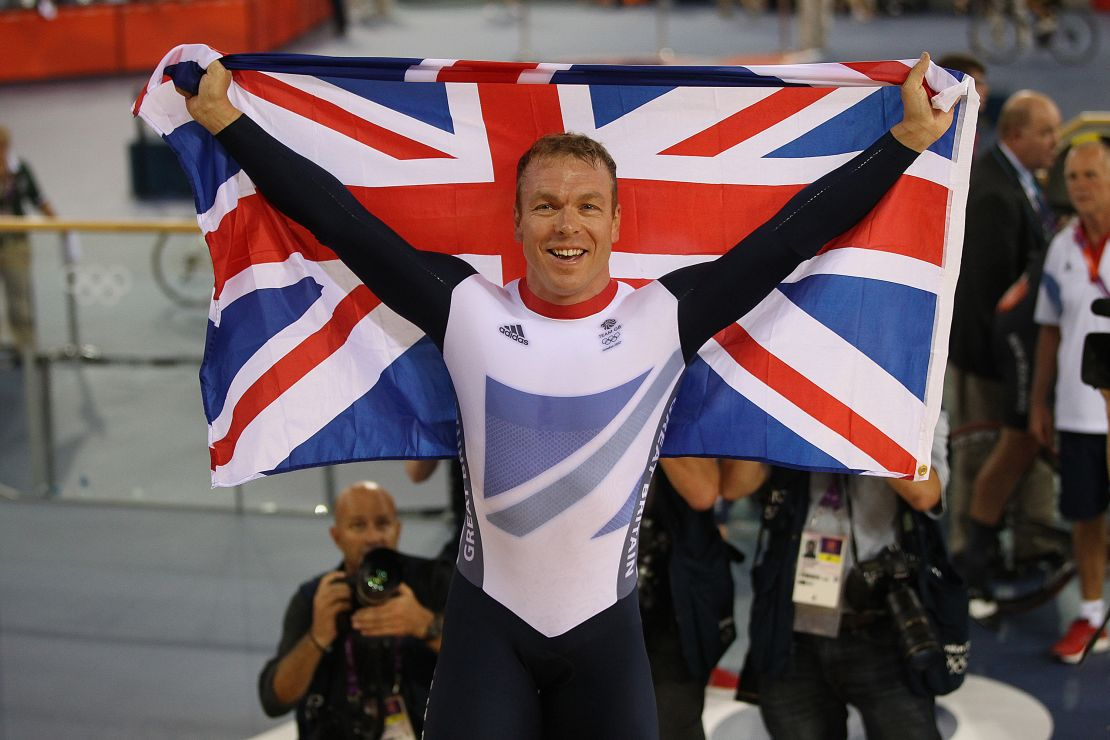
Chris Hoy, Six-Time Olympic Champion, Announces Terminal Cancer Diagnosis

Chris Hoy, one of Britain’s most celebrated Olympians with six gold medals, has revealed he has terminal cancer. The 48-year-old former cyclist shared that he was diagnosed with prostate cancer that has metastasized to his bones, giving him a life expectancy of two to four years. Hoy initially sought medical attention in September 2023 due to shoulder pain, which led to the discovery of multiple tumors across his body, including his shoulder, pelvis, hip, spine, and rib.

Despite the grave diagnosis, Hoy has maintained a positive outlook, emphasizing the importance of appreciating life. “This is bigger than the Olympics. It’s about appreciating life and finding joy,” he told The Sunday Times. Adding to his challenges, his wife Sarra was diagnosed with multiple sclerosis shortly after his own diagnosis.

Hoy, who first gained fame at the Sydney Olympics in 2000, went on to win gold in Athens in 2004 and became a national hero with his triple gold victory in Beijing 2008. He retired after the London 2012 Olympics as the most decorated British Olympian at the time.

In February 2024, Hoy disclosed his cancer diagnosis but kept details private until now. He continues to work as a cycling pundit for the BBC and recently shared an emotional message of gratitude for the overwhelming support from fans and loved ones. Figures across the sports and political world, including Prime Minister Keir Starmer and fellow athletes like Mark Cavendish, have praised Hoy for his resilience and inspirational outlook.
 

Can New CVS CEO David Joyner Overcome the Aetna Challenge?

With CVS Health’s recent leadership transition, David Joyner faces a tough road ahead as the new CEO, following the sudden departure of Karen Lynch. While Joyner’s previous role involved overseeing Caremark, CVS’s pharmacy benefit management (PBM) business, questions arise about whether his experience equips him to tackle the significant challenges facing Aetna, the health insurance division.

Aetna has been struggling with rising medical costs, particularly in its Medicare Advantage plans for seniors, reflecting broader industry issues but more acutely affecting CVS. Joyner’s appointment coincided with the company’s decision to withdraw its 2024 earnings forecast and warn of disappointing third-quarter profits, sending CVS shares down 5%. Over the past year, CVS stock has dropped 24%, lagging far behind the broader market’s gains.

Wall Street analysts and investors have expressed concern over Joyner’s lack of direct experience in health insurance and public company leadership. Andrew Mok, a Barclays analyst, pointed to a “leadership gap at Aetna” that needs urgent attention, echoing the doubts of several others. Aetna’s struggles, including its rising medical services costs, have exacerbated investor worries, with the company paying out 95% of premiums for medical services—well above the target ratio of 80%.

Joyner, however, insists he’s ready for the challenge. In a joint interview with Executive Chairman Roger Farah, who described the board’s selection process as “very thorough,” Joyner defended his qualifications and stressed his commitment to addressing Aetna’s issues. He plans to form a new management team, including leadership for Aetna, which has been without a permanent head since the departure of Brian Kane two months ago. Lynch had been overseeing Aetna during this interim period.

Some analysts remain optimistic about Joyner’s appointment. Lisa Gill from J.P. Morgan recalled his past success in revitalizing Caremark in the early 2000s and praised his direct, candid management style, believing it could prove valuable as CVS navigates through these turbulent times.

CVS’s strategic review also revealed plans to sell off non-core assets and close 271 retail pharmacies as the company seeks to improve efficiency. However, speculation around a potential breakup of CVS’s pharmacy and insurance businesses persists. Farah acknowledged these discussions but affirmed that the company’s leadership believes in the value of keeping the divisions together, focusing instead on executing better.

With his experience and an ambitious agenda, Joyner must now work to stabilize Aetna, rebuild investor confidence, and chart a path forward for CVS in an increasingly competitive healthcare market.


New Political Violence Erupts Across the U.S. as Election Tensions Escalate

As the United States nears its November 2024 election, political violence has surged, exemplifying the increasing tensions between political factions. In York, Pennsylvania, a 74-year-old man was assaulted at a rally supporting Vice President Kamala Harris, while another attendee was racially slurred by the attacker. In northern Michigan, an 81-year-old man putting up a Donald Trump yard sign was struck and injured by an all-terrain vehicle driven by an individual angered by Trump.

These incidents are part of a broader wave of violence in the U.S., with at least 300 cases identified since the January 6, 2021, Capitol attack, 51 of which occurred this year. Experts note that the U.S. is experiencing the largest rise in political violence since the 1970s. These attacks, which range from brawls over political signs to more severe confrontations, have led to two deaths this year—a victim during an assassination attempt on Trump and the shooter himself.

While the most publicized incidents include assassination attempts on Trump and shootings at a Democratic campaign office, Reuters uncovered many other violent acts linked to politically charged issues like election disputes, LGBTQ+ rights, and the Israeli-Palestinian conflict. A growing number of Americans now view violence as an inherent part of political life, according to Nealin Parker of Common Ground USA. Robert Pape, a political violence expert, warns that the upcoming election could ignite further violence in battleground states.

Donald Trump’s rhetoric has stoked this volatile atmosphere, with the former president refusing to rule out the possibility of post-election violence if he loses. Trump’s assertions that any electoral loss would be due to fraud only further inflame tensions. Meanwhile, the Harris campaign has remained silent on these recent violent acts.

July’s attempt on Trump’s life marked one of the most significant recent cases of political violence. The shooter, Thomas Crooks, was killed, and law enforcement heightened security for fear of retaliation. On the day of the attack, another anti-Trump extremist, Joshua Kemppainen from Michigan, went on a rampage, vandalizing vehicles displaying Trump support before injuring an elderly man by running him over with an ATV. Kemppainen later fatally shot himself, following a history of mental health struggles.

Other cases of violence have emerged nationwide. In Massachusetts, a pro-Israel demonstrator shot a pro-Palestinian critic during a rally, while a Michigan man attacked a postal worker delivering pro-Harris campaign material. In North Carolina, a group of white men fired BB guns at Black teenagers after asking if they supported Trump.

The persistence of these incidents underscores the increasing polarization of American politics. As political extremism continues to grow, law enforcement and researchers alike warn of further violence as the election approaches, with citizens divided more deeply than ever before.