Workday Shares Drop as Lukewarm Subscription Forecast Signals Caution in Tech Budgets

Workday Inc. saw its shares fall by 5% in extended trading Thursday after forecasting second-quarter subscription revenue that merely met Wall Street expectations, signaling caution amid weakened client spending and ongoing economic uncertainty in the enterprise software market.

The California-based human capital and financial management software provider projected Q2 subscription revenue of $2.16 billion, aligning with analysts’ consensus but doing little to boost investor confidence. The company also reiterated its full-year guidance of $8.8 billion in subscription revenue for fiscal 2026.

“We remain focused on executing in this uncertain environment,” said CFO Zane Rowe.

Despite this cautious outlook, Workday reported solid Q1 results:

  • Total revenue: $2.24 billion (vs. $2.22 billion expected)

  • Subscription revenue: $2.06 billion (slightly above $2.05 billion consensus)

  • Adjusted EPS: $2.23 per share (beating $2.01 estimate)

In tandem with its earnings release, the company announced a new $1 billion share repurchase program, a move often intended to reassure investors amid stock volatility.

Competitive Landscape and Federal Setback

Workday competes against enterprise giants like Oracle and SAP, both of which boast larger back-office software businesses. Analysts note that increased competition in the HR and finance software market may pressure pricing and margins in the coming quarters.

Adding to its recent headwinds, Workday was stripped of a federal HR platform contract earlier this month by the U.S. Office of Personnel Management. The decision followed criticism that the award process did not seek competitive bids. The canceled contract had been connected to efforts from within the Elon Musk-backed campaign to restructure federal workforce management, which could further dampen Workday’s growth in the public sector.

Analyst Outlook

While the company continues to grow and outperform near-term expectations, its muted forecast reflects broader macroeconomic concerns and signals that even resilient SaaS firms are not immune to tightening tech budgets. Analysts expect Workday to maintain its position among top enterprise software providers but caution that client spending softness and lost contracts may limit upside in the short term.

Trump Hosts $148 Million Meme Coin Dinner, Drawing Global Crypto Elite and Political Backlash

Wealthy foreign investors gathered at Trump National Golf Club near Washington, D.C., on Thursday for a high-profile dinner celebrating holders of the $TRUMP meme coin, a cryptocurrency backed by the Trump family. The event attracted more than 220 guests from around the world and generated an estimated $148 million in meme coin purchases—fueling both significant profits for a select few and fierce criticism from lawmakers and watchdog groups.

As Donald Trump arrived via Marine One, protestors outside the club decried the event with signs reading “Stop crypto corruption” and “America is not for sale.” Inside, top-25 meme coin holders who spent over $111 million combined were granted VIP access, a private cocktail reception, and luxury gifts, including $100,000 Trump-branded tourbillon watches.

Among the attendees was Justin Sun, a China-born crypto billionaire and the top $TRUMP coin holder, whose $18.5 million wallet earned him first place in the coin contest. Sun is also an adviser to World Liberty Financial, the Trump family’s crypto platform, which—along with an affiliated firm—controls 80% of the remaining $TRUMP coin supply and has earned more than $320 million in fees so far.

A menu posted on social media revealed a lavish meal of filet mignon, halibut, and lava cake served on gold-lettered cards. The event culminated in an after-party dubbed “Meme The Night,” hosted by Singapore-based MemeCore. Its co-founder, “Ice,” secured second place with a $16 million wallet.

Crypto Access Meets Political Outrage

Democratic lawmakers condemned the event as a “crypto grift” with opaque attendee lists and potential national security concerns. Senator Elizabeth Warren called the event “an orgy of corruption,” while Senator Chris Murphy raised alarm over anonymous guests like “Ogle,” a masked crypto security expert and contest winner, whose $3.6 million holding earned him 22nd place.

Republicans, meanwhile, were more measured. Senator Cynthia Lummis, a vocal crypto advocate, said the event gave her “pause,” hinting at discomfort over Trump’s expanding digital asset empire, which now includes a crypto exchange, stablecoin, bitcoin mining, and ETFs.

Winners and Losers

While top holders have profited close to $1.5 billion, analytics firms like Inca Digital and Bubblemaps report that 600,000 smaller wallets have lost a total of $3.87 billion, with $117 million in losses occurring after the dinner announcement. Analysts warn of a steep wealth disparity within the token’s community.

As political scrutiny mounts, Democrats are pushing legislation to ban presidents and lawmakers from owning or promoting crypto products. But with Republicans holding congressional majorities, chances of passing such bills remain slim in the near term.

Despite the controversy, Trump appeared confident during his speech:

“The Biden Administration persecuted crypto innovators. We’re bringing them back into the USA where they belong.”

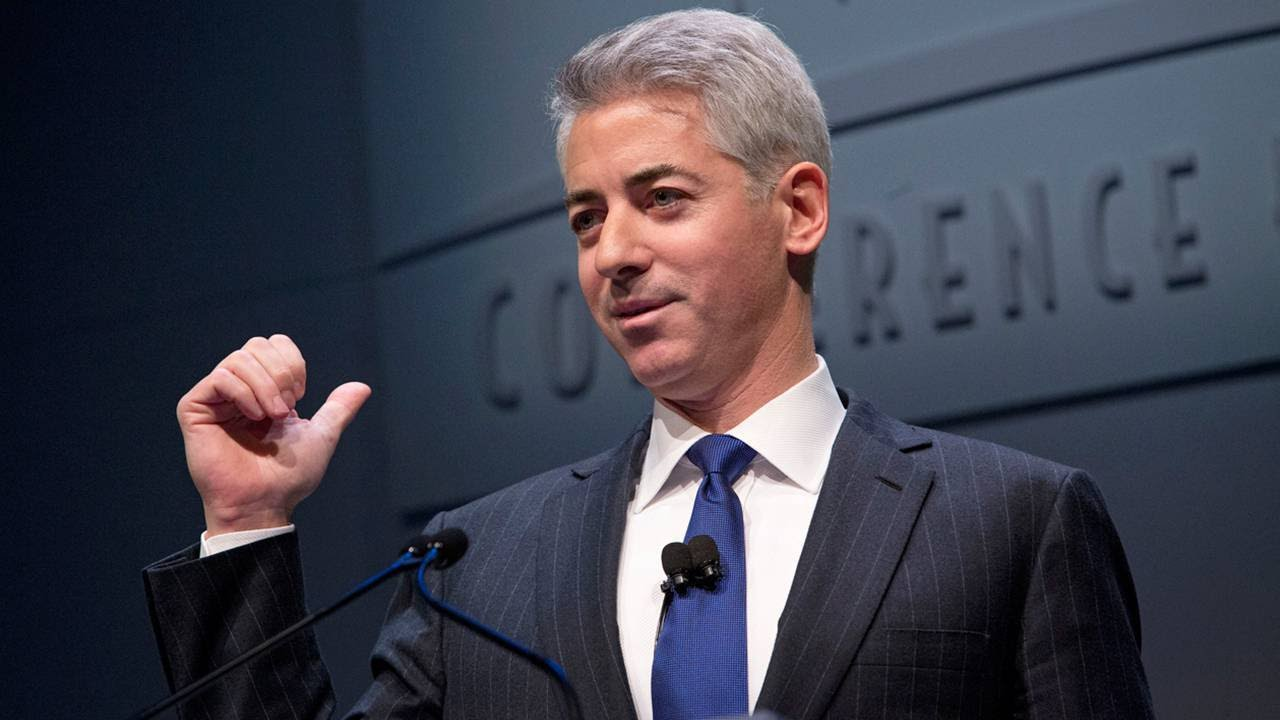
Ackman’s Pershing Square Bets Big on Amazon, Sells Out of Canadian Pacific

Billionaire investor Bill Ackman has added Amazon to his Pershing Square Capital Management portfolio, marking a major move into the e-commerce and cloud giant. The decision comes as Trump-era tariffs appear less damaging than initially feared and Amazon’s valuation offered an attractive entry point after market turbulence in April.


Key Takeaways:

  • Amazon Stake: Pershing Square initiated a new position in Amazon, with Chief Investment Officer Ryan Israel saying the stock became affordable after a tariff-driven market selloff. The hedge fund believes Amazon’s earnings growth remains robust, and CEO Andrew Jassy’s leadership will help expand margins amid strong revenue growth.

  • Tariff Impact Minimal: Ackman’s team downplayed concerns over Trump’s import tariffs, suggesting Amazon’s retail earnings won’t be materially affected, and the cloud division (AWS) can weather any slowdown.

  • Strategic Portfolio Shift: To fund the Amazon investment, Pershing Square exited Canadian Pacific, one of Ackman’s historically profitable holdings. The move was made “with regret,” as Ackman remains bullish on the rail company’s long-term potential.

  • Other Changes:

    • New Positions: Stakes were also added in Hertz and Uber, broadening exposure to transport and mobility sectors.

    • Trims: Positions in Chipotle, Hilton, and Universal Music Group were reduced.

    • Nike Adjustment: Equity holdings in Nike were converted into deep-in-the-money call options, allowing continued exposure with less capital deployed.


Strategic Outlook:

Ackman’s Amazon bet signals growing confidence in tech and e-commerce resilience, particularly as U.S. trade policy evolves and inflation moderates. Meanwhile, the exit from Canadian Pacific—despite long-term optimism—reflects the need to rebalance capital toward higher-growth opportunities.

The move into Uber and Hertz also aligns with trends in urban mobility and travel rebound, while trimming strong performers like Chipotle and Hilton frees up capital amid rising valuations.