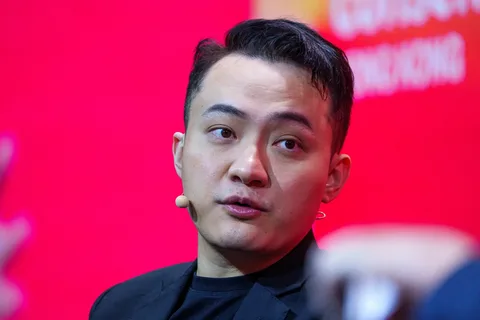
Trump Crypto Ally Justin Sun Says His World Liberty Tokens Were Frozen

Justin Sun, the China-born crypto entrepreneur and major backer of Donald Trump’s World Liberty Financial ($WLFI), said Friday that his tokens tied to the project were “unreasonably frozen.” Sun has invested at least $75 million in WLFI, making him the second-largest known investor after the Trump family, whose stake has already generated hundreds of millions in profits.

Sun did not disclose how many tokens were blocked or who initiated the freeze. Blockchain data from analytics firm Nansen shows that a World Liberty “guardian address” blacklisted a wallet controlled by Sun on Thursday, locking around 545 million WLFI tokens. He had earlier moved 50 million tokens out of that wallet.

World Liberty responded vaguely, saying it does not “seek to blacklist anyone” but will act against “malicious or high-risk activity.” Sun’s firm Tron confirmed that he and the WLFI team were in “active communication.” Despite the dispute, Sun said he planned to buy another $20 million worth of WLFI-related assets, including $10 million in new tokens.

The controversy highlights the tangled business ties between Trump’s political family and crypto ventures. Sun has regularly appeared alongside Eric Trump at crypto conferences, while promoting World Liberty’s projects through his platforms. The Trump family’s involvement in WLFI—at a time when the president is publicly backing crypto—has fueled concerns about conflicts of interest, particularly as some business partners, including Sun, face regulatory scrutiny.

The U.S. SEC still has a civil fraud case pending against Sun, though reports suggest the Trump administration is exploring a settlement. Meanwhile, WLFI’s token value has dropped sharply, sliding from above 30 cents at launch to around 18 cents on Friday.
Salesforce Shares Slide as Weak Outlook Highlights Delayed AI Payoff

Salesforce (CRM.N) shares fell nearly 8% on Thursday after the company issued a disappointing third-quarter revenue forecast, raising investor concerns that returns from its artificial intelligence investments may take longer to materialize.

The company projected revenue between $10.24 billion and $10.29 billion, with the midpoint falling short of analysts’ average estimate of $10.29 billion, according to LSEG data. Despite announcing a $20 billion expansion of its share buyback program, Salesforce’s muted guidance weighed heavily on investor sentiment.

The outlook comes as software companies face mounting pressure to prove that billion-dollar AI investments will deliver meaningful returns, even as customers scale back spending in an uncertain economic environment. Matt Britzman, senior equity analyst at Hargreaves Lansdown, said the guidance gives “bears fresh ammo amid mounting fears that the software sector is ripe for disruption.”

Salesforce has been rapidly integrating AI across its cloud services, including the 2024 launch of Agentforce, an AI-powered agent platform designed to automate workflows and improve margins. However, the company continues to face macroeconomic headwinds. Analysts at Oppenheimer described the growth outlook as “uninspiring,” noting challenges for front-office software suppliers this year.

Shares of Salesforce are down about 24% year-to-date. To strengthen its offerings, the company has returned to acquisitions, including its $8 billion purchase of Informatica in May. Still, Salesforce trades at a forward earnings multiple of 20.96—well below Microsoft’s 31.26 and Oracle’s 30.84—suggesting potential upside.

J.P. Morgan analysts said second-quarter results, which beat revenue expectations, alongside management’s positive commentary, indicate that Salesforce stock may be undervalued compared to peers, leaving room for recovery.

Trump to Host Tech Leaders in First Rose Garden Event After Renovation

U.S. President Donald Trump will host more than two dozen technology and business leaders for a dinner in the newly renovated White House Rose Garden on Thursday, a White House official confirmed. The guest list includes Meta founder Mark Zuckerberg, Apple CEO Tim Cook, Microsoft founder Bill Gates, and OpenAI CEO Sam Altman.

The event underscores Trump’s shifting relationship with Silicon Valley. Once marked by frequent clashes over issues like content moderation and antitrust, the dynamic has changed since his 2024 election victory. Tech executives have since sought closer ties with the administration, aligning with the rollback of diversity and equity initiatives while engaging Trump on artificial intelligence and emerging technologies.

White House spokesman Davis Ingle said, “The president looks forward to welcoming top business, political and tech leaders for this dinner and the many dinners to come on the new, beautiful Rose Garden patio.”

Elon Musk, CEO of Tesla and SpaceX, was not on the invite list, though he said on his social media platform X that he “was invited, but unfortunately could not attend,” adding that a representative would be present. Musk previously split with Trump after serving as an adviser earlier this year.

The Rose Garden renovation, completed in August, replaced the iconic lawn with a stone patio and umbrella-covered tables inspired by Trump’s Mar-a-Lago resort in Florida. The dinner follows a White House event on AI hosted by First Lady Melania Trump earlier in the day.

Other executives expected include Google CEO Sundar Pichai, Oracle CEO Safra Catz, Blue Origin CEO David Limp, Micron Technology CEO Sanjay Mehrotra, OpenAI President Greg Brockman, Microsoft CEO Satya Nadella, Palantir CTO Shyam Sankar, AMD CEO Lisa Su, Sacramento Kings owner Vivek Ranadive, and Meta’s chief AI officer Alexandr Wang.