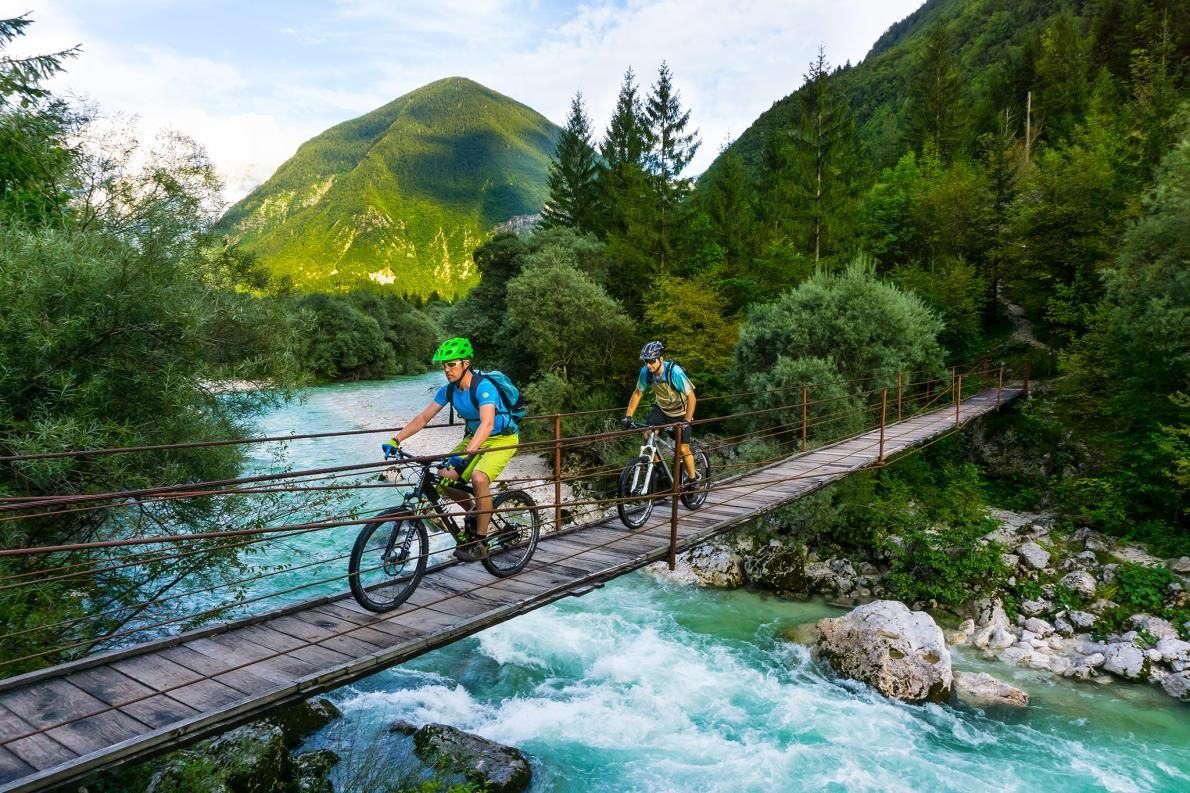
The Trans Dinarica, a new 5,500km cycling route, weaves through the heart of the Balkans, offering a chance to explore some of Europe’s most remote and pristine landscapes. This long-distance trail, launched in July 2024, connects eight countries, including Slovenia, Montenegro, Bosnia and Herzegovina, and Albania, guiding cyclists through rugged national parks, UNESCO World Heritage sites, and culturally rich villages.
The journey begins with a quiet ascent from the asphalt roads of Montenegro, where pastures stretch before you and the sight of a shepherd’s hut is accompanied by the playful barks of two dogs. As the storm clouds gather, the dogs, undeterred, follow the rider through steep gravel roads toward the summit. In Tušinja, a small village, a local man invites the cyclist into his home, offering coffee and rakija. The warmth and hospitality of the village are a stark contrast to the rare sight of a tourist.
Cycling from Podgorica, Montenegro, to Sarajevo, Bosnia and Herzegovina, the Trans Dinarica’s course runs through the Dinaric Alps, which were once a battleground in the 1990s Yugoslav wars. Now, they form a stunningly quiet landscape, largely untouched by the tourism that floods Croatia’s Adriatic coast. The trail not only showcases the natural beauty of the region, such as the Tara River Canyon in Montenegro and Lake Ohrid in Albania, but also highlights the cultural diversity of the area.
One notable example of the region’s unique blend of cultures is the village of Theth in Albania, where, despite the country’s majority Muslim population, the village has preserved its Catholic heritage. The church in Theth, nestled among the soaring peaks of the Accursed Mountains, reflects this deep cultural history, offering a glimpse of the diverse past of the Balkans. Along the route, cyclists encounter a mix of ancient Hellenistic ruins, Ottoman structures, and Orthodox monasteries, each telling a part of the region’s complex story.
The Trans Dinarica was inspired by the Via Dinarica hiking trail, which opened in 2010 and aimed to reconnect people across the borders of the fractured Balkans. The cycling version now offers a chance to explore some of Europe’s most overlooked corners, from remote mountain villages to awe-inspiring natural wonders.
Jan Klavora, CEO of Visit Good Place and a creator of the Trans Dinarica, shared his vision for the trail: “I hope that Trans Dinarica can connect the region in a new way,” he said, recalling his childhood in Yugoslavia when ethnic identities were more fluid. The Trans Dinarica brings together a mosaic of cultures, including Croats, Serbs, Bosniaks, and Albanians, who now live side by side.
The trail covers 5,500km of carefully mapped roads and trails, drawing on a database of 27,000km of cyclable routes. It not only aims to attract international cyclists but also hopes to rejuvenate local economies in depopulated areas. By encouraging tourism and services, the creators hope to give people a reason to stay in these remote areas instead of leaving for better opportunities elsewhere.
However, the creators are mindful of the delicate balance between development and preservation. The planned Vlorë airport in Albania, for example, may bring more tourists but could also strain the fragile environment and local culture. “We want to show that tourism and investment don’t have to ruin the region’s uniqueness,” said Jana Apih, a sustainable tourism expert involved in the project.
The Trans Dinarica showcases the region’s unspoiled nature and its efforts to resist mass tourism. Cyclists experience a serene, intimate journey through the UNESCO-listed Durmitor National Park, where the mountain roads rival the most picturesque passes in the Alps. The route also leads to mountain villages like Tušila in Bosnia and Herzegovina, where cyclists enjoy hearty meals and the warm hospitality of locals.
In the village of Lukomir, on the edge of the Bjelašnica plateau, the trail passes through a landscape dotted with ancient stećci tombstones and shepherds’ cottages. Despite the chilly, mist-filled weather, the village exudes a warmth, with colorful woolen socks and handmade crafts brightening the grey surroundings.
As cyclists continue their journey, they are rewarded with stunning views of Sarajevo, a city where terracotta roofs, mosques, churches, and modern skyscrapers form a patchwork that symbolizes the region’s diversity. “We don’t care about borders,” said Klavora, encapsulating the spirit of the Trans Dinarica. “We don’t care who is Bosniak, Croatian, or Serb. We just want to explore.”