
NASA’s Viking Mission Could Have Eradicated Martian Life During Water Experiments

In 1975, NASA’s Viking program made a groundbreaking achievement when its twin landers successfully touched down on Mars, marking the first American spacecraft to reach the Martian surface. These missions were pivotal in the search for life beyond Earth, as the landers conducted a series of experiments aimed at detecting microbial life on the Red Planet. Over six years, the Viking landers analyzed Martian soil samples, attempting to uncover any signs of life. However, a new and controversial theory suggests that the very experiments designed to detect life may have inadvertently destroyed any potential Martian microbes.

Dirk Schulze-Makuch, an astrobiologist from Technische Universität Berlin, has raised concerns about the methods used during the Viking missions. In a recent commentary in Nature Astronomy, he proposed that the addition of liquid water to Martian soil samples may have been too disruptive for any microbes that might have existed. Mars is known for its extreme dryness, more arid than Earth’s Atacama Desert, and it is hypothesized that any potential life forms on the planet would be specially adapted to extract moisture from salts in the atmosphere. Introducing liquid water, Schulze-Makuch suggests, could have overwhelmed these microbes, leading to their destruction rather than detection.

The Viking program’s assumption that Martian life would require liquid water, similar to life on Earth, may have been a key flaw in its approach. The experiments involved adding water and nutrients to Martian soil and monitoring any metabolic reactions, hoping to find evidence of living organisms. While some initial signs of microbial activity were detected, these results were later dismissed as inconclusive. Schulze-Makuch argues that these reactions could have been evidence of life forms adapted to Mars’ extremely dry environment, but the addition of liquid water may have killed them before they could be properly studied.

To avoid repeating this mistake in future missions, Schulze-Makuch advocates for a different approach to life detection on Mars. Instead of focusing on the presence of liquid water, he proposes a “follow the salts” strategy. This would involve searching for organisms that might thrive in environments where moisture is absorbed from salt compounds, potentially offering a more accurate method of detecting life in Mars’ harsh conditions. By rethinking how we search for life, we may be better prepared to recognize the signs of Martian organisms that have adapted to survive in a radically different environment from Earth.
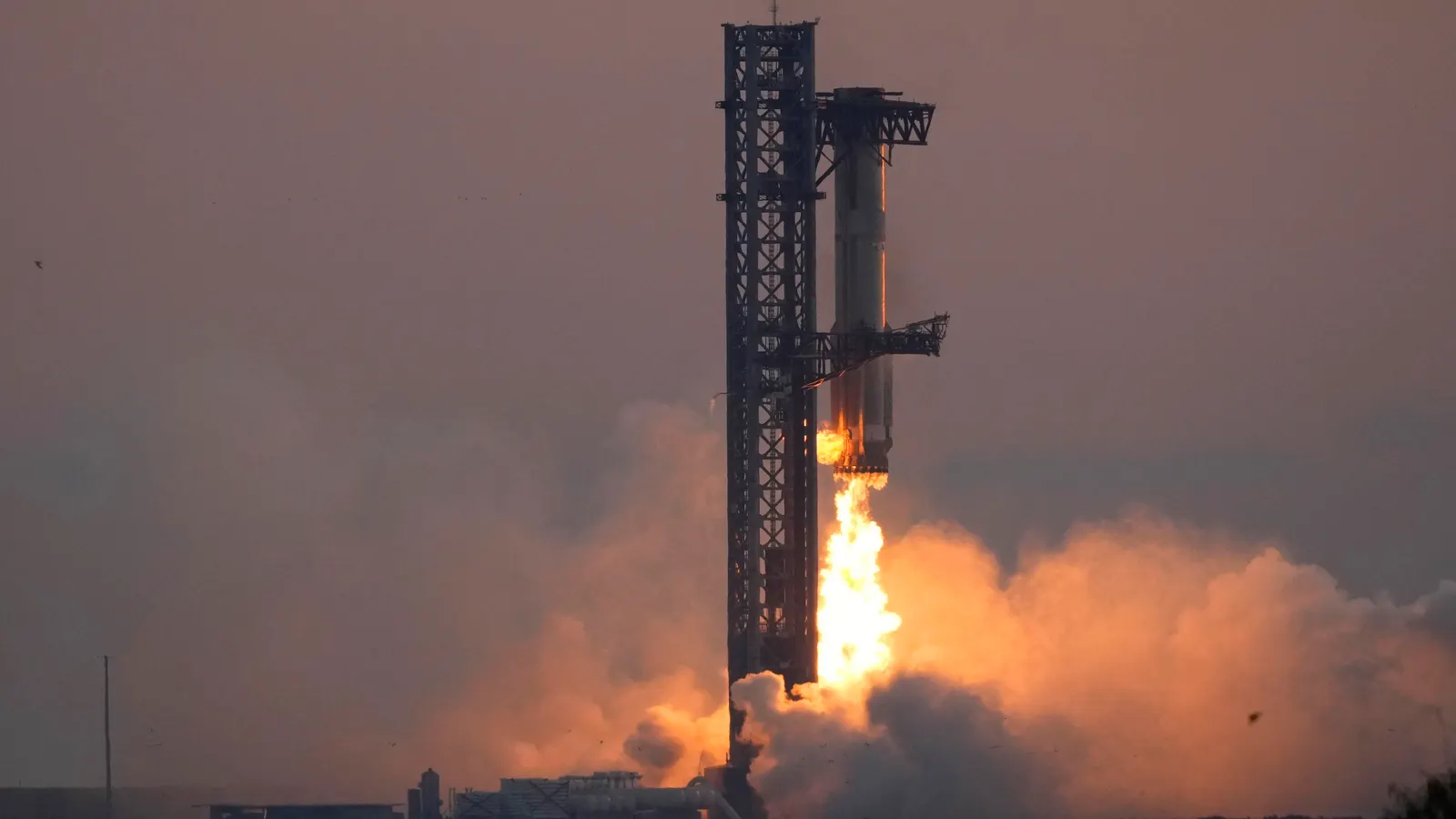
SpaceX Plans to Retry ‘Chopsticks’ Rocket Catch in Upcoming Starship Launch

SpaceX is preparing for the highly anticipated launch of its massive Starship rocket from South Texas, scheduled for Tuesday. This critical test mission, which marks the sixth major trial for the Starship program, is set to draw significant attention. One notable aspect of the launch is the expected visit from President-elect Donald Trump, signaling the importance of this event both for SpaceX and its political connections.

The launch comes at a time when SpaceX CEO Elon Musk is deeply involved in the transition planning for Trump’s second term. Musk has been an influential figure in Trump’s circle since the November 5 election, and his support for the Republican administration has been attributed to concerns over regulations, particularly those affecting the development of the Starship rocket. Musk has voiced concerns about excessive regulation and its impact on the advancement of cutting-edge technologies like Starship, which has been central to SpaceX’s vision for space exploration.

Scheduled for a 30-minute launch window beginning at 4 p.m. local time, the mission will see Starship attempt a bold flight, sending the rocket into space and partially orbiting the Earth. This mission is considered a crucial step in SpaceX’s plans to eventually make Starship a fully reusable spacecraft capable of missions to the Moon, Mars, and beyond. The test will assess various elements of the vehicle’s design and performance, providing invaluable data for future launches.

As SpaceX continues to push the boundaries of space exploration, the Starship launch is expected to be a pivotal moment for both the company and the broader aerospace industry. With political backing from the Trump administration and ongoing technical advancements, SpaceX aims to solidify its position as a leader in the quest for interplanetary travel. The outcome of this mission will likely play a key role in shaping the future of space exploration.

SpaceX Successfully Deploys Optus-X Telecom Satellite from Florida

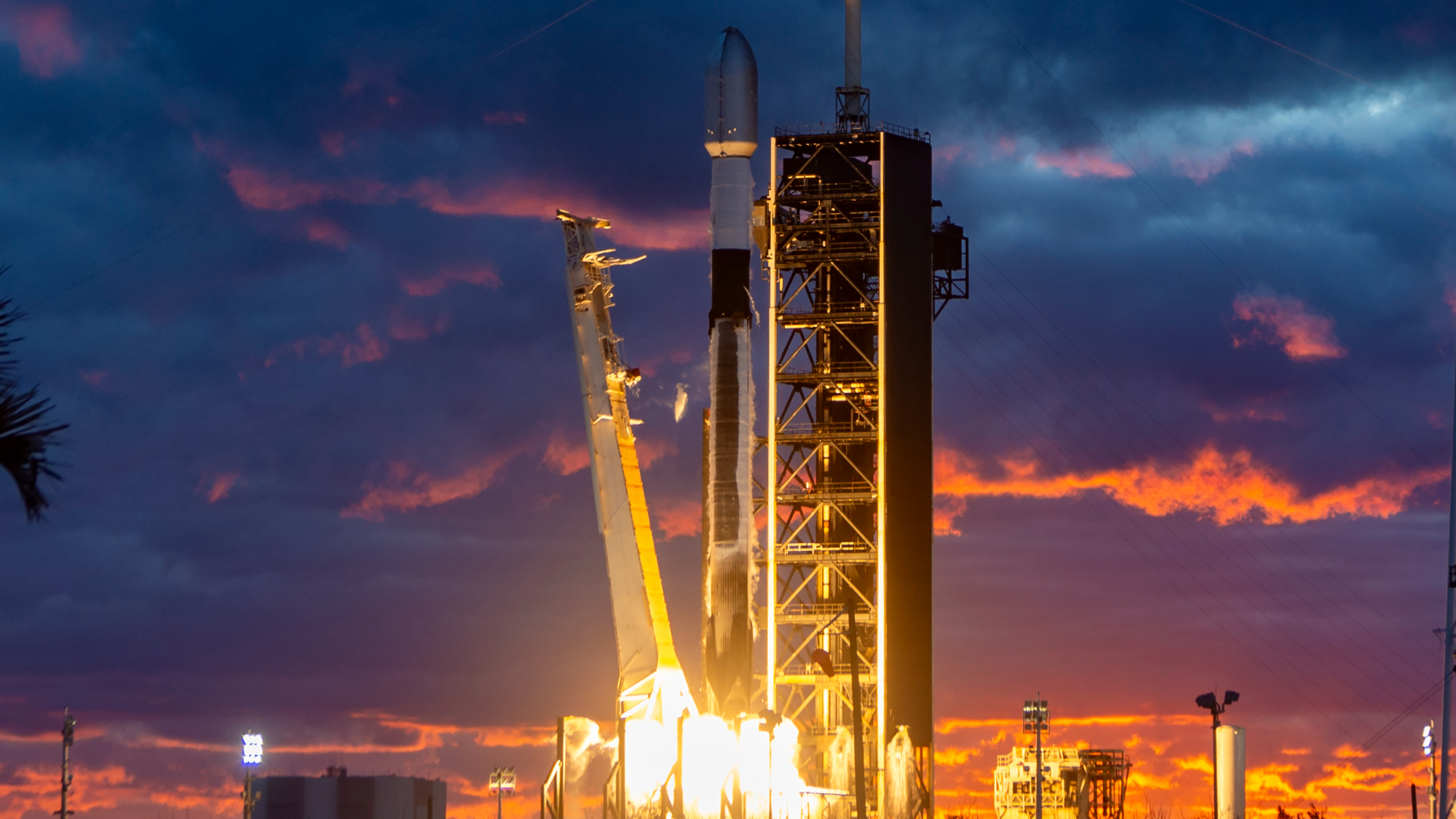
SpaceX Falcon 9 rocket successfully launched the Optus-X telecommunications satellite from NASA’s Kennedy Space Center in Florida. The liftoff, which occurred at 5:28 PM EST, coincided with a stunning sunset, creating a visually spectacular event for onlookers. Commissioned by Australian telecom provider Optus, the satellite aims to enhance communication services once operational in geostationary orbit, a region critical for global telecommunications and broadcasting.

Following the launch, the Falcon 9’s reusable first stage executed a controlled landing on SpaceX’s autonomous droneship, A Shortfall of Gravitas, stationed in the Atlantic Ocean. This achievement marked the 16th successful flight and recovery for this particular booster, underlining SpaceX’s commitment to cost-effective and sustainable spaceflight. Of its 16 missions, nine have been dedicated to deploying Starlink satellites, SpaceX’s own constellation for global internet coverage.

The Optus-X satellite is set to travel to a geostationary orbit approximately 22,236 miles (35,786 kilometers) above the Earth’s equator. The Falcon 9 rocket delivered it to a geosynchronous transfer orbit, an intermediary step from which the satellite will use its onboard propulsion system to reach its final position. Geostationary orbit allows satellites to maintain a fixed position relative to the Earth’s surface, making it ideal for consistent telecommunications coverage.

This launch underscores SpaceX’s role as a leading provider of satellite deployment services for commercial clients around the world. For Optus, the deployment of Optus-X represents a significant step forward in enhancing its network capabilities, enabling improved connectivity for customers in Australia and beyond. With its successful launch and innovative booster recovery, SpaceX continues to push the boundaries of modern rocketry and satellite deployment.