NASA Teams Up with Microsoft to Launch Earth Copilot AI for Easier Earth Data Access

NASA, in partnership with Microsoft, has unveiled Earth Copilot, an AI-powered tool designed to simplify access to complex Earth science data. This innovative chatbot leverages artificial intelligence to interpret and summarise NASA’s vast geospatial datasets, making them easier for the public to understand and utilise. By providing answers to user queries on topics like air quality changes or the environmental effects of natural disasters, Earth Copilot bridges the gap between NASA’s scientific expertise and users who may lack technical knowledge. The tool’s primary aim is to democratise access to data, empowering a broader audience to engage with Earth science insights.

This initiative aligns with NASA’s broader mission to make its scientific resources more widely accessible. Tyler Bryson, Corporate Vice President for Health and Public Sector Industries at Microsoft, highlighted the challenges many users face in navigating NASA’s technical databases. These repositories often require advanced geospatial knowledge to extract meaningful insights. Earth Copilot addresses this issue by harnessing AI to deliver concise, accurate answers within seconds, removing barriers that previously limited access to critical Earth science information.

Currently, Earth Copilot is undergoing rigorous testing by NASA scientists and researchers to ensure its accuracy and reliability. Once validated, the tool will be integrated into NASA’s existing Visualisation, Exploration, and Data Analysis (VEDA) platform. VEDA is already a hub for public access to NASA’s datasets, and Earth Copilot’s capabilities could significantly enhance the platform’s usability, especially for non-expert users seeking quick and straightforward insights from complex data.

By merging cutting-edge AI with NASA’s unparalleled Earth science expertise, Earth Copilot represents a major step forward in data accessibility. The tool not only simplifies the way users interact with scientific data but also supports NASA’s goal of fostering a more informed and engaged global community. Whether for researchers, policymakers, or curious individuals, Earth Copilot has the potential to transform how people explore and understand the dynamic changes happening on our planet.
Scientists Solve the Mystery of the Squirting Cucumber’s Explosive Seed Dispersal

For centuries, the squirting cucumber has fascinated naturalists with its explosive method of seed dispersal. This peculiar plant, scientifically known as Ecballium elaterium, ejects its seeds at astonishing speeds, with some traveling up to 33 feet (10 meters). Researchers have finally uncovered the mechanics behind this rapid and ballistic seed release, solving a mystery that dates back to Ancient Rome.

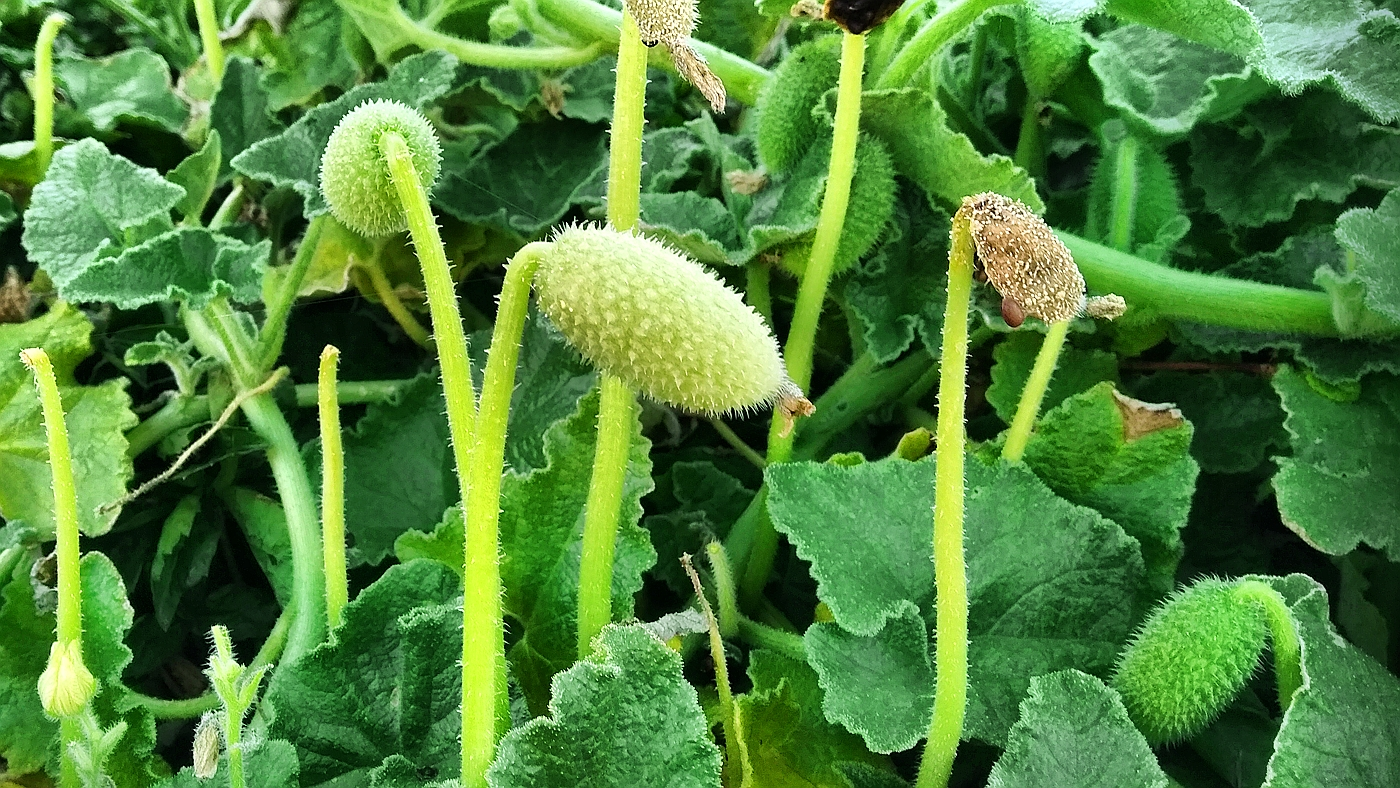
The squirting cucumber, when ripe, measures about 1.6 inches (4 centimeters) long and, upon falling from its stem, launches seeds at speeds of around 45 miles per hour (20 meters per second). The eruption lasts only 30 milliseconds, making it a truly remarkable phenomenon. Though the plant is found in regions across the Mediterranean, northern Africa, and parts of North America, its seed propulsion is unlike that of any other member of the gourd family.

Pliny the Elder, the Roman naturalist, was the first to document the cucumber’s explosive seed release, noting the potential danger it posed to eyes. In the 19th century, scientists suspected that high internal pressure played a role in the eruption, but the specific mechanisms were not well understood—until now.

Using high-speed video, CT scans, time-lapse photography, and 3D modeling, researchers have identified that the squirting mechanism involves more than just a buildup of fluid pressure. The process is shaped by a combination of factors, including physical changes in the plant’s structure leading up to the moment of seed release.

Dr. Angela Hay, a research leader at the Max Planck Institute, emphasized that optimal seed dispersal involves more than just pressure. The study reveals that it’s a trade-off between the buildup of fluid pressure and other physical transformations that allow the fruit to eject its seeds at an optimal angle and distance.

Study coauthor Dr. Derek Moulton, a mathematics professor at the University of Oxford, was introduced to the squirting cucumber in 2022 by Dr. Chris Thorogood, a botanist. After observing the cucumbers in action, the researchers used advanced imaging techniques to capture the seed launches in detail. Moulton described how, when ripe, even a gentle touch on the fruit could trigger the explosive release.

The research team’s detailed study showed that, prior to the explosion, the fruit swelled with fluid, which also thickened the stem, causing it to stiffen and tilt the fruit to an angle of about 45 degrees. This angle, rather than a vertical launch, is ideal for ejecting seeds over a greater distance. Furthermore, as the fruit detached from the stem, the stem’s contraction caused the fruit to spin, creating a wider dispersal arc for the seeds.

This complex process ensures that the seeds are not only launched far but are also spread across a broader area, improving the chances that some will successfully germinate.

Dr. Hay remarked that studying outliers like the squirting cucumber can provide valuable insights into plant behavior that more conventional models may not reveal. The discovery also highlights that plants can perform extraordinary feats, challenging the notion that they are passive organisms.

Moulton expressed his satisfaction with the project, saying, “How many people have ever associated cucumbers with rapid motion? It’s been fascinating to uncover the mechanism behind this explosive cucumber.”


Voyager 2’s Uranus Flyby Reveals Unusual Magnetic Field Anomaly

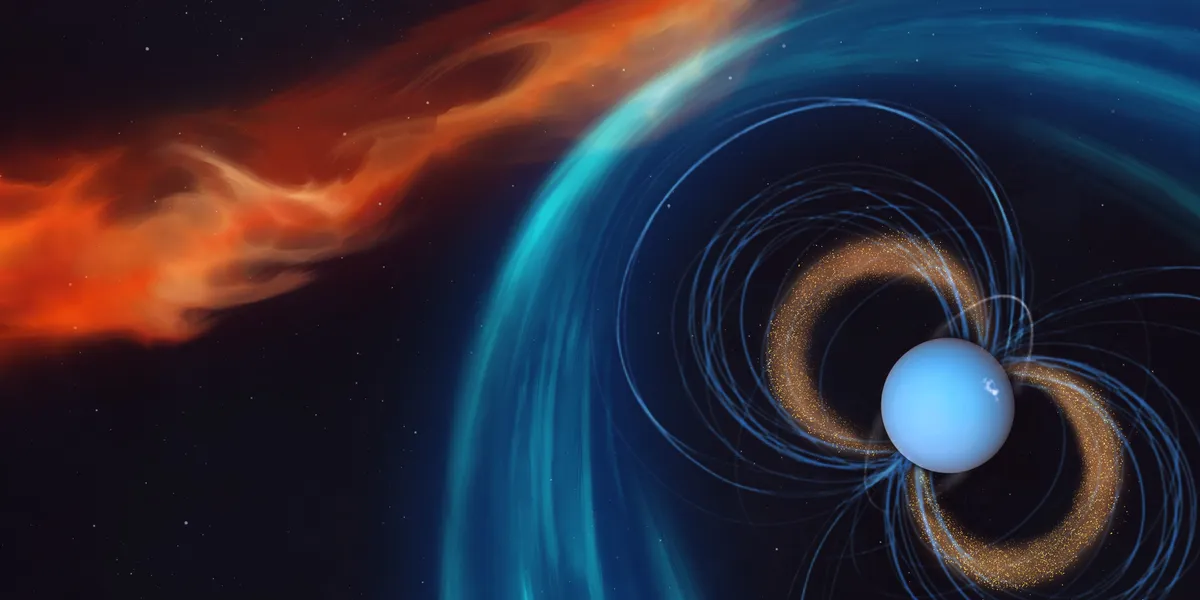
A recent reanalysis of data from NASA’s Voyager 2 spacecraft, collected during its 1986 flyby of Uranus, has uncovered new details about the planet’s highly unusual magnetosphere. Published on November 11 in Nature Astronomy, the study reveals that a rare solar wind event caused Uranus’s magnetic field to undergo significant distortion. The findings highlight the unique behavior of Uranus’s magnetosphere, which differs dramatically from those of other planets in the solar system, offering new perspectives on planetary magnetic fields and their interactions with solar activity.

According to Jamie Jasinski, lead author of the study and planetary scientist at NASA’s Jet Propulsion Laboratory, Voyager 2’s arrival at Uranus coincided with an intense blast of solar wind, an event occurring near the planet only about 4% of the time. This rare interaction compressed Uranus’s magnetosphere, revealing its atypical structure and dynamics. Jasinski noted that this timing was crucial; had Voyager 2 arrived a week earlier or later, it might have missed these extraordinary conditions, potentially leading to a very different understanding of Uranus’s magnetic behavior.

Unlike Earth’s relatively stable and well-aligned magnetic field, Uranus’s magnetosphere is shaped by its extreme axial tilt of 98 degrees and an off-center magnetic axis. These factors create a unique “open-closed” magnetic process, where the magnetosphere alternates between states in response to solar wind fluctuations. This cyclical opening and closing make Uranus’s magnetic environment one of the most dynamic in the solar system. Voyager 2’s measurements captured this variability, revealing a magnetosphere that behaves unpredictably, influenced by both the planet’s rotation and external solar forces.

The study sheds light on how Uranus’s unusual magnetic field could impact future exploration of the ice giant. Understanding the planet’s magnetic dynamics will be crucial for future missions, especially for studying its interactions with the solar wind and its effect on Uranus’s atmosphere and moons. This research not only advances our knowledge of Uranus but also contributes to a broader understanding of magnetic fields across the solar system, highlighting the diversity and complexity of planetary environments.