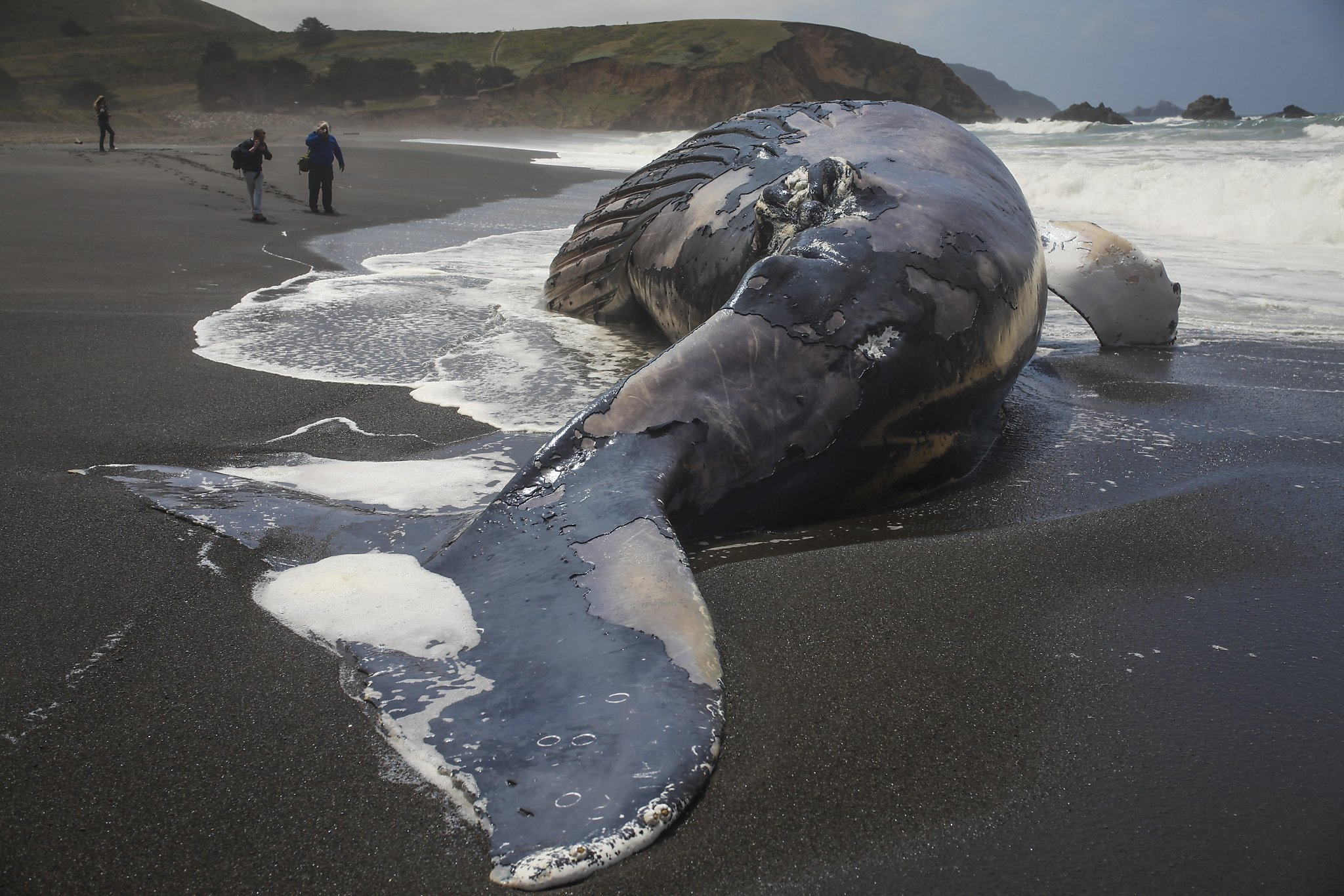
Life-Sized ‘Dead Whale’ Draws Thousands to Caspian Sea to Raise Climate Awareness at COP29

A massive, 52-foot, hyper-realistic model of a sperm whale has appeared on the shores of the Caspian Sea, near Baku, Azerbaijan, emitting a rancid smell that has drawn thousands of curious onlookers. Although sperm whales don’t inhabit the Caspian Sea, this replica has sparked intense reactions and conversations among residents and visitors.

The whale, crafted by Captain Boomer, a Belgian collective of artists and scientists, is part of an awareness campaign to draw attention to ecological issues and climate change. Using molds taken from real whales and the added effect of rotting fish nearby, the installation replicates the appearance and smell of a beached whale, immersing people in a startling reminder of environmental degradation.

Captain Boomer has exhibited the model in cities across Europe and Australia for over a decade. This time, they have brought it to Baku in coordination with COP29, a United Nations climate summit addressing global climate change challenges. The collective’s intent is to confront people with the tangible impact of environmental crises, making them reflect on humanity’s relationship with nature. “People feel that their bond with nature is disturbed,” said Bart Van Peel, a Captain Boomer representative.

After a two-week journey by truck from Belgium through Europe, Turkey, and Georgia, the whale arrived in Baku with the cooperation of Azerbaijani authorities and local environmental activists, including Adnan Hussein of the FINS initiative, which aims to protect marine species.

In addition to the whale, the installation includes a street theater performance, where actors portray scientists examining the whale and speculating on its “death.” These fictional stories, sometimes attributing the whale’s presence to disrupted migration routes due to climate change, create a narrative that merges fact with fiction, provoking viewers to think deeply about the ecological effects of climate disruption.

With oceans warming, marine life, including whales, face challenges like altered food sources and disrupted migration routes. These conditions increase their vulnerability to human activities like fishing and shipping. Through this installation, Captain Boomer seeks to capture these challenges symbolically, emphasizing the urgency of climate action.

Since the exhibit’s debut, thousands have visited, some staying for extended periods, visibly moved by the sight. Van Peel reflects on the collective experience around the whale, describing it as a “gesture of a beast coming from another element and throwing itself at our feet, saying: ‘Look, I can’t anymore.’” He hopes the exhibit serves as a powerful question for those who experience it: “What are you going to do?”

Rising Pancreatic Cancer Cases in Under-50 Adults Highlight Low Awareness Levels

A recent survey conducted by The Ohio State University Comprehensive Cancer Center—Arthur G. James Cancer Hospital and Richard J. Solove Research Institute (OSUCCC—James) has revealed a troubling gap in awareness about pancreatic cancer among adults under 50. Despite a rising number of pancreatic cancer diagnoses in younger individuals, the survey found that more than half of the respondents failed to recognize the early warning signs of the disease. Furthermore, about one-third mistakenly believed that pancreatic cancer only affected older adults. This lack of awareness extends to preventive measures as well, with many unaware of how lifestyle changes could reduce the risk of developing this deadly cancer.

Rising Diagnoses in People Under 50 Spark Concerns

The increase in pancreatic cancer diagnoses among younger individuals has raised alarms among health experts. Dr. Zobeida Cruz-Monserrate, co-leader of the Molecular Carcinogenesis and Chemoprevention Programme at OSUCCC—James, pointed out that pancreatic cancer rates in people under 50 have been climbing by about 1% annually. This shift in the age demographics of the disease is both unusual and concerning, as pancreatic cancer is notorious for being diagnosed at advanced stages, when treatment options are far less effective. The lack of early detection methods contributes to the grim prognosis associated with the disease.

Factors Influencing Pancreatic Cancer Risk

Genetics account for approximately 10% of pancreatic cancer cases, but lifestyle choices play a much larger role in determining an individual’s risk. According to the American Cancer Society, factors such as obesity significantly increase one’s lifetime risk of pancreatic cancer, with obesity linked to a 20% increase in risk. Dr. Cruz-Monserrate stressed that maintaining a healthy weight, staying physically active, and moderating alcohol consumption are key lifestyle adjustments that can not only lower the risk of pancreatic cancer but also improve overall health. These preventive measures offer a practical approach to combating the rising threat of the disease.

The findings from this survey underscore the urgent need for increased awareness and education on pancreatic cancer, particularly among younger adults. Public health initiatives must focus on the importance of recognizing symptoms early and promoting healthy lifestyle choices. With more attention on prevention and early detection, the burden of pancreatic cancer could be reduced, potentially saving lives in future generations.

Hong Kong’s Port Island Yields First Dinosaur Fossils, Offering Glimpse into Ancient Past

In a groundbreaking discovery for Hong Kong, scientists have uncovered the city’s first-ever dinosaur fossils on Port Island. Preliminary analysis of the bones suggests they likely belonged to a large dinosaur from the Cretaceous period, which spanned from 145 to 66 million years ago. While further research is required to pinpoint the exact species, this find represents a significant step in Hong Kong’s growing contribution to the field of paleontology, offering a glimpse into the ancient history of the region.

Discovery at Port Island: Hong Kong’s Geological Treasure

The fossils were discovered in a UNESCO-recognized geopark located on Port Island, a site known for its rich geological history. The bones were found scattered and weathered, hinting at a complex history of environmental exposure and erosion. Researchers believe the remains were originally buried beneath sediment layers, only to be exposed by natural forces before being reburied. Dr. Michael Pittman, a dinosaur expert and Assistant Professor at the Chinese University of Hong Kong, emphasized the rarity and significance of this discovery, noting that locating dinosaur fossils is a difficult task due to the specific geological conditions required. He pointed out that such finds are only possible when the right combination of rock formations from the appropriate time periods is present, a rare occurrence in Hong Kong.

An Important Milestone in Hong Kong’s Fossil Record

This discovery marks an important milestone in Hong Kong’s fossil record, as it is the first confirmed dinosaur find in the region. While Hong Kong has previously yielded fossils of prehistoric marine life, such as ostracods and ammonites dating back nearly 400 million years, dinosaur remains had never been documented until now. Officials are optimistic about the potential for further discoveries, given that the geological layers of Port Island share similarities with those in Guangdong, an area that has produced extensive dinosaur fossils. This connection opens the possibility for more fossil finds in the future, potentially shedding light on Hong Kong’s ancient past.

As the research continues, scientists are excited about the potential implications of the discovery, not just for Hong Kong but for the broader understanding of dinosaur distribution and evolution. The fossilized remains offer a rare opportunity to study a part of the Earth’s history that was previously unknown in this region, and may eventually lead to new insights into the ancient ecosystems that once thrived here. This find also highlights the growing importance of Hong Kong as a site for geological research and paleontological exploration.