Northern Taurid Meteor Shower Peaks, Offering Chance to See Brilliant Fireballs

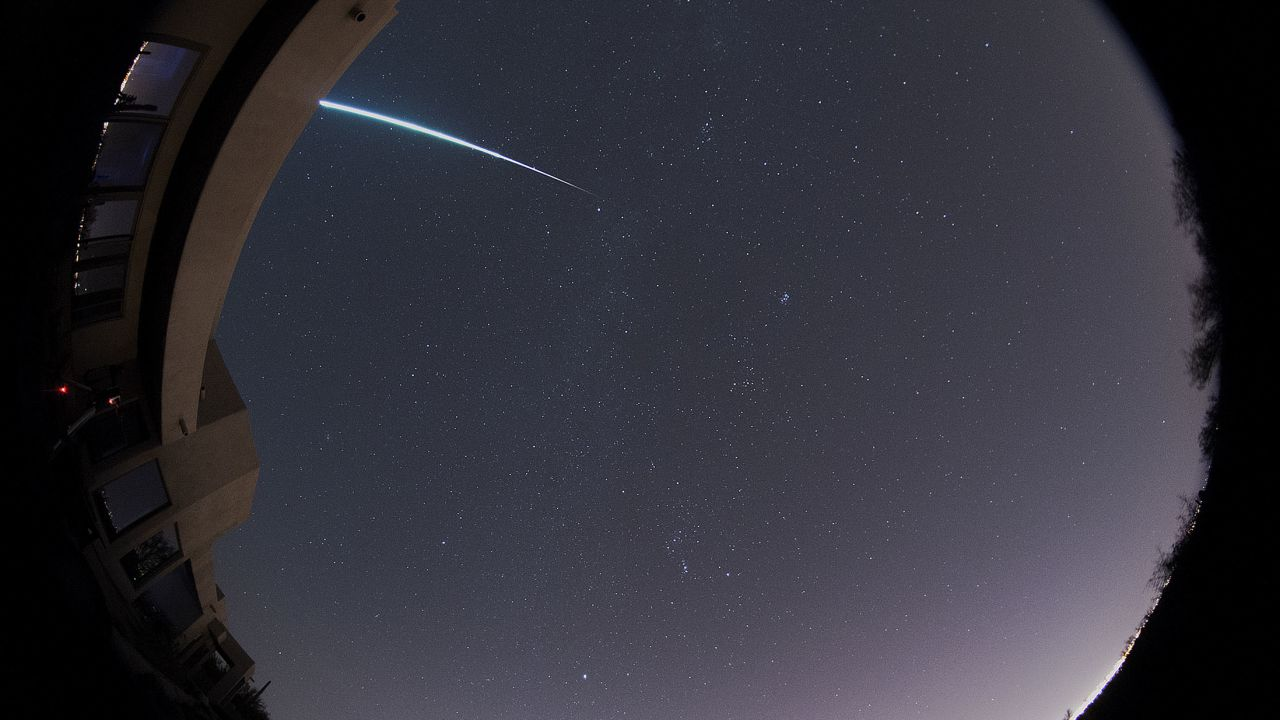
Sky-watchers have another opportunity to view dazzling fireballs as the Northern Taurid meteor shower reaches its peak. The event, which began in mid-October, will be most visible from late Monday night into Tuesday, with the best time for sightings expected after midnight, according to NASA.

The Northern Taurids radiate from the Taurus constellation and are visible worldwide, except in Antarctica, noted Dr. Shannon Schmoll, director of Abrams Planetarium at Michigan State University. However, a 79% full moon may make it difficult to spot meteors in the earlier evening hours, the American Meteor Society (AMS) cautioned. Schmoll advises waiting until the moon is closer to setting for a clearer view, suggesting viewers find a dark area, get comfortable, and remain patient.

The Northern Taurids are generated by debris from Comet Encke, which completes a full orbit around the sun in just 3.3 years—the shortest known cometary orbit. Unlike major meteor showers, the Northern Taurids produce fewer meteors (around five per hour) but offer an elevated chance to witness spectacular fireballs. These larger meteors, sometimes as bright as Venus, can create striking visual trails that linger after the meteor has passed, known as “trains” or smoke trails.

Schmoll encourages viewers to take in the celestial display, noting that meteor showers help foster a connection with the natural world. Beyond their visual appeal, these showers offer astronomers and enthusiasts new insights into our solar system’s history and formation.

The Northern Taurids will remain active until December 2, providing continued chances to catch fireballs lighting up the night sky.

Upcoming Celestial Events

  • Meteor Showers:
    • Leonids: November 16-17
    • Geminids: December 12-13
    • Ursids: December 21-22
  • Full Moons:
    • Beaver Moon (Supermoon): November 15
    • Cold Moon: December 15

China’s Birth Rate Crisis: Limited Incentives Amid Growing Challenges

China’s recent initiatives to increase birth rates have done little to address the underlying causes of the country’s declining birth rates, according to analysts. Despite lifting the one-child policy nearly a decade ago, birth rates remain at historic lows. In 2022, China recorded only 9.02 million births, a record low, and new marriage registrations fell by 25% year-on-year in the third quarter, setting a trajectory for the lowest figures since 1979.

China’s pro-natal policies thus far focus on easing family planning but have yet to spark the desired “birth spurt.” Lauren Johnston, associate professor at the University of Sydney, explains that these policies are designed more to “support families” rather than boost birth rates significantly. Some recent measures include extending maternity leave from 98 to 158 days and offering subsidies for families with children under age 3. However, Johnston points out that these policies mark “a small step in a long-run agenda.”

The influence of China’s former one-child policy still lingers, shaping young people’s attitudes toward family planning and limiting birth rates. Harry Murphy Cruise, economist at Moody’s Analytics, highlights a “mental hangover” from the policy that has reshaped family expectations. Combined with economic uncertainty and a slowed job market, many young adults feel hesitant to start families. China’s youth unemployment rate reached a record high of 18.8% in August, indicating the financial pressures that further dissuade young couples from having children.

China’s total fertility rate in 2022 stood at 1.2 births per woman, far below the U.S. rate of 1.7. Forecasts from the United Nations predict that by 2100, China could see its population halve, marking the steepest demographic decline globally. The nation’s share of world births is expected to decrease to 3% by 2100 from 8% in 2021, according to Austin Schumacher of the University of Washington. Even with innovations in pro-natal policies, Schumacher suggests such measures may not significantly reverse this trend.

Income stability and the affordability of raising children are major concerns. China’s economy has slowed in recent years, compounded by an ongoing real estate slump and regulatory crackdowns on various sectors that have weakened job growth for young workers. Economist Sheana Yue from Oxford Economics argues that meaningful measures to boost incomes and reduce household costs would significantly influence family planning decisions. Efforts by Chinese health authorities to encourage employers to support extended maternity leave are also underway, yet more comprehensive policies may be needed to inspire real confidence.

Urbanization adds another layer to the problem. About 65% of China’s population lives in cities, a notable increase from 19% in 1980. For many in China’s urban centers, long work hours and a high cost of living discourage marriage and childbearing, weakening the impact of any current incentives. Darren Tay, head of APAC country risk at BMI, notes that urban lifestyles and “hectic work schedules” often reduce the likelihood of starting families, even with incentives in place.

China’s approach to pro-natal policies has faced criticism for lack of meaningful incentives. For instance, there have been reports of local social workers calling women to inquire about their pregnancy status, potentially infringing on privacy. The government has also tasked local authorities with setting up public childcare centers and relaxing housing loan limits for larger families. Yet, as Tianchen Xu from the Economic Intelligence Unit points out, the success of these policies varies greatly, dependent on the financial capacity and commitment of each local authority.

Looking forward, Nomura economists predict that China may announce significant investments of up to 500 billion yuan ($70 billion) annually to encourage births during a parliamentary session in March. However, analysts argue that to reverse the trend, stronger, more direct financial incentives—especially subsidies and housing benefits—are essential. Without significant changes, China’s demographic crisis could deepen, impacting its future workforce and economic growth.

 

Indian Scientists Unveil Discovery of Giant Exoplanet, Five Times the Size of Earth

Indian scientists have made a groundbreaking discovery with the identification of an exoplanet named TOI-6651b, which is five times the size of Earth and significantly more massive. Orbiting a Sun-like star, TOI-6651b has a mass roughly 60 times that of Earth and a radius five times larger, making it an exceptional find in the field of exoplanet research. This discovery marks the fourth exoplanet found by India’s Physical Research Laboratory (PRL), highlighting the country’s growing expertise in space exploration and scientific research.

TOI-6651b resides in an area known as the “Neptunian desert,” a region where few planets of such mass are typically found. The planet orbits its host star, TOI-6651, in a remarkably short period—just over five Earth days—making its “year” a mere fraction of an Earth month. Its orbit is slightly elliptical, distinguishing it from other gas giants that typically follow more circular paths. The star it orbits is a G-type sub-giant, slightly larger and warmer than our Sun, with a surface temperature of around 5940 K.

The composition and structure of TOI-6651b offer fascinating insights into planetary formation. Using the advanced PARAS-2 spectrograph, scientists from PRL have determined that the planet is predominantly made of rocky, iron-rich materials, making up about 87% of its mass. The planet’s outer layer consists of lighter elements like hydrogen and helium, and its high density suggests that it might have gone through unique evolutionary processes, such as tidal heating or atmospheric loss. These characteristics make TOI-6651b an important subject of study for understanding how massive, dense exoplanets form and evolve.

This discovery opens new doors for further research into planetary science, especially in studying the formation of large, dense exoplanets. The unusual composition of TOI-6651b provides a unique opportunity for scientists to examine how such planets develop in different environments. As more discoveries like this are made, our understanding of exoplanetary systems and the potential for other worlds will continue to expand, offering exciting possibilities for future space exploration.