Africa’s Slow Divide May Pave the Way for Earth’s Sixth Ocean

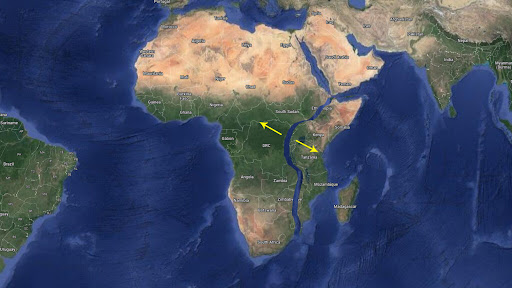
Africa’s landmass is undergoing a slow but significant split, driven by tectonic forces that could eventually lead to the creation of a new ocean. Scientists estimate that in about 50 million years, the ongoing geological activity will have widened the gap enough to allow seawater to flood in, forming what could be Earth’s sixth ocean. This gradual process mirrors the ancient geological shifts that have shaped the planet’s continents, such as the break-up of Pangea around 230 million years ago. Fossil evidence, such as the discovery of Cynognathus, a prehistoric reptile found in both Africa and South America, supports the idea that these continents were once part of a single landmass before splitting apart.

At the heart of this tectonic phenomenon is the East African Rift System (EARS), a vast network of faults running through countries like Kenya, Tanzania, and Ethiopia. The rift, which has been active for millions of years, marks the boundary between two sections of Africa’s tectonic plate—the Nubian plate to the west and the Somalian plate to the east. Over the last 25 million years, this rift has been widening, and the forces driving this split show no signs of slowing. As the land continues to separate, scientists predict that eventually, water will rush in, creating a body of water that could become an ocean.

The scientific community is closely monitoring these geological changes to better understand how the Earth’s crust is evolving. Geologist David Adede notes that the East African Rift has a long history of tectonic and volcanic activity, which continues to reshape the landscape. While the visible movement of the rift may seem slow, deeper shifts within the Earth’s crust are creating weak points that could eventually result in major geological events. However, there is some debate about the specific causes of these developments. Researcher Stephen Hicks suggests that a notable crack observed in Kenya may be more due to recent soil erosion caused by rainfall rather than tectonic forces.

Meanwhile, geologist Lucía Pérez Díaz offers a different perspective, suggesting that the crack may indeed be related to the fault lines in the rift. However, she stresses that further study is needed to confirm the precise mechanism driving this geological activity. Despite the uncertainties, one thing is clear: Africa’s tectonic split is an ongoing process, and its eventual consequences could fundamentally reshape the continent, with the formation of a new ocean standing as one of the most remarkable outcomes of this natural evolution.
CT Scans Reveal Mysteries of Ancient Egyptian Mummies at Field Museum

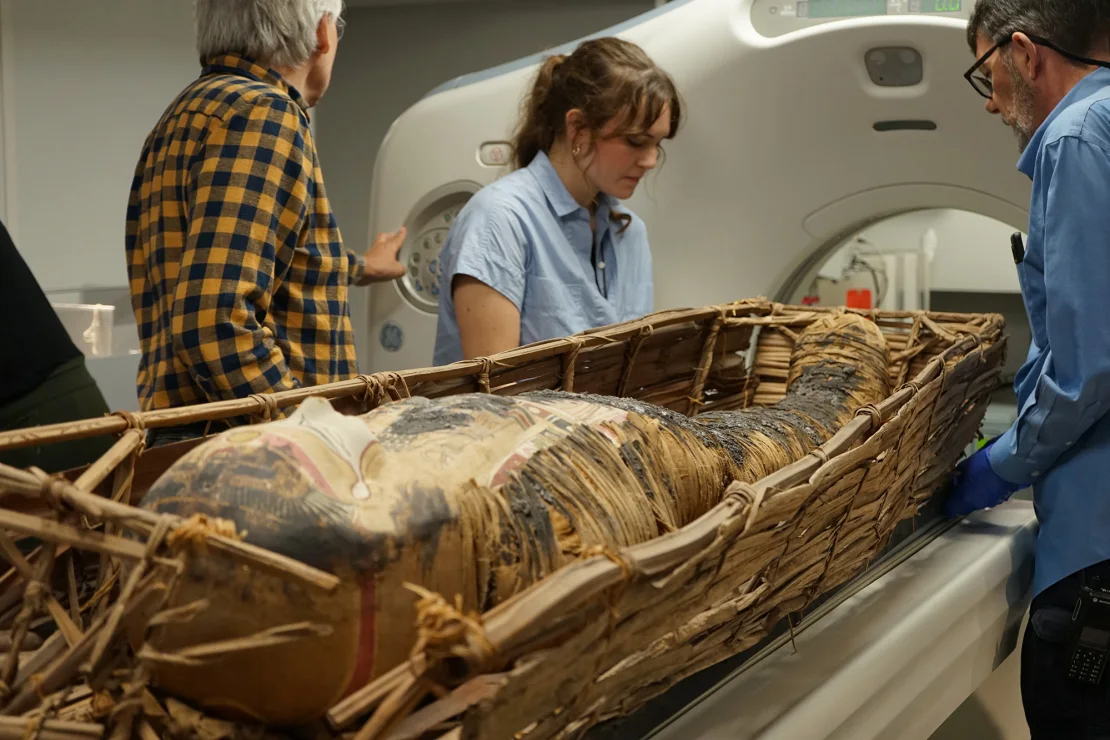
Scientists at Chicago’s Field Museum of Natural History recently used advanced CT scanning to study 26 Egyptian mummies without disturbing a single linen wrap. In a four-day procedure, museum staff transported the mummies on specially designed carts to a mobile CT scanner, capturing thousands of X-rays to produce detailed 3D images of each skeleton and artifact.

The scans are uncovering insights into Egyptian mortuary practices from over 3,000 years ago, such as the steps embalmers took to prepare bodies for the afterlife. Egyptians saw the body as essential for the soul’s journey, drying the corpse with salt and wrapping it in protective linen. Some embalmers even packed removed organs back into the body with wax statues representing the gods that safeguarded these organs.

The mummies offer individual glimpses into history. Lady Chenet-aa, a high-status woman from the 22nd Dynasty, received an elaborate burial, with prosthetic eyes placed in her sockets and her trachea filled to keep her neck intact. Her coffin, or cartonnage, was softened and molded around her upright-standing body before being laced shut. Harwa, another mummy, was likely a doorkeeper for a granary. Though his high status exempted him from hard labor, wear on his teeth suggests a life of sand-laden food in the desert.

One coffin, originally crafted for a priest, revealed a teenage boy inside, reflecting the reuse of coffins for those who could not afford personalized burial options.

These scans underscore a new respect in handling ancient remains. Museums now avoid unwrapping mummies, preserving them for further study and honoring their history. Conversations with Egyptian representatives about returning the mummies resulted in a request to keep them on display in Chicago, where visitors learn their stories. By sharing these narratives, the Field Museum aims to treat mummified remains not as art but as a dignified part of humanity’s history.


Ancient Embracing Figures in Pompeii Reveal New Truths Through DNA Analysis

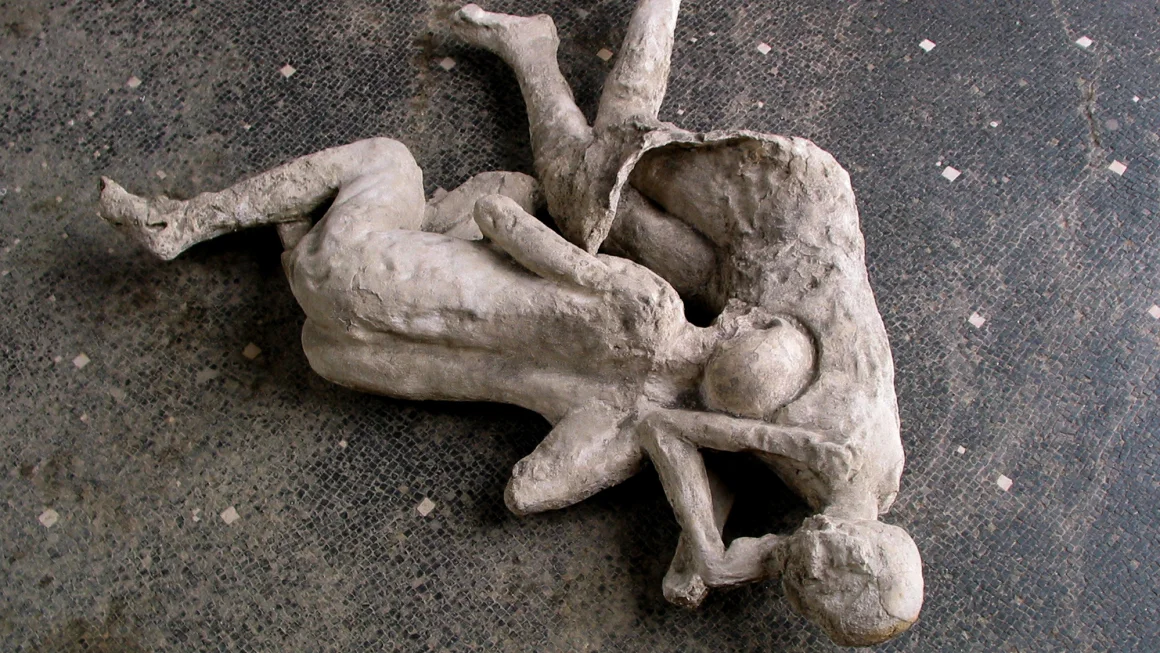
The eruption of Mount Vesuvius in AD 79 obliterated entire Roman towns like Pompeii, burying its residents in a thick layer of volcanic ash that preserved buildings, frescoes, and even the positions of people as they fell. For centuries, Pompeii’s existence was forgotten, only rediscovered during later excavations, including groundbreaking 19th-century work by archaeologist Giuseppe Fiorelli. Fiorelli pioneered the technique of creating plaster casts by pouring liquid chalk into the voids left by decomposed bodies, preserving the final forms of 104 victims.

Now, advanced DNA sequencing of bone fragments preserved within these plaster casts is rewriting some long-held beliefs about the identities and relationships of Pompeii’s residents in their final moments. In one case, what was thought to be a mother holding her child—a figure with a gold bracelet and a smaller figure on her hip—turned out to be two unrelated individuals. Meanwhile, two other bodies, once believed to be a pair of sisters or a mother and daughter, were revealed to be two young adults, one male and one female.

Beyond these revelations, DNA analysis points to Pompeii as a diverse, cosmopolitan city with a population showing varied genetic heritage, a testament to its place within the multicultural Roman Empire. The new findings not only offer a more nuanced understanding of the people of Pompeii but also provide a vivid reminder of the unexpected personal histories that can emerge from these ancient sites.