
New 3D Scans Reveal Details of Shackleton’s Endurance Shipwreck Discovery

The story of Sir Ernest Shackleton’s ill-fated 1914 Antarctic expedition has captivated audiences for more than a century, and now, new technological advancements are offering a fresh perspective on the wreck of the Endurance. Discovered in 2022 beneath the icy waters of the Weddell Sea, the ship, which sank after being trapped by pack ice, has been documented with unprecedented clarity. Thanks to detailed 3D scans and underwater imaging, researchers have been able to uncover the shipwreck’s remarkable state of preservation, revealing striking details of the 144-foot vessel that lay hidden in the Antarctic depths for over a century.

The scans, conducted by the Falklands Maritime Heritage Trust, have provided a comprehensive look at the ship’s structure and its contents. These detailed images are shedding light on the final moments of the Endurance and its crew, capturing the ship in its almost pristine condition despite being submerged in the harsh conditions of the polar region. The scans are invaluable in helping researchers understand not only the fate of the ship but also the conditions faced by Shackleton’s team during their legendary survival story.

One of the most surprising discoveries is the remarkable preservation of artifacts on the ship’s upper deck. While some parts of the mast and railings have understandably decayed over time, much of the deck has remained intact. Items left by Shackleton’s crew, such as dishes, ropes, and even a single boot, are scattered across the ship, offering a poignant glimpse into the daily lives of the men who braved the Antarctic’s unforgiving climate. These objects add a human element to the historical narrative, connecting modern-day observers with the past.

Perhaps most striking of all is the survival of the linoleum flooring on the ship’s deck, still bearing the faded star pattern it had over a hundred years ago. The preservation of this simple yet enduring artifact is a testament to the remarkable conditions in which the Endurance rests. The images not only serve as a fascinating historical record but also deepen the mystery and allure of Shackleton’s expedition, as researchers continue to explore the wreck and uncover new insights into the life of one of history’s most iconic explorers.

New Patch Technology Uses Electricity to Fight Harmful Skin Bacteria

Scientists have developed a groundbreaking patch that uses mild electrical pulses to combat harmful bacteria on the skin. The Bioelectronic Localized Antimicrobial Stimulation Therapy (BLAST) patch is designed to help prevent infections by targeting bacteria that could potentially enter the bloodstream and cause severe health issues. This innovative approach leverages harmless electrical currents to disrupt the bacteria’s ability to adhere to skin surfaces, offering a new way to address skin infections at their source.

The BLAST patch has shown promising results in recent trials conducted on pig skin, which closely resembles human skin in structure and is commonly used in preclinical studies. During these tests, the researchers applied Staphylococcus epidermidis bacteria, a microorganism normally found on human skin that usually poses no threat. However, when this bacteria is introduced into the body through medical devices like catheters, it can lead to infections that are difficult to treat.

In the experiment, the BLAST patch was placed on the pig skin, and mild electrical pulses were delivered every ten minutes over an 18-hour period. These pulses, similar in intensity to those used in pacemakers, effectively reduced the formation of biofilms—protective layers that allow bacteria to resist treatment. The results were striking, showing a nearly tenfold reduction in bacterial levels on the treated skin, suggesting that the patch could be an effective method for reducing bacterial presence and the risk of infection.

With the success of these tests, the BLAST patch offers a promising new avenue for tackling skin infections, particularly in healthcare settings where the risk of bacterial transmission is high. This bioelectronic device could complement traditional antibiotic treatments, providing a non-invasive, localized solution to control harmful bacteria before they spread. The next steps will likely involve further clinical testing, with the hope that the BLAST patch could soon become a valuable tool in preventing infections and improving patient outcomes.

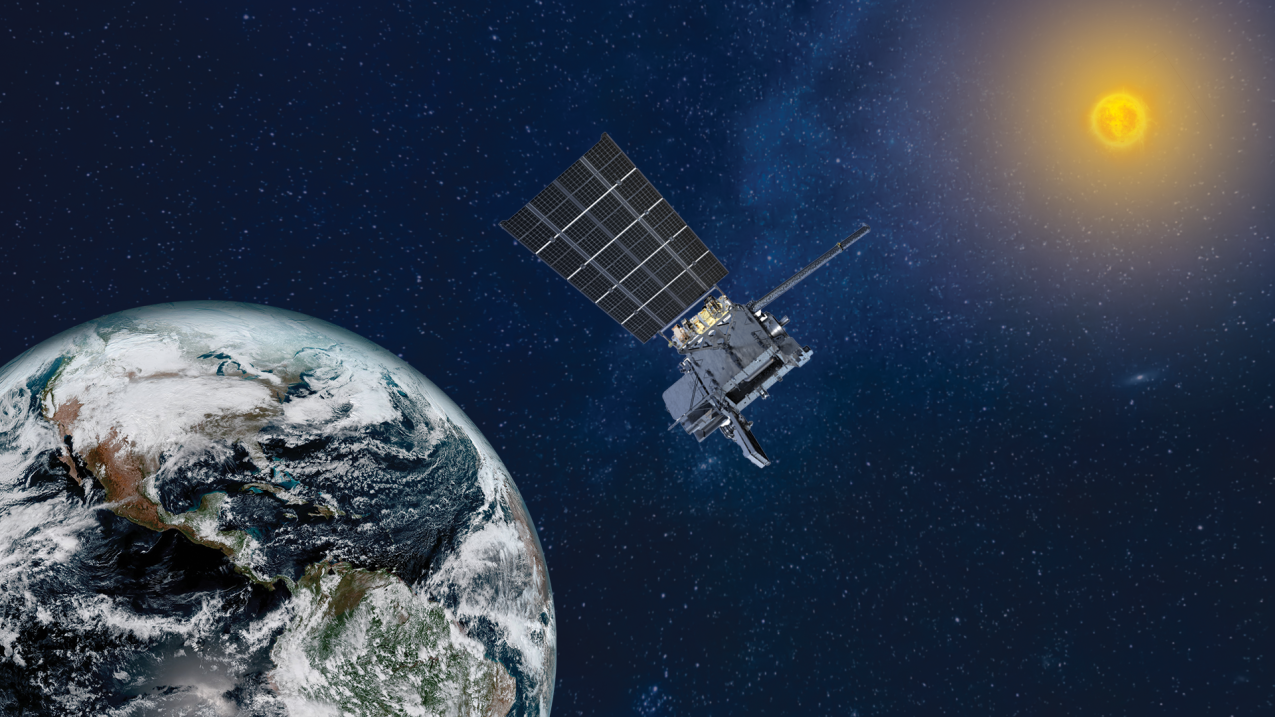
First Images of Solar Eruptions Captured by NOAA’s GOES-19 Satellite

The National Oceanic and Atmospheric Administration (NOAA) has revealed the first images from its advanced space-based tool, the Compact Coronagraph (CCOR-1), mounted on the GOES-19 satellite. This instrument marks a milestone in solar observation, offering unprecedented clarity in monitoring solar activity. The CCOR-1’s role is to observe the sun’s outer atmosphere, known as the corona, and to track solar phenomena such as coronal mass ejections (CMEs), which can impact space weather on Earth.

Launched in June 2024, CCOR-1 officially began its solar observation mission on September 19, aiming to enhance our understanding of solar storms. These powerful eruptions can release massive bursts of energy and charged particles into space, potentially disrupting satellite communications, power grids, and GPS systems. Positioned on the GOES-19 satellite, which orbits Earth in a geostationary orbit, CCOR-1 provides a constant, real-time stream of data that is crucial for improving space weather forecasting.

What sets CCOR-1 apart from previous solar observation tools is its ability to block the sun’s intense glare using an occulting disk. This allows the coronagraph to capture high-resolution images of solar eruptions, such as CMEs, without being overwhelmed by the sun’s brightness. One of the most striking images captured on September 29 shows a CME bursting from the sun’s eastern limb at 8:15 a.m. EDT. The high-speed plasma streams from the sun’s surface, with speeds reaching up to thousands of miles per second, offering scientists a closer look at the dynamics of solar storms.

These groundbreaking images not only provide a clearer understanding of solar activity but also represent a significant leap in space weather forecasting. With real-time monitoring and detailed observations, CCOR-1 will help NOAA predict the potential impact of solar storms on Earth’s magnetic field and technological infrastructure. This advancement is a vital step forward in protecting both space-based assets and ground-based systems from the disruptive effects of solar weather.