Diver Finds Graduation Ring Lost in the Ocean for Nearly 50 Years, Surprises Its Owner

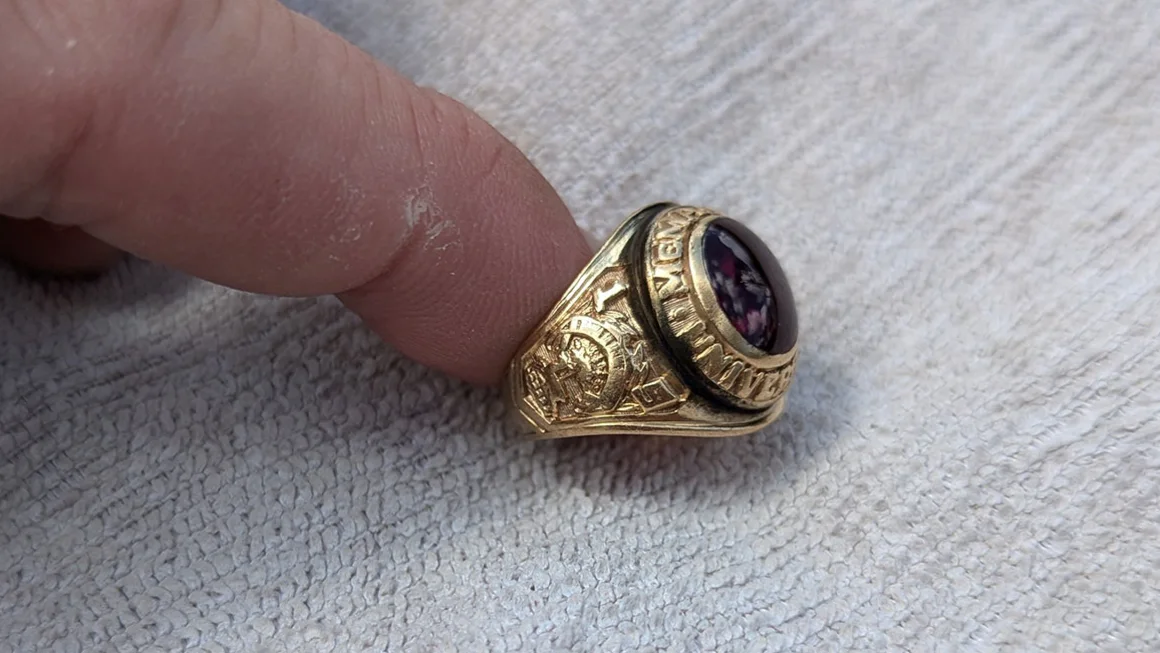
Just before Morgan Perigo’s 83rd birthday, he received an unexpected package at his doorstep—a long-lost 1965 McMaster University graduation ring that had vanished in the ocean nearly 50 years ago.

This remarkable reunion was made possible by Alex Davis, a professional diver and spear fisherman based in Barbados. While checking webcams on a calm tourism day, Davis noticed that Hurricane Beryl had shifted sand along the coastline, exposing areas that typically lay buried. Intrigued by what the storm might have uncovered, he decided to investigate with his metal detector, expecting to find typical beach debris.

Initially, Davis encountered a few coins and miscellaneous metal objects. However, a distinct tone from his metal detector caught his attention, signaling something made of gold. After digging through sand and coral, he uncovered a gold ring with a dark red stone. Upon closer inspection, Davis noticed the engraving: “McMaster University 1965,” along with the initials “FMP.”

Knowing he had found something valuable and potentially sentimental, Davis embarked on a mission to return the ring to its owner. He reached out to McMaster University’s alumni office, where Karen McQuigge, director of alumni engagement, and her team identified the ring’s owner as Frederick Morgan Perigo. Luckily, Perigo had maintained his contact information with the university over the years, allowing the alumni team to notify him of the incredible find.

Perigo was astounded. He had lost the ring in 1977 during a family trip to Barbados when he dove into the ocean to rescue his son from a wave. In the process, the ring had slipped off his finger, disappearing into the water.

The timing was perfect. Davis reached out to Perigo, learning of his upcoming birthday and arranging for the ring to be shipped in time for the occasion. The sentimental reunion was a gift Perigo never expected, almost 47 years after the ring had slipped away.

Davis, who described the experience as profoundly rewarding, would gladly undertake a similar mission if he ever found another ring with identifying details. For McQuigge, the story symbolizes the lasting value people place on these mementos, noting that Perigo had worn the ring for over a decade before it was lost.

 

Trump Victory Could Boost Elon Musk’s Vision of Mars Missions

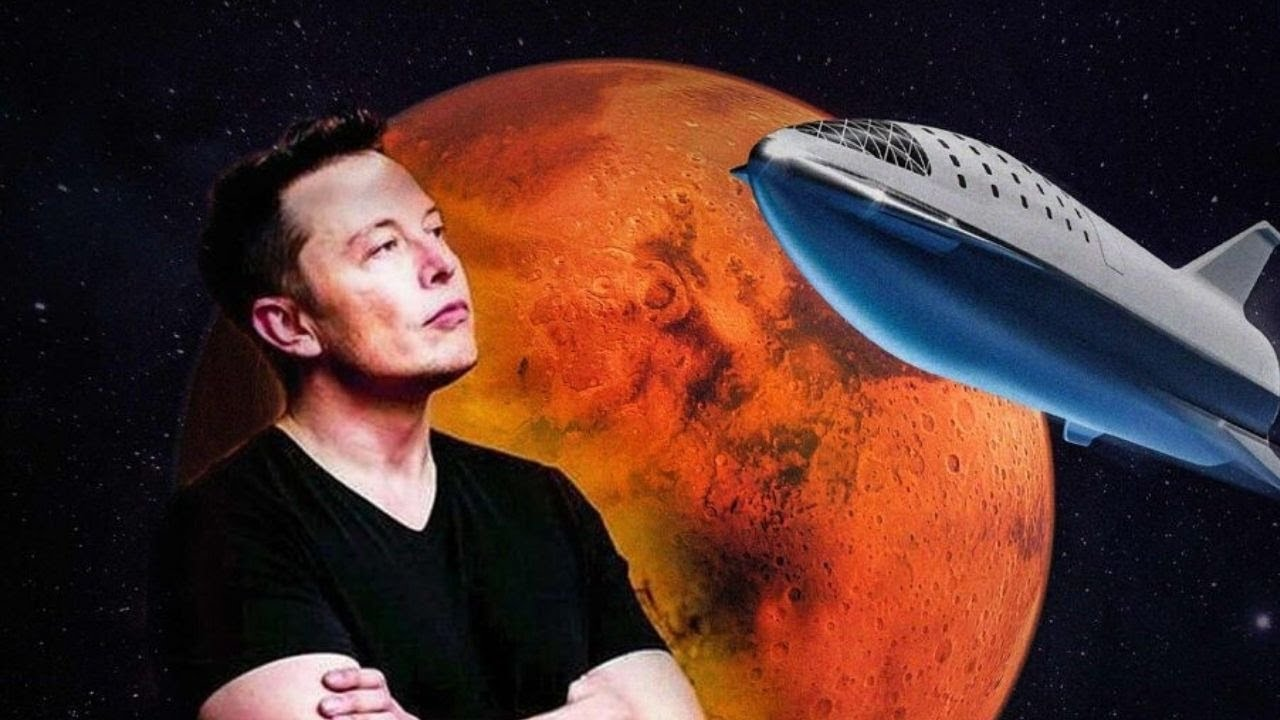
Elon Musk’s ambition to transport humans to Mars may gain momentum under President-elect Donald Trump, according to sources familiar with Trump’s space policy plans. NASA’s Artemis program, which involves Musk’s SpaceX Starship rocket, currently aims to place humans on the moon as a step toward Mars missions. Under the new administration, however, the program is expected to prioritize Mars more directly, with potential uncrewed missions as soon as this decade.

This shift aligns with Musk’s long-term goal of making Mars humanity’s next frontier. Known for wearing an “Occupy Mars” shirt at a Trump rally in October, Musk has strongly endorsed the incoming president, contributing $119 million to Trump’s campaign and heightening the visibility of space policy during the transition.

Sources indicate that the Trump administration’s approach to NASA will focus more intensively on Mars, seeing the moon as a mere “launching pad” for a Mars mission. Doug Loverro, a space industry consultant who led NASA’s human exploration unit during Trump’s previous term, notes that a Mars-centered agenda could make the Red Planet an explicit objective. Yet, an intensified Mars focus also poses increased financial and technical challenges, especially in comparison to lunar missions.

Trump’s influence on space policy isn’t new: he launched NASA’s Artemis program in 2019, which the Biden administration maintained. However, Trump’s advisers now plan to push for changes in Artemis to correct what they perceive as stagnation since their last administration. This could entail shifting from costly government contracts to fixed-price agreements with private companies, which would transfer greater responsibility—and risk—to firms like SpaceX.

Under Musk’s influence, the Trump administration may also look to reduce regulatory constraints, particularly at the Federal Aviation Administration (FAA). Musk has long voiced frustration over the FAA’s commercial space regulations, which he argues have delayed SpaceX’s Starship program. Deregulation could thus expedite private rocket launches, aiding Musk’s vision for Mars.

Such policy shifts may impact NASA’s $24 billion Space Launch System (SLS) rocket, a government-owned project led by Boeing and Northrop Grumman since 2011. If Artemis pivots toward Mars, the SLS program could face scrutiny, as critics argue it has drained NASA’s budget while struggling with delays. Nonetheless, canceling the program would be difficult due to the potential job losses and greater reliance on SpaceX for space missions.

Musk, who also heads Tesla and Neuralink, is known for setting ambitious timelines. He recently claimed that SpaceX could land Starship on Mars by 2026, with a crewed mission following by 2030. Trump has publicly discussed these Mars aspirations with Musk, although experts are cautious about the feasibility. Scott Pace, Trump’s top space policy official during his previous term, believes that while a one-way Starship mission to Mars might be achievable, a fully crewed mission remains unlikely within such a short timeline.

Plans for Musk’s Mars vision could change as the Trump transition team finalizes its policy agenda. For now, it appears that both Musk and Trump are aligned in their drive to push the boundaries of space exploration, targeting Mars as a significant goal for the near future.


Rare “Zombie Star” Discovered in Pa 30 Nebula Linked to Ancient Supernova SN 1181

Discovery of “Zombie Star” in Pa 30 Nebula Linked to Ancient Supernova SN 1181

Astronomers have recently identified a rare “zombie star” within the Pa 30 nebula, a remnant of the ancient supernova SN 1181, which was observed over 800 years ago. This unique discovery sheds new light on the evolution of supernova remnants and raises intriguing questions about the life cycles of stars. The supernova SN 1181, recorded by Chinese and Japanese astronomers in 1181, appeared near the Cassiopeia constellation and shone brightly for roughly six months before fading from view. Its historical significance lies in being one of the few supernovae documented before the invention of telescopes, making this discovery a valuable insight into early star life documentation.

For centuries, SN 1181 was considered an “orphan” supernova, meaning it had no identifiable stellar remnants linked to its original explosion. This changed in 2021 when scientists connected SN 1181 to the Pa 30 nebula, discovered in 2013 by citizen scientists. Pa 30 has since captivated astronomers due to its unusual features and distinct structure. Observations from the W.M. Keck Observatory recently revealed complex filaments expanding outward from the nebula’s core, adding another layer of mystery and further confirming its connection to the SN 1181 event.

At the heart of the Pa 30 nebula lies the so-called “zombie star”—a stellar remnant that survived a thermonuclear explosion, something exceedingly rare in the study of supernovae. Unlike typical supernova explosions, which completely destroy their parent stars, this explosion was classified as a Type Iax supernova, a partial explosion of a white dwarf. These types of supernovae are known for leaving behind remnants rather than annihilating the star entirely. Led by researchers Tim Cunningham and Ilaria Caiazzo, the study showed detailed images of the “zombie star” and its surrounding filaments, which resemble delicate dandelion petals, expanding out from the nebula’s core.

This discovery has deep implications for our understanding of stellar evolution and supernova remnants. A “zombie star” surviving such a powerful event offers clues to the resilience of certain types of white dwarfs, potentially reshaping theories about the end stages of star life cycles. As astronomers continue to analyze this rare remnant, they hope to uncover more about the processes behind Type Iax supernovae and why certain stars withstand what should be a fatal explosion.