
Ancient Meteorite Impact: A Catalyst for Early Life on Earth

Meteorite Impact: A Crucial Catalyst for Early Life on Earth

Approximately 3.26 billion years ago, a massive meteorite collided with Earth, far surpassing the one that famously contributed to the extinction of the dinosaurs. Research led by geologist Nadja Drabon from Harvard University posits that this monumental event may have been instrumental in fostering the development of early life forms. Contrary to the typical associations of such impacts with widespread destruction, this particular collision is thought to have unleashed a cascade of changes that created favorable conditions for certain microorganisms to thrive.

Drabon and her team focused on rock formations in the Barberton Greenstone Belt of South Africa, a region that harbors evidence of the ancient impact. Their studies indicate that the collision would have produced extreme environmental conditions, including intense heat that vaporized significant portions of the ocean’s surface. The impact also generated a dense cloud of debris, which blocked sunlight for a considerable period. While this lack of light would have posed challenges for photosynthetic organisms, it simultaneously facilitated the release of critical nutrients from the ocean floor, including phosphorus and iron, into the surface waters.

This influx of nutrients presented a unique opportunity for microorganisms equipped to exploit these resources. The research highlights that microbes capable of metabolizing iron flourished in the aftermath of the impact, leading to significant population growth. This shift in the microbial landscape suggests that the consequences of the meteorite impact were not solely detrimental; rather, they may have provided a much-needed boost to early life by reshaping the ecological environment in a way that favored specific organisms.

The implications of Drabon’s findings extend beyond the history of life on Earth; they challenge traditional narratives surrounding catastrophic events in geological history. By demonstrating that such impacts can create opportunities for life rather than solely destroy it, this research adds a nuanced understanding of the resilience and adaptability of living organisms in the face of dramatic environmental shifts. The study encourages further exploration into how similar processes may have influenced the evolution of life on other planets, expanding our understanding of the potential for life in the cosmos. Ultimately, the meteorite impact serves as a reminder of nature’s complex interplay between destruction and creation, illustrating how adversity can lead to unforeseen advancements in the tapestry of life.

Can Diamond Dust Injection in the Atmosphere Combat Climate Change

Exploring the Potential of Diamond Dust for Climate Cooling

A groundbreaking research initiative led by climate and earth scientists is investigating an unconventional solution to combat global warming: the use of diamond dust to cool the planet. This innovative approach is part of a broader field known as solar geoengineering, which seeks to mitigate the effects of climate change by reflecting sunlight back into space. By exploring this novel method, scientists hope to address climate change more aggressively than traditional efforts, which primarily focus on reducing greenhouse gas emissions.

Historically, the material most commonly associated with solar geoengineering has been sulfur dioxide, a compound known for its ability to reflect sunlight. However, the use of sulfur dioxide comes with significant environmental risks, including the potential for acid rain and damage to the ozone layer. Recognizing these drawbacks, researchers are actively seeking safer alternatives that can achieve similar levels of reflectivity without incurring harmful side effects. The exploration of diamond dust as a potential solution marks an exciting shift in this ongoing research.

The diamond dust proposal emerged from studies conducted by researchers at ETH Zurich, particularly from the Institute for Atmospheric and Climate Science. In their investigations, scientists tested a range of particles for their cooling potential, including materials like calcite, aluminum, and, notably, diamond dust. Utilizing complex climate models, the team analyzed how these various substances would interact with sunlight and heat, as well as their longevity in the atmosphere. The findings from these studies are crucial in determining the feasibility of implementing diamond dust as a viable geoengineering solution.

The implications of successfully employing diamond dust for solar geoengineering could be profound. If proven effective, this method could significantly alter our approach to managing climate change, offering a supplementary tool alongside greenhouse gas reduction strategies. However, extensive research is still needed to assess the long-term impacts and potential risks of such interventions. Questions about the ethical and political ramifications of deploying geoengineering solutions also remain, emphasizing the importance of a thorough and cautious approach to any proposed climate interventions. As this research unfolds, the scientific community and policymakers must carefully consider both the potential benefits and challenges associated with using diamond dust to cool the planet.

Scientists Uncover Clues to Origins of America’s Oldest Tombstone in Jamestown

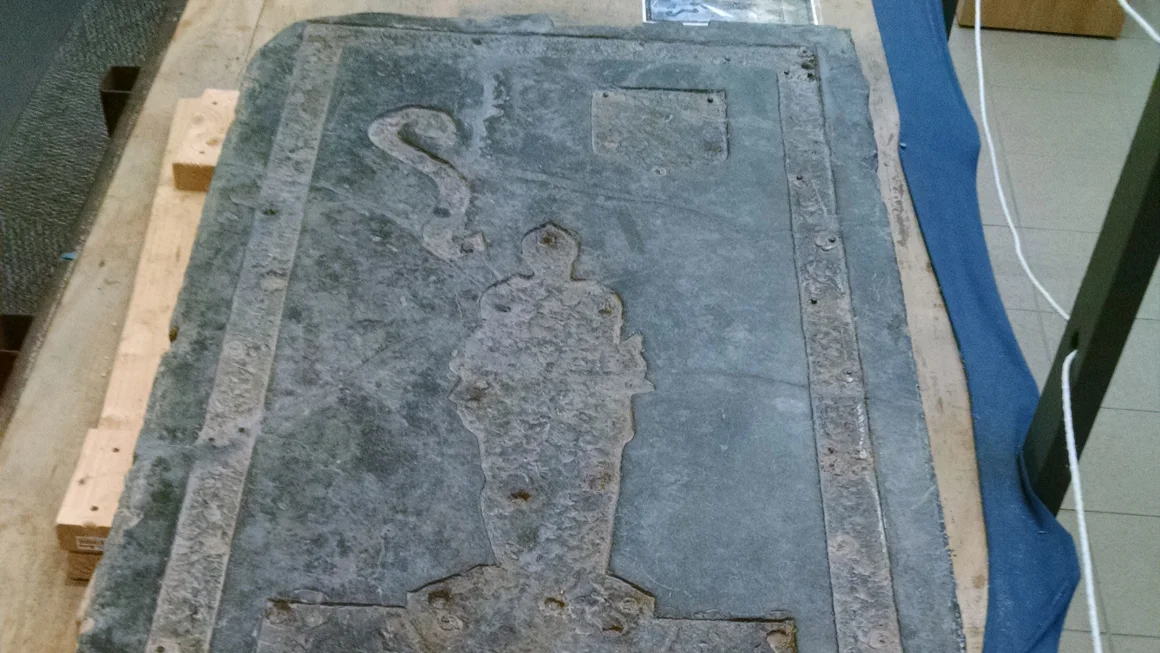
In Jamestown, Virginia, the oldest known tombstone in the United States has yielded new insights into its origins. Often called the “Knight’s Tombstone” for its engraved knight and shield, the intricately carved black limestone slab dates back to 1627 and lies within the remains of the first permanent British settlement in North America. Until recently, its origins were a mystery, but new research has traced the stone to Belgium, highlighting its symbolic and economic value in the early colonial period.

Researchers analyzing the limestone’s microfossils found traces of four ancient foraminiferan species that only exist in parts of Europe, particularly Belgium and Ireland. The study, published in the International Journal of Historical Archaeology, suggests that this stone—formed between 340 million and 336 million years ago—likely came from a thriving Belgian tombstone export business of the time. From there, the stone traveled first to London to be engraved and then across the Atlantic, a journey that would have taken a year.

This tombstone is believed to mark the grave of Sir George Yeardley, an early colonial governor and influential figure in Jamestown. Yeardley, knighted in 1618, led the General Assembly, North America’s first representative governing body, and played a significant role in early colonial governance and trade. His status and wealth, rare among Jamestown colonists, would have enabled him to afford this elaborate burial marker, which included brass inlays and a prominent placement in the church. Most colonial-era graves were unmarked or had simple wooden markers, making Yeardley’s tombstone a unique artifact of early American history.

The limestone’s journey from Belgium to Jamestown speaks not only to Yeardley’s high status but also to Jamestown’s role in early transatlantic trade. Mary Anna Hartley, an archaeologist with Jamestown Rediscovery, notes that the substantial cost of such a memorial was “prohibitive to all but the most affluent” and underscores the colony’s connection to Europe. While the stone itself was found inside the third Jamestown church built around 1640, it may have originally been in an earlier church where Yeardley was interred. Excavations in 2018 revealed human remains thought to be Yeardley’s within the second church’s chancel. Researchers are conducting DNA analyses to confirm the identity by next summer.

Jamestown remains a vivid historical site, showcasing the complex cultural dynamics of early America. As Hartley noted, the settlement is significant because of its role in forming the foundation of American society, with interactions among English settlers, other Europeans, Indigenous people, and enslaved Africans shaping the colony’s early identity. The discovery of Yeardley’s tombstone, preserved and hidden by vegetation, emphasizes both the fragility and resilience of historical artifacts.

Interestingly, Sir George Yeardley’s tombstone resembles the black marble stone marking Queen Elizabeth II’s resting place at St. George’s Chapel, suggesting that symbols of respect for high-status individuals have remained consistent across centuries. Yet most Jamestown settlers had no such luxuries due to limited resources, which, along with the high mortality rates of the time, left many graves unmarked.

Jamestown’s archaeology reveals a layered narrative of colonial life and death, with its historical artifacts providing a unique window into the daily lives, societal structures, and enduring cultural practices that defined early American society.