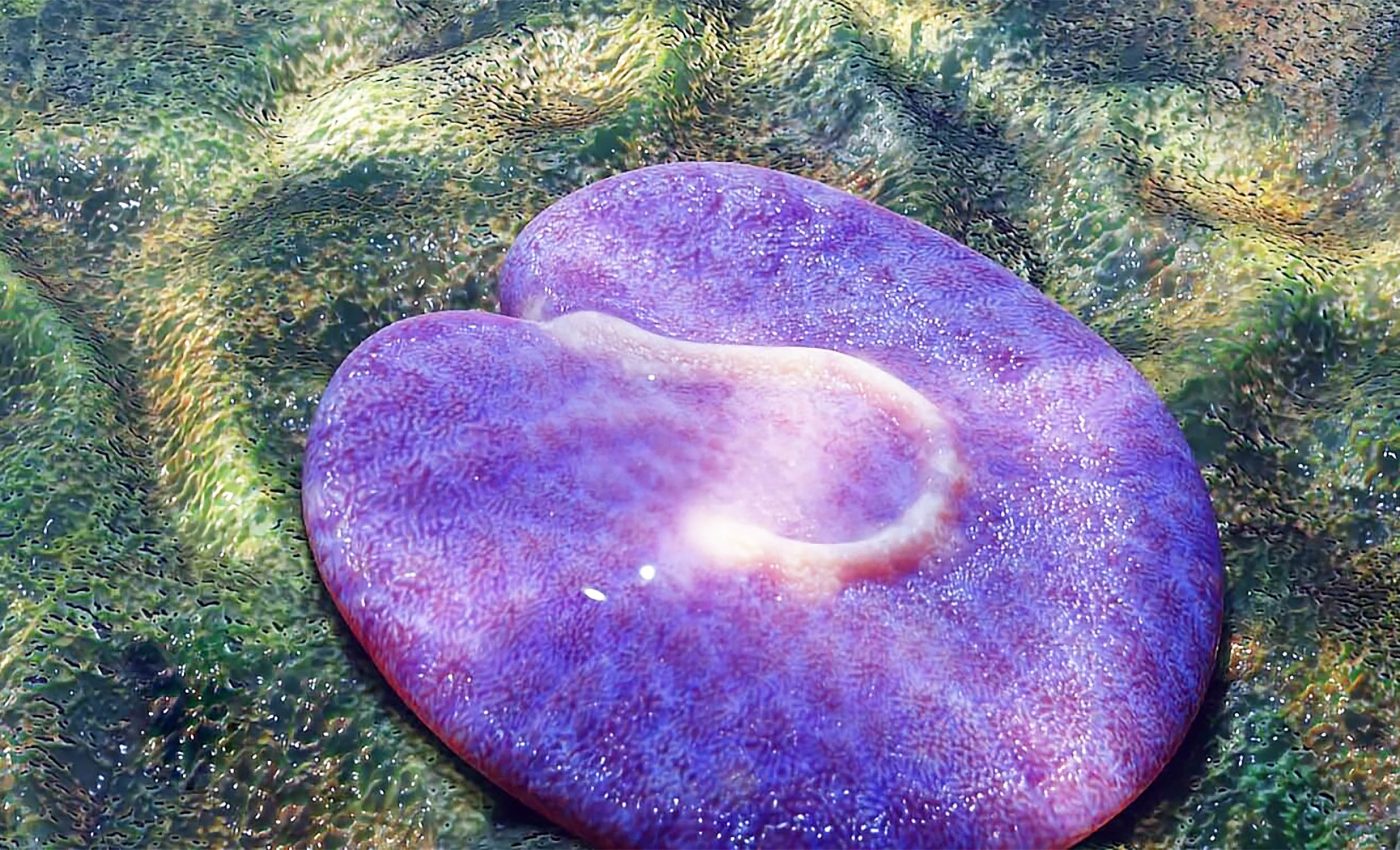
Introducing Quaestio Simpsonorum: Australia’s Oldest Asymmetrical Animal Discovery

A groundbreaking discovery from Australia’s Nilpena Ediacara National Park has introduced Quaestio simpsonorum, the oldest asymmetrical animal ever found. Dating back approximately 555 million years, this ancient marine creature bore a striking resemblance to a small underwater vacuum cleaner, gliding across the ocean floor to feed on tiny algae and bacteria. Its most defining feature, however, was a backward question-mark-shaped protrusion on its back. This unique structure marks an important step in the development of more complex life forms. The Ediacaran period, which lasted from 635 to 541 million years ago, has long intrigued scientists as a precursor to the Cambrian explosion, a period when life on Earth underwent rapid diversification. Quaestio’s fossils were discovered in South Australia, a site known for hosting a treasure trove of early complex animal fossils.

Paleobiologist Scott Evans of Florida State University led the research on this ancient creature, with the findings published in Evolution and Development. Evans emphasized the significance of Quaestio’s unique asymmetrical form. “The animal’s backward question-mark shape clearly separates the left and right sides,” Evans noted, “and that’s something we haven’t observed in other fossils from this era.” This discovery provides new insights into how the structural complexity of animals began to evolve during the Ediacaran period.

Movement on the Ocean Floor

What makes Quaestio even more fascinating is the evidence that it could move. Fossilized tracks found trailing one of the specimens suggest that the creature had the capability to glide along the ocean floor in search of food. This mobility allowed it to actively feed on microorganisms like algae and bacteria, making it one of the earliest known examples of an animal exhibiting directed movement. Mary Droser, a paleontologist from the University of California, Riverside, and a co-author of the study, highlighted the importance of this finding. “It offers an essential piece of the puzzle for understanding the evolution of life on Earth,” she explained.

The discovery of Quaestio simpsonorum not only sheds light on the physical and behavioral traits of early marine animals but also deepens our understanding of the evolutionary advancements occurring in the Ediacaran period. The fossil site at Nilpena Ediacara continues to be a goldmine for researchers studying the origins of complex life. With each new discovery, scientists come closer to piecing together the evolutionary history that set the stage for the incredible biodiversity we see on Earth today.

Study Identifies Three Young Asteroid Families as Key Origins of Earth’s Meteorites

Earth experiences a constant influx of meteorites, most of which disintegrate in our atmosphere before making contact with the surface. However, some do survive, and significant impacts can have dramatic effects on our planet. Through extensive research, scientists have confirmed that the vast majority of these meteorites originate from the asteroid belt, located between Mars and Jupiter. This belt is filled with rocky remnants from the early solar system, and new research is shedding light on which specific asteroid sources contribute to Earth’s meteorite collection.

Identification of Asteroid Families

An international team of researchers has pinpointed three main asteroid families in the belt that are responsible for a large proportion of meteorites landing on Earth. According to their study, the Karin, Koronis, and Massalia families are the primary contributors, accounting for about 70 percent of all meteorites collected on our planet. These families formed as a result of collisions millions of years ago: the Karin family roughly 5.8 million years ago, the Koronis family around 7.5 million years ago, and the Massalia family approximately 40 million years ago. Of these, the Massalia family stands out, being linked to 37 percent of all known meteorites.

Methodology of Research

The research team used a combination of telescopic surveys and computer simulations to conduct their study. The telescopic surveys helped in analyzing the mineral composition of the asteroid families, while the simulations modeled the long-term evolution and movement of these asteroid fragments. This dual approach allowed scientists to track how these fragments made their way from the asteroid belt to Earth’s orbit. In the past, only about 6% of meteorites had clear origins linked to bodies like the Moon, Mars, or Vesta. The sources of the remaining 94% were ambiguous, making these findings a significant advancement in planetary science.

Implications for Future Research

The identification of these young asteroid families has implications for understanding the solar system’s history and the potential threats posed by near-Earth objects. By pinpointing these sources, scientists can better predict the frequency and type of meteorite impacts Earth might face in the future. Moreover, understanding the timeline of these collisions and the subsequent dispersion of asteroid fragments provides valuable insight into the asteroid belt’s dynamic nature. Future research may focus on how these findings can contribute to planetary defense strategies and space exploration missions targeting these asteroid families.

NASA Crew-8 Mission Postponed by Florida’s Severe Weather

The Crew-8 team continues to wait for approval to head back home as unfavorable weather off Florida’s coast has delayed their departure. Initially, NASA’s SpaceX Crew-8 mission was scheduled to undock on Monday night, but the timeline has now been adjusted to no earlier than 9:05 PM EDT. Mission officials remain cautious and are closely monitoring weather conditions to decide the safest time to proceed.

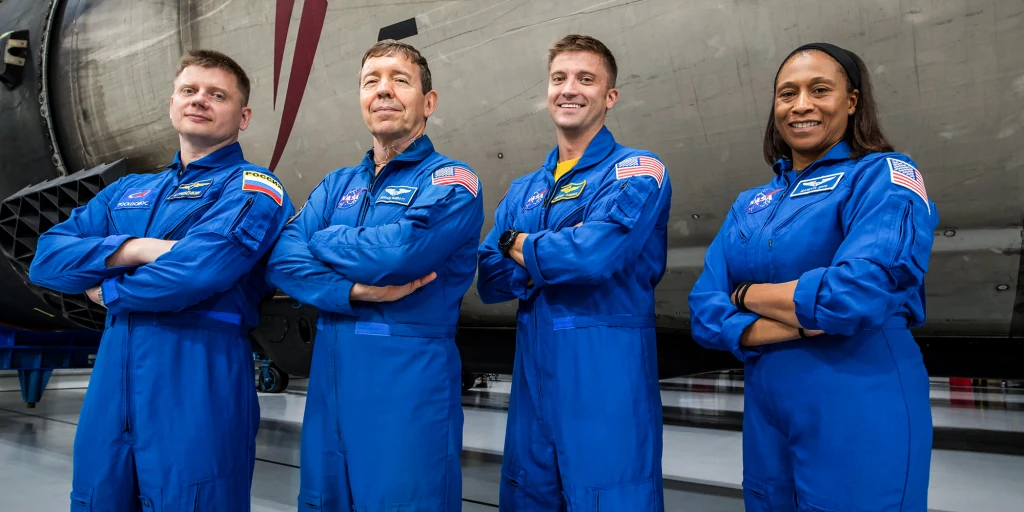
Crew-8 members Matthew Dominick, Mike Barratt, Jeanette Epps (all from NASA), and Alexander Grebenkin from Roscosmos have had to adapt to the changing circumstances. They adjusted their sleep schedules in anticipation of the original undocking plans, only to see their departure delayed. Despite this setback, they’ve kept busy on the International Space Station (ISS) by sticking to their exercise routines and continuing their assigned tasks. The crew members remain flexible, keeping to their adjusted sleep patterns while waiting for the next weather briefing.

Meanwhile, the delay has had ripple effects on the rest of the ISS crew. Expedition 72 Commander Suni Williams and Flight Engineers Butch Wilmore, Nick Hague, and Don Pettit have also adapted their schedules to assist with Crew-8’s departure. With Monday’s delay, they enjoyed a lighter workload and used the time to prepare for a potential Tuesday undocking. Coordination between the two teams is crucial to ensure the transition goes smoothly.

As everyone awaits updated information on the weather, both the Crew-8 team and the ISS crew are staying ready for whatever comes next. The dynamic nature of space missions often requires adaptability, and the astronauts’ ability to manage unexpected changes ensures mission success while prioritizing safety.