
Swapped at Birth: Two Women Discover Their True Identities

In a startling revelation, two families in the West Midlands are awaiting compensation following the first documented case of babies being switched at birth in NHS history. This unexpected twist of fate began with a simple DNA test that forced two women and their families to reconsider their entire identities.

Tony received a DNA home-testing kit as a Christmas gift in 2021 but left it unopened for two months. Finally, during a rainy February day, he decided to test the kit out. After sending in his sample, he didn’t give it much thought until he received the results one Sunday evening while on the phone with his mother, Joan.

Initially, the results aligned with his expectations, revealing information about his maternal lineage. However, the name listed as his sister was not Jessica, as he had always known her, but Claire. This unexpected finding triggered concerns for both Tony and his mother, who was in her 80s and living alone after her husband’s death.

An Unexpected Connection

Eager for answers, Tony contacted Claire through the DNA testing service’s messaging feature. Claire had also taken the same DNA test two years prior, prompted by her son. Her results had also raised questions about her familial connections, revealing a genetic link to a first cousin she did not recognize.

As Claire and Tony began exchanging details, they discovered that Claire was born around the same time and in the same hospital as Jessica. It soon became clear that they had been swapped at birth, a shocking realization given the rarity of such occurrences in the UK. According to a 2017 Freedom of Information request, the NHS had no documented cases of babies being sent home with the wrong parents prior to this incident.

The absence of such cases is largely attributed to protocols established in the 1980s, where newborns receive radio frequency identification (RFID) tags for tracking.

Embracing the Truth

Confronted with this life-altering news, Tony and Claire discussed their next steps. “The ripples from this will be enormous,” Tony acknowledged. Claire, however, expressed an eagerness to meet Tony and their biological mother.

When Tony finally shared the discovery with Joan, she was desperate for clarity about how such a mix-up could occur. Her memories of the day Claire was born remained vivid; she had been induced at a West Midlands hospital due to high blood pressure and had briefly held her long-awaited daughter before she was taken to the nursery for the night. The following day, she was handed Jessica, who had fair hair unlike the rest of the family, but Joan attributed this to distant relatives.

After 55 years, Joan longed to know more about Claire’s life. Before they could reach out to her, Tony and Joan had to inform Jessica about the revelation. Their relationship has since changed, as Jessica has not agreed to be interviewed regarding the situation.

A Moment of Connection

Only five days after the initial DNA results, Claire visited Joan. For years, she had unknowingly passed through the village where her biological mother lived. Upon arrival, Tony welcomed her with a warm, “Hi Sis,” and invited her to meet Joan.

Instantly, Claire felt a profound connection to Joan, exclaiming, “Oh my God, I’ve got your eyes! We have the same eyes. Oh my God, I look like someone!” Joan echoed this sentiment, remarking how Claire resembled her in her younger days. They spent time sharing family photos and stories, but when it came to Claire’s childhood, she chose to withhold the truth, revealing only that her upbringing had been challenging.

Claire faced practical challenges too, realizing that her birth certificate and identification documents were inaccurate due to the mix-up.

Seeking Accountability

Weeks after their discovery, Tony reached out to the NHS trust overseeing the hospital involved, explaining the DNA test findings. The trust accepted liability for what it termed an “appalling error,” but discussions regarding compensation have yet to be finalized, even two and a half years later.

Despite the turmoil, Claire and Joan have found common ground, bonding over shared interests and experiences. They have traveled together to explore their Irish roots and spent holidays side by side.

“I’d like to spend as much time as I can with them, of course, but that time is gone. It was taken away,” Claire reflected. While Claire now refers to Joan as “Mum,” Jessica’s relationship with Joan remains strained. Yet Joan emphasizes that her love for Jessica remains unchanged. “It doesn’t make any difference to me that Jessica isn’t my biological daughter. She’s still my daughter, and she always will be,” Joan affirmed.

 

Record-Breaking Prime Number Found by Former Nvidia Programmer

Luke Durant, a 36-year-old ex-Nvidia programmer, has achieved a remarkable feat in the realm of mathematics by discovering the largest known prime number, a massive 41,024,320 digits long, officially designated as M136279841. His relentless pursuit of prime numbers consumed nearly a year and involved significant personal investment.

Prime numbers, defined as whole numbers divisible only by 1 and themselves (e.g., 2, 3, 5, 7), have captivated mathematicians for centuries. Durant’s discovery marks the first major advancement in prime number exploration in nearly six years and is classified as a Mersenne prime. This specific category of primes, which can be expressed in the form 2^p – 1, is named after the French monk Marin Mersenne, who studied these intriguing numbers over 350 years ago.

Significance of Mersenne Primes

Mersenne primes hold a special place in the mathematical community, not only for their rarity but also for what their discoveries reveal about the capabilities of computational technology over time. “The historical record of the world’s largest prime tells us something about the historical capability of computers, and in particular it tells us something about the progress of humanity in this area,” explained Dr. Kevin Buzzard, a professor of pure mathematics at Imperial College London.

Durant’s groundbreaking finding was announced by the Great Internet Mersenne Prime Search (GIMPS) community on October 21. This project exemplifies citizen science, enabling nonspecialists to contribute to significant mathematical discoveries. Durant was inspired by the GIMPS community’s robust infrastructure and advanced technology, which motivated him to delve into prime number research.

The Journey to Discovery

Familiarizing himself with GIMPS software and leveraging cloud computing, Durant effectively created a supercomputer by coordinating multiple systems worldwide. GIMPS consists of volunteers from across the globe who run the project’s software on their personal computers to hunt for new primes, supported by mathematicians analyzing the results for future research.

For Durant, the motivation to pursue such massive prime numbers stems from a desire to explore the limits of computing and the physical universe. “I wanted to push the boundaries of the known universe in whatever small way I was able,” he stated, noting that these prime numbers represent some of the largest unique pieces of information in existence.

While extremely large prime numbers have little practical application today, they carry immense significance for those involved in the project. George Woltman, the founder of GIMPS, described the recent discovery as a “rare and beautiful gem” that may inspire future generations of mathematicians.

The Discovery Process

Durant received an initial alert about his prime discovery on October 12 while preparing for a trip. He quickly decided to confirm the new number’s primality, realizing its importance. GIMPS employs a probable prime test for initial verification, followed by several definitive tests on different hardware to confirm the primality of a new Mersenne prime.

The discovery was exhilarating for Durant, who felt privileged to be the one to uncover the latest Mersenne prime. “These numbers are so exceptionally large and rare now that I was fully prepared to fail after maybe still another year or two of effort,” he reflected.

Notably, Durant’s achievement marks the first Mersenne prime found using graphics processing units (GPUs). Known for their speed and efficiency in mathematical computations, GPUs are commonly found in everyday devices. Durant’s discovery used advanced GPUs, which excel in performing repetitive mathematical calculations quickly, significantly enhancing the search for new prime numbers.

Future Implications

Woltman anticipates that GPUs will play an increasingly vital role in discovering more primes in the future. He noted that while CPUs remain essential, GPUs are particularly adept at tackling complex number-crunching tasks, potentially leading to more significant discoveries.

Durant attributes much of his success to his education at the Alabama School of Mathematics and Science, which fostered his interests and technical skills. As a reward for his significant contribution, he is eligible for the $3,000 GIMPS research discovery award, which he plans to donate to a public high school to highlight the importance of education and support.


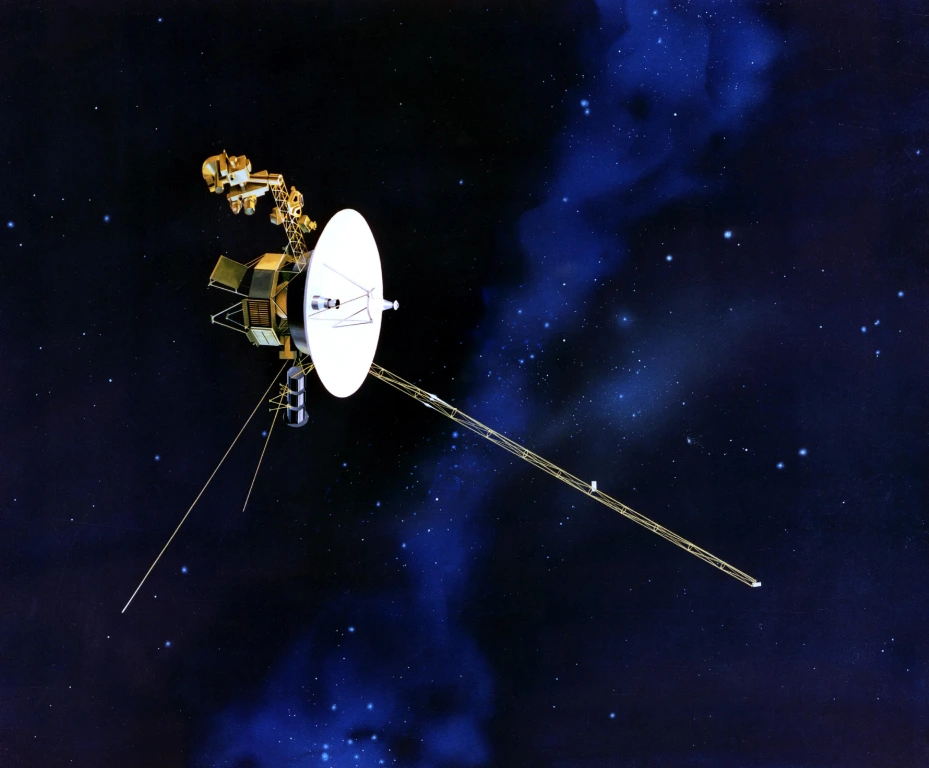
Aging Voyager 1 Spacecraft Revives Ancient Transmitter to Reestablish Contact with NASA

NASA’s Voyager 1 spacecraft, which has been traveling through interstellar space for nearly five decades, has successfully reestablished communication after a brief but critical blackout. Launched in September 1977, Voyager 1 is currently about 15 billion miles (24 billion kilometers) from Earth, making it the farthest spacecraft from our planet.

Recently, the spacecraft experienced a technical issue that prompted its autonomous fault protection system to engage, cutting off communication for several days. To mitigate power consumption and prolong its operational life, the Voyager team has been selectively turning off components over the years. In a remarkable turn of events, engineers activated a radio transmitter that Voyager 1 hadn’t used since 1981 to maintain contact with mission control.

Communication Breakdown and Recovery

On October 16, NASA sent a command to turn on Voyager 1’s heaters, which are crucial for warming components that have suffered radiation damage over time. However, something triggered the fault protection system, leading the spacecraft to automatically shut down non-essential systems to conserve power. The following days saw no response from Voyager, leading to heightened concerns among the team.

Using the Deep Space Network, a system of antennas that facilitates communication with distant spacecraft, engineers were able to eventually detect a faint signal from Voyager 1 on October 18. However, by October 19, communication halted entirely, leading to fears that the X-band transmitter, typically used for sending data, had shut down again, potentially switching to the weaker S-band transmitter instead.

A Dim Signal and Future Steps

NASA’s team confirmed that the S-band signal was detectable, although it poses significant challenges for long-term communication. According to Bruce Waggoner, Voyager mission assurance manager, the S-band is “too weak to use long term.” While this weaker signal allows for basic commands to be sent, it does not support telemetry or scientific data transmission.

Engineers are now working meticulously to analyze the fault protection system’s triggers before attempting to switch back to the more powerful X-band transmitter. This careful approach is necessary to avoid further complications that could jeopardize Voyager 1’s mission. Waggoner noted that reestablishing the X-band’s functionality could provide critical data that may explain the recent communication failures.

In the meantime, the team successfully confirmed the functionality of the S-band transmitter on October 24, ensuring that Voyager remains oriented towards Earth, but this is not a sustainable solution for ongoing communication.

Innovative Solutions Amidst Challenges

Despite these challenges, the Voyager team has demonstrated remarkable ingenuity. Earlier in the year, they employed several innovative techniques to maintain contact with the aging spacecraft, such as activating old thrusters to keep the antenna aligned with Earth and resolving a computer glitch that had interrupted scientific data transmission for months.

Voyager 1’s ability to continue operating in the harsh conditions of interstellar space highlights both the resilience of the technology and the dedication of the team working to ensure the mission’s success as it continues its unprecedented journey through the cosmos.