Healthcare Products Boost Reckitt’s Q3 Sales Amid Tough Year

Reckitt reported a smaller-than-expected 0.5% fall in third-quarter underlying sales, outperforming analysts’ forecast of a 1.7% decline. The uptick in sales was driven by the strong performance of its healthcare products, such as Nurofen painkillers and Strepsils lozenges, helping the company regain investor confidence after a challenging year. Shares rose over 3% in early morning trading, with signs of improving volumes welcomed by the market.

The consumer goods group faced setbacks earlier in the year due to an internal investigation in its Middle Eastern business and litigation involving Mead Johnson, its U.S.-based infant nutrition brand. In response, Reckitt announced plans to divest its homecare portfolio by 2025 and focus more on healthcare and hygiene. The company is still considering options for Mead Johnson amid ongoing legal uncertainties.

CEO Kris Licht acknowledged organizational changes could result from the ongoing review, potentially affecting staffing levels. Despite a 14% drop in sales volumes for its nutrition business—due in part to a supply shortage caused by a tornado—the company remains on track to meet its full-year targets. The healthcare segment’s resilience has provided some relief, with price/mix rising 0.9% and overall volumes only declining by 1.4%, better than anticipated.

Analysts view Reckitt’s results as a relief after a difficult period, but concerns over litigation and the potential impacts of restructuring linger.
NASA Chooses Two Innovative Astrophysics Missions for X-Ray and Far-Infrared Observations

NASA has officially selected two groundbreaking mission proposals focused on investigating X-ray and far-infrared wavelengths, marking a significant step in a new class of astrophysics missions. These initiatives are part of NASA’s Explorers Programme, each receiving an allocation of $5 million for a 12-month concept study. Following this study phase, a final decision on which mission to pursue will be made in 2026, with the selected mission expected to launch in 2032. This initiative reflects NASA’s commitment to expanding our understanding of the universe by exploring uncharted territories.

The primary goal of these missions is to delve deeper into regions of the universe that have remained largely unexplored. Nicola Fox, Associate Administrator for NASA’s Science Mission Directorate, highlighted the transformative potential of these missions, stating they align with the top priorities outlined in the Decadal Survey. This survey serves as a roadmap for the next decade of astrophysical research, emphasizing the importance of innovative missions in advancing our scientific objectives and facilitating groundbreaking discoveries.

One of the selected proposals is the Advanced X-ray Imaging Satellite, spearheaded by Principal Investigator Christopher Reynolds from the University of Maryland, College Park. This mission aims to investigate supermassive black holes and the phenomenon of stellar feedback, which plays a crucial role in galaxy evolution. By leveraging advanced imaging techniques and providing a wider field of view than previous X-ray observatories, this satellite is expected to enhance our understanding of the dynamic processes occurring in the cosmos.

In addition to the Advanced X-ray Imaging Satellite, the second mission concept will also focus on far-infrared observations, aiming to uncover new insights into the formation and evolution of galaxies, stars, and planetary systems. Both missions represent a collaborative effort among leading scientists and institutions, promising to push the boundaries of our knowledge and open new avenues for exploration in astrophysics. As the scientific community eagerly anticipates the results of the concept studies, the future of space exploration looks poised for exciting developments that could reshape our understanding of the universe.

Groundbreaking Brain Map Unveils 140,000 Neurons and New Nerve Cell Types in Fruit Fly Brain

Researchers Unveil Most Comprehensive Brain Map of Fruit Fly, Identifying 140,000 Neurons and New Nerve Cell Types

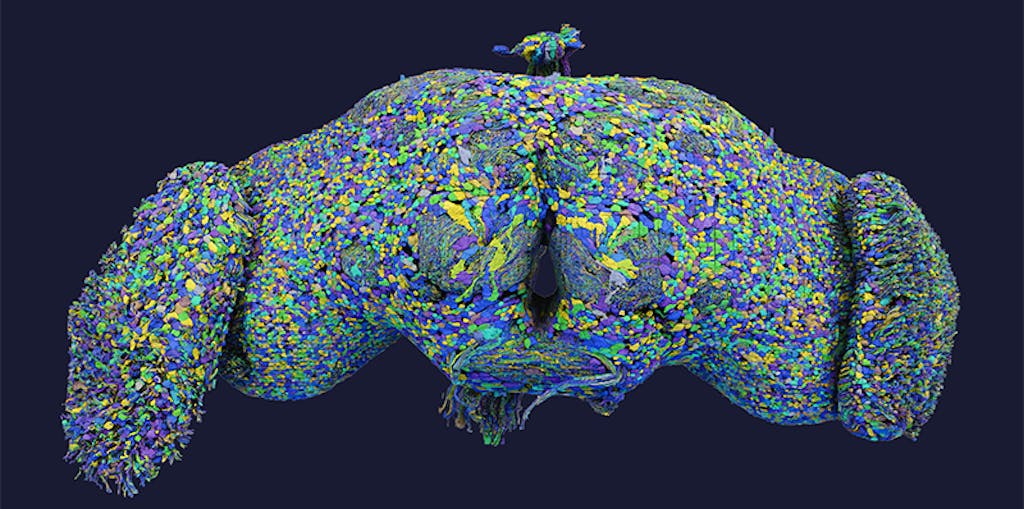
Scientists have achieved a remarkable milestone in neuroscience by creating the most detailed map of a fruit fly’s brain ever produced. This intricate map, which reveals nearly 140,000 neurons and an astounding 54.5 million synapses, is the culmination of over four years of dedicated research led by neuroscientists Mala Murthy and Sebastian Seung at Princeton University. Known as a ‘connectome,’ this map stands as the most complete brain diagram for any organism to date, offering unprecedented insights into the complexity of neural networks.

The research team utilized advanced electron microscopy to capture images of the fly’s brain, allowing them to reconstruct its intricate structure. To manage the vast amount of data, AI-assisted tools were employed, although significant portions of the map required meticulous manual editing. In total, the team and their volunteers conducted more than three million manual adjustments to ensure the map’s accuracy and reliability. This rigorous process led to the identification of 8,453 distinct neuron types, of which 4,581 were previously unknown, expanding our understanding of fruit fly neurobiology.

One of the most intriguing findings from this study was the unexpected interconnectivity of various neurons. Researchers discovered that neurons typically associated with specific sensory functions, such as vision, frequently formed connections with neurons that process other sensory inputs like hearing and touch. This interconnectedness suggests a sophisticated integration of sensory information, emphasizing the brain’s ability to process and respond to a multi-faceted environment, which is crucial for the survival of the fruit fly.

The insights gained from the connectome have already proven valuable in simulating fruit fly behavior within virtual models. In a groundbreaking experiment, the simulations demonstrated how neurons involved in taste perception—specifically those detecting sweet and bitter stimuli—activate the motor neurons that control the fly’s proboscis. Remarkably, when compared to actual fly behavior, the virtual model achieved over 90% accuracy in predicting neuronal responses and subsequent actions. This advancement not only enhances our understanding of fruit fly behavior but also paves the way for future research into the neural underpinnings of more complex organisms, including humans.