Dyson Spheres and the Quest for Extraterrestrial Life: Potential Evidence Emerges

Freeman Dyson, a renowned British-American physicist, theorized that advanced civilizations might construct massive structures, known as Dyson spheres, to harness the full energy output of their parent stars. This concept, initially inspired by science fiction, suggests that these hypothetical megastructures would be detectable through the infrared radiation they emit as waste heat. While Dyson’s idea was speculative, it has driven decades of scientific inquiry into the search for extraterrestrial life.

Recent research has brought this concept back into the spotlight. A study published in the Monthly Notices of the Royal Astronomical Society identified seven stars in the Milky Way galaxy that exhibit unexplained infrared radiation, potentially indicating the presence of Dyson spheres. The research team, led by Matías Suazo from Uppsala University, analyzed data from millions of stars and found these seven candidates, which stand out due to their infrared glow.

However, the scientists caution that these findings are far from conclusive. The infrared signatures could be explained by natural phenomena, such as planetary collisions or circumstellar debris disks, rather than artificial structures. Despite this, the possibility of Dyson spheres remains intriguing, warranting further investigation with advanced telescopes like NASA’s James Webb Space Telescope.

The study represents a significant step in the ongoing search for extraterrestrial intelligence, as it explores the limits of what we can detect and understand about potential alien civilizations. Even if the evidence doesn’t ultimately point to Dyson spheres, the research could lead to new discoveries in astronomy and deepen our understanding of the universe.


 

The Tragic Legacy of Thomas Midgley Jr.: Innovations Turned Disasters

Thomas Midgley Jr., once celebrated as a pioneering inventor, is now remembered for his contributions to two of the most catastrophic environmental and public health disasters of the 20th century. In 1924, Midgley, a chemical engineer for General Motors, introduced tetraethyl lead as a solution to engine knocking, a major problem in early automobiles. However, lead is highly toxic, particularly to children, and its use in gasoline caused widespread poisoning. Despite this, leaded gasoline became a global commercial success, with devastating long-term health consequences.

Midgley’s second major invention was chlorofluorocarbons (CFCs), introduced as a safe alternative to toxic refrigerants. While CFCs were initially hailed as a breakthrough, they later proved to be harmful to the ozone layer, leading to increased ultraviolet radiation reaching the Earth, which has serious implications for both human health and the environment.

Although Midgley was initially celebrated, the world is still grappling with the repercussions of his inventions. The ozone layer is slowly healing, but the effects of leaded gasoline continue to impact global health. Midgley’s story, though tragic, serves as a cautionary tale about the unintended consequences of technological advancements.


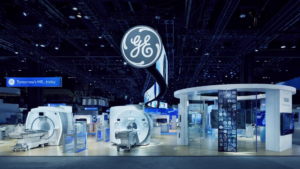
GE HealthCare Partners with Amazon Web Services to Develop Generative AI for Medical Data Analysis

GE HealthCare announced a strategic collaboration with Amazon Web Services (AWS) to develop generative artificial intelligence (AI) models and tools aimed at enhancing the analysis of complex medical data. This partnership targets the healthcare industry, which generates nearly a third of the world’s data, much of which remains underutilized due to its fragmented and inaccessible nature.

With 97% of hospital data going unused, according to a Deloitte report, GE HealthCare sees an opportunity to leverage generative AI to optimize data use across healthcare operations. The collaboration with AWS will focus on creating AI models that can streamline various medical processes, including screenings, diagnoses, decision support, and workflow management such as scheduling.

Dr. Taha Kass-Hout, GE HealthCare’s global chief science and technology officer, highlighted that this partnership will enable hospitals and clinicians to maximize the potential of their existing data. AWS’s advanced solutions, including Amazon Bedrock and Amazon SageMaker, will provide the technical infrastructure necessary for developing these AI models at scale.

Additionally, GE HealthCare plans to utilize AWS’s AI tools to boost internal productivity. One of the initial projects includes deploying Amazon Q Developer, an assistive tool that generates real-time code suggestions for software developers, thereby improving their efficiency.

While GE HealthCare already offers AI tools, this collaboration with AWS is expected to accelerate the development and deployment of new AI-driven medical applications. These innovations will initially be available to GE HealthCare employees and customers, with plans for broader accessibility in the future. The company maintains strict testing standards to ensure the reliability and safety of its AI applications.