
Researchers Establish Tighter Mass Constraints on Ultralight Bosonic Dark Matter

For more than eight decades, dark matter has remained one of the most intriguing mysteries in astrophysics. Despite its pervasive influence on the cosmos, dark matter has never been directly observed; instead, its presence is inferred from the gravitational effects it exerts on visible matter, such as stars and galaxies. While scientists agree on its existence, the fundamental nature of dark matter particles, especially their mass, remains largely unknown. Previous research has managed to set constraints on fermionic dark matter particles using quantum mechanics, but bosonic dark matter has proven much harder to pin down.

A recent breakthrough study, published in Physical Review Letters, has set a new and much stronger lower limit on the mass of ultralight bosonic dark matter particles. The research team, led by Tim Zimmermann, a doctoral candidate at the University of Oslo’s Institute of Theoretical Astrophysics, used stellar motion data from Leo II, a small satellite galaxy of the Milky Way, to refine the estimates. Leo II is about a thousand times smaller than the Milky Way, making it an ideal candidate for studying dark matter’s subtle gravitational effects.

Using a sophisticated tool called GRAVSPHERE, the researchers generated thousands of possible dark matter density profiles based on the stars’ movements within Leo II. These profiles were then compared with theoretical models derived from quantum wave functions, each corresponding to different dark matter particle masses. Because bosonic particles are subject to quantum uncertainty, particles that are too light would produce a “fuzziness” effect, preventing the formation of the dense structures observed in Leo II. Their results showed that the mass of ultralight bosonic dark matter must be at least 2.2 × 10⁻²¹ electron volts (eV), which is over 100 times greater than previous lower bounds based on the Heisenberg uncertainty principle.

This finding holds substantial consequences for existing ultralight dark matter theories, especially the popular fuzzy dark matter model, which usually assumes particle masses around 10⁻²² eV. The updated mass constraints challenge these models to account for the new limits and may steer future research toward reconsidering the properties and role of bosonic dark matter in cosmic structure formation. By tightening these mass bounds, the study brings us closer to unraveling the enigmatic nature of dark matter and its influence on the universe.
NASA’s Perseverance Snaps Stunning Pre-Dawn Image of Mars’ Moon Deimos

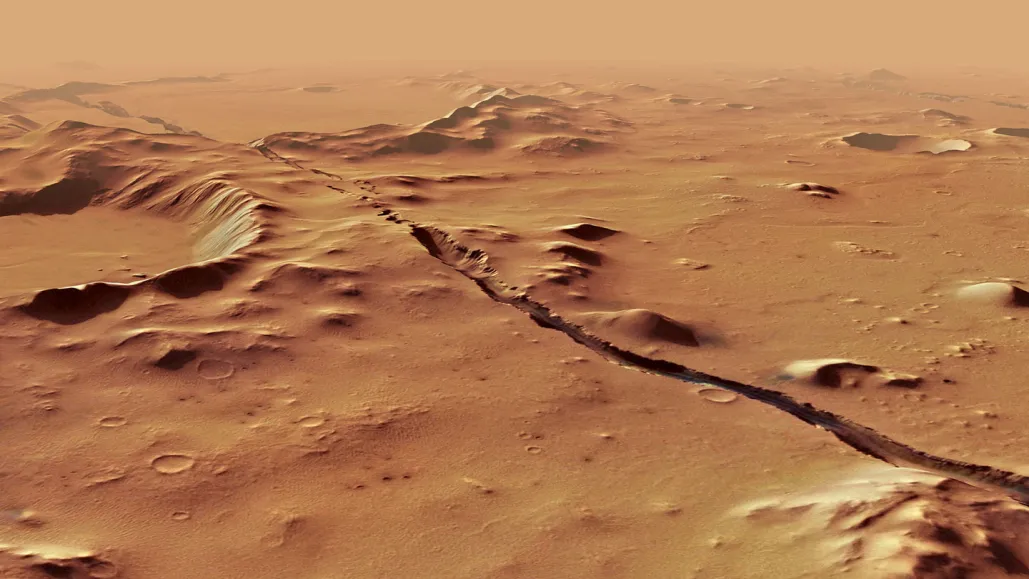
NASA’s Perseverance rover has captured a remarkable early morning image of Mars’ smaller moon, Deimos, just before dawn on March 1, 2025, marking Sol 1433 of its mission. Using its left navigation camera, the rover combined 16 long-exposure shots taken over 52 seconds, each with the maximum exposure time of 3.28 seconds. This technique allowed Perseverance to reveal the faint outline of Deimos suspended against the dim pre-dawn Martian sky. Although the resulting image is somewhat hazy due to low light and digital noise, it provides a rare and valuable glimpse of the moon from the surface of Mars.

The image also shows several bright points of light, some of which are stars from the Leo constellation, including Regulus and Algieba. Many of the other specks in the photo are likely caused by cosmic rays striking the camera sensor during exposure or by image noise, adding complexity to the scene. NASA’s Jet Propulsion Laboratory reported that the frames were stitched together onboard the rover and later transmitted to Earth for detailed analysis, highlighting the rover’s unique observational capabilities beyond its primary geological mission.

This celestial snapshot illustrates the potential of Perseverance as a tool for more than just surface exploration. By capturing long-exposure images of Mars’ moons and stars, scientists can gain insights into the planet’s atmospheric conditions and the behavior of its natural satellites. Deimos appears brighter in the image due to its reflective surface and closer position during this observation. Such imaging efforts could improve understanding of how Mars’ moons orbit and interact with the planet, which is crucial for planning future missions, including those that may use these moons as orbital waypoints.

NASA continues to enhance the scientific return of Perseverance by pushing the boundaries of its imaging capabilities. Each new observation, including views of distant cosmic bodies like Deimos before dawn, enriches our knowledge of the Martian environment and expands the horizons of planetary exploration. These images not only serve as stunning visuals but also as valuable data to help unravel the complexities of Mars and its moons.

NASA Satellite Identifies Tree Leaf Variations as Potential Early Indicator of Volcanic Eruptions

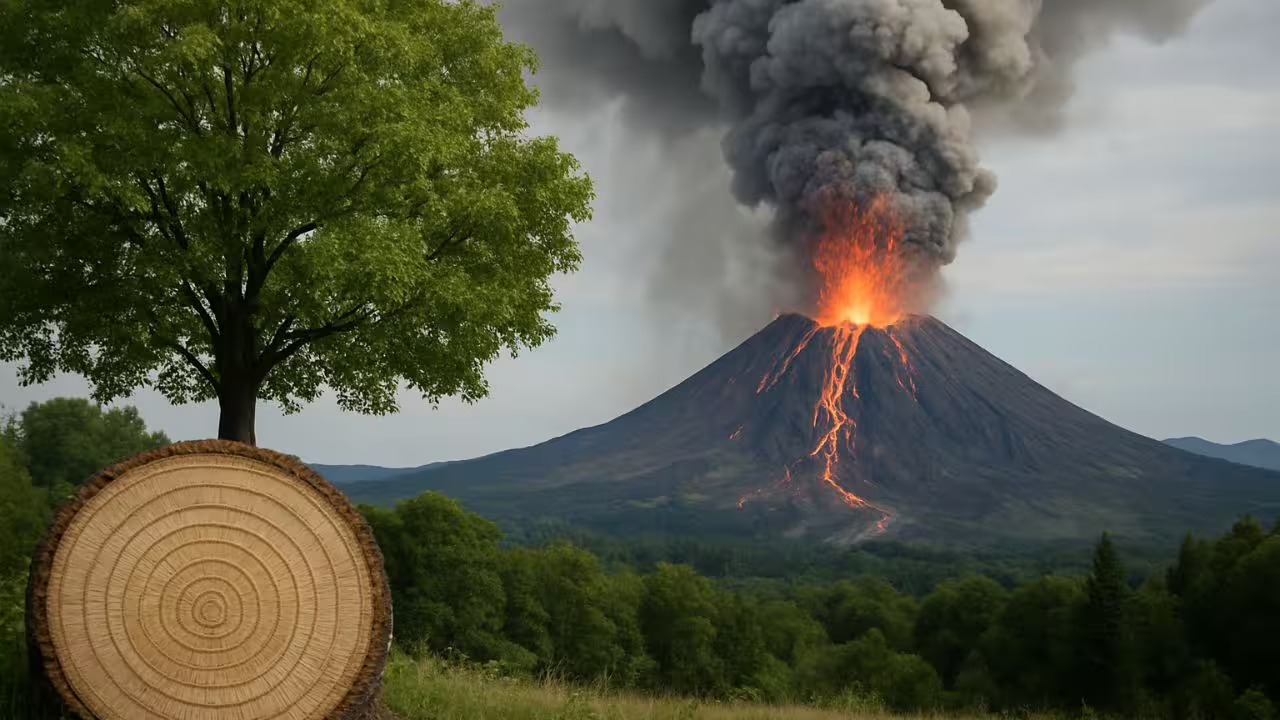
NASA scientists are exploring a novel method to predict volcanic eruptions by observing how trees respond to underground volcanic activity from space. In collaboration with the Smithsonian Institution, researchers have found that tree leaves tend to grow lusher and greener when volcanic carbon dioxide seeps through the soil, signaling magma movement beneath the surface. This natural reaction offers a promising early warning sign, potentially visible via satellites like Landsat 8 and recent missions such as AVUELO, providing an additional tool to monitor high-risk volcanoes worldwide.

According to research from NASA’s Earth Science Division at Ames Research Center, the greening of vegetation is triggered when trees absorb volcanic carbon dioxide released as magma pushes upward. Unlike sulfur dioxide, which appears later in volcanic activity and is easier to detect, carbon dioxide emissions are more challenging to observe directly from orbit. However, the indirect effect on vegetation health serves as a valuable clue to detect early stages of volcanic unrest.

Volcanologist Florian Schwandner highlights that these subtle changes in vegetation can complement existing early warning systems, particularly in remote or dangerous volcanic regions. Since on-site gas measurements can be risky and expensive, scientists like Robert Bogue and Nicole Guinn have begun investigating how tree leaf characteristics might serve as natural indicators of underground volcanic processes. Guinn’s studies around Mount Etna in Sicily demonstrated a strong link between leaf color shifts and subterranean volcanic gas emissions, with satellites like Sentinel-2 and Terra able to capture these vegetative changes effectively.

To validate this approach further, NASA and Smithsonian teams, led by climate scientist Josh Fisher, conducted fieldwork in early 2025 near active volcanoes in Panama and Costa Rica. They collected tree samples and measured gas levels to better understand the connection between vegetation response and volcanic activity. This interdisciplinary research not only aims to improve volcanic eruption forecasting but also promises insights into how long-term exposure to atmospheric carbon dioxide affects trees—information crucial for anticipating future climate dynamics.