Russian Scientists Identify 11 New Active Galactic Nuclei Through Spektr-RG X-ray Survey

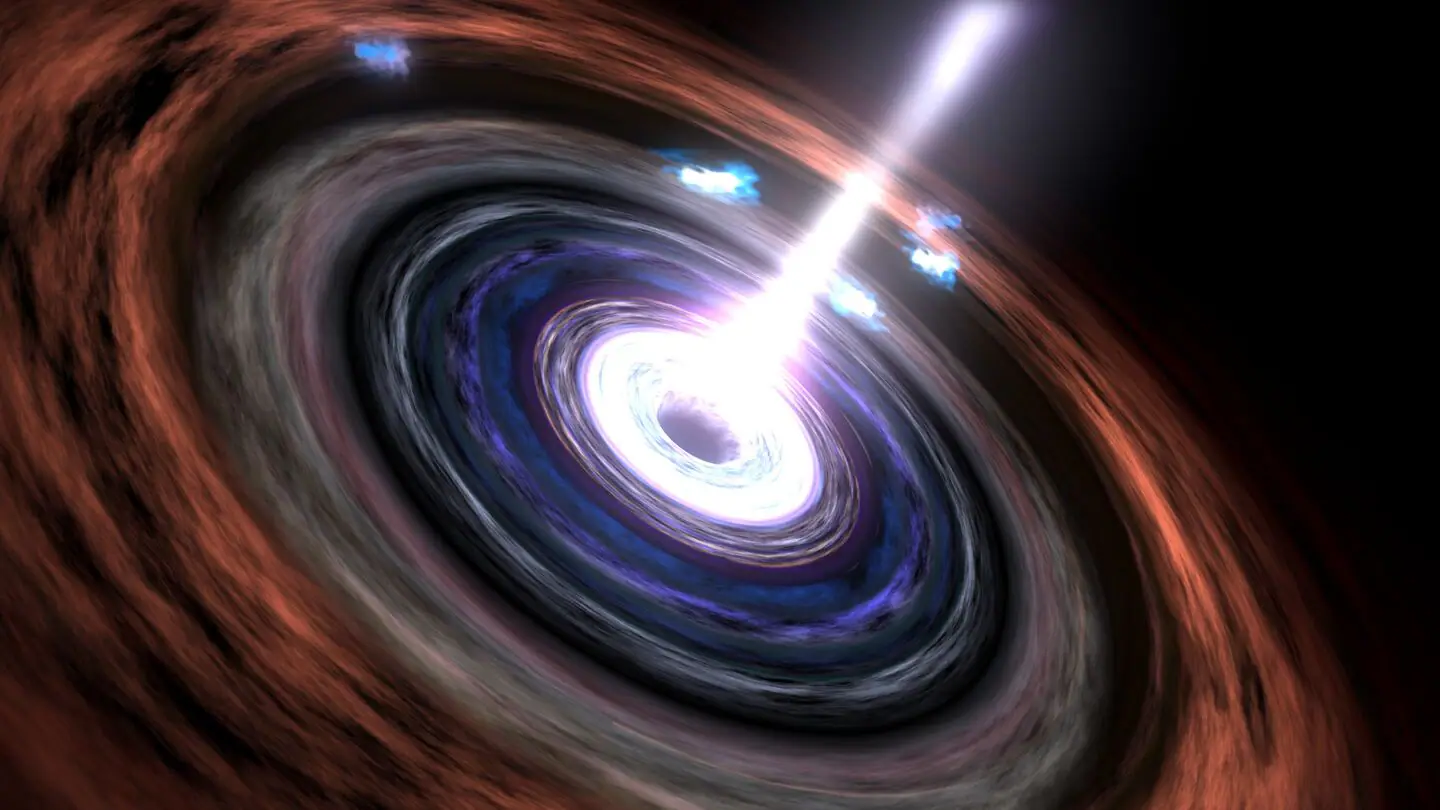
A recent survey by researchers from the Russian Academy of Sciences has led to the discovery of 11 new active galactic nuclei (AGNs) through the all-sky X-ray source observations conducted with the ART-XC telescope aboard the Spektr-RG (SRG) space observatory. Led by Grigory Uskov, the team has so far identified over 50 AGNs and several cataclysmic variables, contributing significantly to our understanding of these energetic cosmic objects. The discovery of these new AGNs provides valuable data for further research, including statistical analysis, testing cosmological models, and improving classification methods.

The newly detected AGNs, cataloged in ARTSS1-5, have been classified as Seyfert galaxies, a well-known subtype of AGNs. Among them, seven are type 1 Seyferts (Sy 1), three are type 1.9 (Sy 1.9), and one is type 2 (Sy 2). Seyfert galaxies are characterized by their luminous cores powered by supermassive black holes accreting matter. These galaxies emit strong electromagnetic radiation, especially in infrared and optical bands, and are key to understanding the nature of AGN activity due to their relatively moderate luminosities compared to quasars.

According to the study published in Astronomy Letters, the 11 AGNs are located at relatively close cosmic distances, with redshifts ranging from 0.028 to 0.258. Their X-ray luminosities vary widely, spanning from 2 to 300 tredecillion erg per second, which fits within the typical luminosity range for active galactic nuclei in the current universe. One particularly interesting source, SRGA J000132.9+240237, exhibits an X-ray spectrum with a power-law slope less than 0.5, indicating strong absorption and a significant reflection component from the galaxy’s surrounding dusty torus.

The researchers emphasize the need for longer and more detailed X-ray observations to fully understand the physical properties of these newly found AGNs. Such studies could shed light on the interaction between supermassive black holes and their host galaxies, the structure of the obscuring material around them, and their role in galaxy evolution. This ongoing work by the Russian team enhances our ability to map the high-energy universe and explore the extreme environments near supermassive black holes.


Antarctica Shows Short-Term Ice Growth Despite Ongoing Long-Term Melting, New Research Finds

Researchers from Tongji University in Shanghai have released new findings about Antarctica’s ice sheet, revealing an intriguing yet complex picture of the continent’s recent ice changes. Using over two decades of NASA satellite data, the study highlights that despite ongoing global warming, Antarctica has actually gained ice mass in the past few years. However, this short-term increase does not overturn the long-term trend of substantial ice loss, emphasizing that the recent gains are largely due to increased precipitation rather than a true reversal in climate change impacts.

The study leverages data from NASA’s Gravity Recovery and Climate Experiment (GRACE) and its successor, GRACE Follow-On satellites, which have monitored Antarctic ice since 2002. Over this period, the ice sheet initially experienced steady ice loss, which accelerated notably between 2011 and 2020—from about 81 billion tons of ice lost annually in the early 2000s to approximately 157 billion tons per year during the last decade. Surprisingly, from 2021 through 2023, the trend shifted with Antarctica gaining around 119 billion tons of ice each year. This turnaround was especially visible in four glaciers in eastern Antarctica, which shifted from losing ice rapidly to gaining mass.

While the recent increase in ice mass offers a glimmer of hope, scientists caution against interpreting it as a sign that global warming effects have been reversed. Climate change impacts are uneven across the globe, and Antarctica’s climate system is complex, influenced by localized factors such as precipitation patterns. The researchers stress that increased snowfall, which adds ice mass, is currently masking the broader warming-driven ice losses seen over the last two decades. This underscores the importance of viewing Antarctica’s ice changes as part of a nuanced and evolving climate system.

In a broader context, Antarctica has historically shown more stable temperatures compared to the Arctic, which has warmed more rapidly. Similarly, Antarctic sea ice has remained relatively stable but has started to show signs of decline in recent years. These patterns highlight how climate change impacts vary by region and reinforce the need for continued monitoring of polar ice. The study from Tongji University contributes vital insights, demonstrating that while short-term variability in ice mass exists, the long-term implications of warming remain a significant concern for the global climate system.

Astronomers Spot ‘Teleios’: A Rare Supernova Remnant with Near-Perfect Symmetry

Astronomers Uncover ‘Teleios’: A Strikingly Symmetrical Supernova Remnant

An international team of astronomers has identified a rare and unusually symmetrical supernova remnant (SNR) using data from Australia’s Square Kilometre Array Pathfinder (ASKAP). Officially designated G305.4–2.2 and nicknamed “Teleios”—derived from the Greek word for “perfect”—this SNR displays an extraordinary degree of circular symmetry, setting it apart from the majority of known remnants that typically appear irregular or distorted. The discovery was made as part of the Evolutionary Map of the Universe (EMU) project, which aims to chart millions of galaxies and deep-sky structures through radio-continuum surveys.

What makes Teleios so remarkable is its near-perfect spherical structure. Most SNRs expand unevenly due to the chaotic nature of the surrounding interstellar medium (ISM), which disrupts the shockwave’s outward propagation. However, a few rare remnants, such as SN1987A or MC SNR J0509–6731, have been noted for their symmetrical shapes—though even among these, Teleios stands out. Its uniform shell-like appearance suggests that the ISM in its vicinity may be unusually homogeneous, or that the explosion dynamics were particularly well-balanced.

Researchers estimate that Teleios lies at a distance of either 7,170 or 25,100 light-years, depending on the model used. These distances correspond to a diameter of 45.6 or 156.5 light-years, respectively. Further analysis of radio emissions within the southeastern portion of the shell revealed faint extended signals. This suggests possible interaction with nearby ISM structures. Additionally, the remnant’s steep spectral index of -0.6 indicates that it is either relatively young or has evolved in a unique way, maintaining a low surface brightness throughout its life cycle.

The discovery of Teleios adds a fascinating new case study to the catalog of known SNRs and highlights the power of next-generation radio telescopes like ASKAP. As researchers continue to probe its characteristics, Teleios may provide new insights into the physics of supernovae, shockwave propagation, and the large-scale structure of the ISM. Its rare symmetry makes it an ideal target for follow-up studies across multiple wavelengths, potentially unlocking new clues about the life and death of stars in our galaxy.