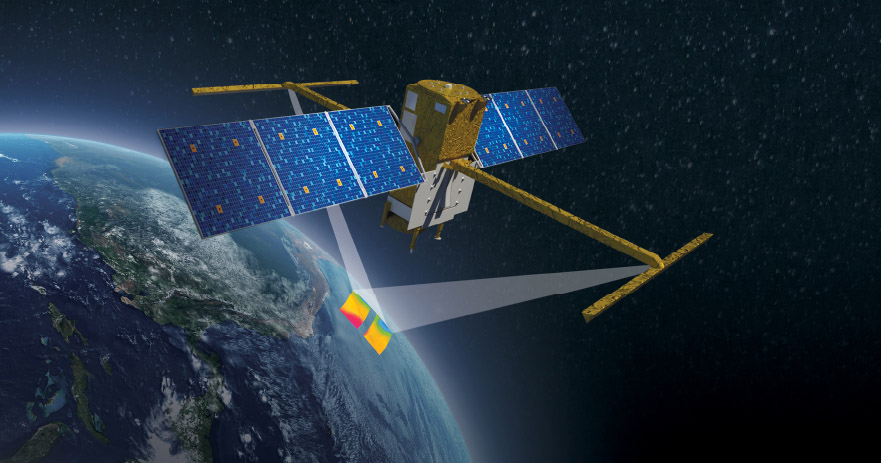
NASA’s SWOT Satellite Uncovers Outsized Role of Tiny Ocean Currents in Shaping Marine Ecosystems

NASA’s SWOT Satellite Sheds Light on Hidden Ocean Currents That Influence Global Climate and Marine Life

The smallest of ocean waves and currents, long overlooked by traditional observation methods, are now emerging as key players in shaping the Earth’s climate and marine ecosystems. Thanks to high-resolution imaging from NASA’s SWOT (Surface Water and Ocean Topography) satellite—developed in partnership with the French space agency CNES—scientists are getting an unprecedented view of submesoscale ocean activity. These features, spanning just a mile or so, are instrumental in transferring carbon, heat, and nutrients throughout ocean layers, highlighting the hidden complexity and power of the world’s marine systems.

In recent studies led by NASA’s Jet Propulsion Laboratory (JPL), SWOT has demonstrated its ability to map vertical ocean currents in detail. Previously, such currents fell into a frustrating observational blind spot: too small for satellites to detect, yet too vast for direct ship-based instruments to monitor. With SWOT, researchers can now see how these vertical circulations move water—and the energy and materials within it—from deep ocean layers to the surface, impacting everything from temperature regulation to nutrient cycles. For instance, the satellite tracked a swirling submesoscale eddy in the Kuroshio Current and detected vertical movements of up to 14 meters per day.

These vertical exchanges play a crucial role in ecosystem health and climate processes. “Vertical currents can bring heat from deep layers to the surface, warming the atmosphere,” said oceanographer Matthew Archer. In another case, SWOT identified an internal solitary wave in the Andaman Sea that carried twice the energy of a typical internal tide. Using sea surface height data, the satellite helps researchers infer not only the slope of waves but also the fluid pressure, which ultimately reveals the strength and influence of oceanic motion. “Force is the fundamental quantity driving fluid motion,” added coauthor Jinbo Wang from Texas A&M University.

Beyond observation, the SWOT mission is reshaping the way scientists model the ocean. Lee Fu, a senior researcher at JPL, emphasized that ocean simulation tools must now adapt to account for these newly visible small-scale processes. NASA has already begun integrating SWOT data into its ECCO ocean model to improve accuracy in climate forecasting. As SWOT continues to provide continuous, detailed measurements of ocean topography, it promises to deepen our understanding of how fine-scale ocean mechanics influence broader environmental changes and climate dynamics.
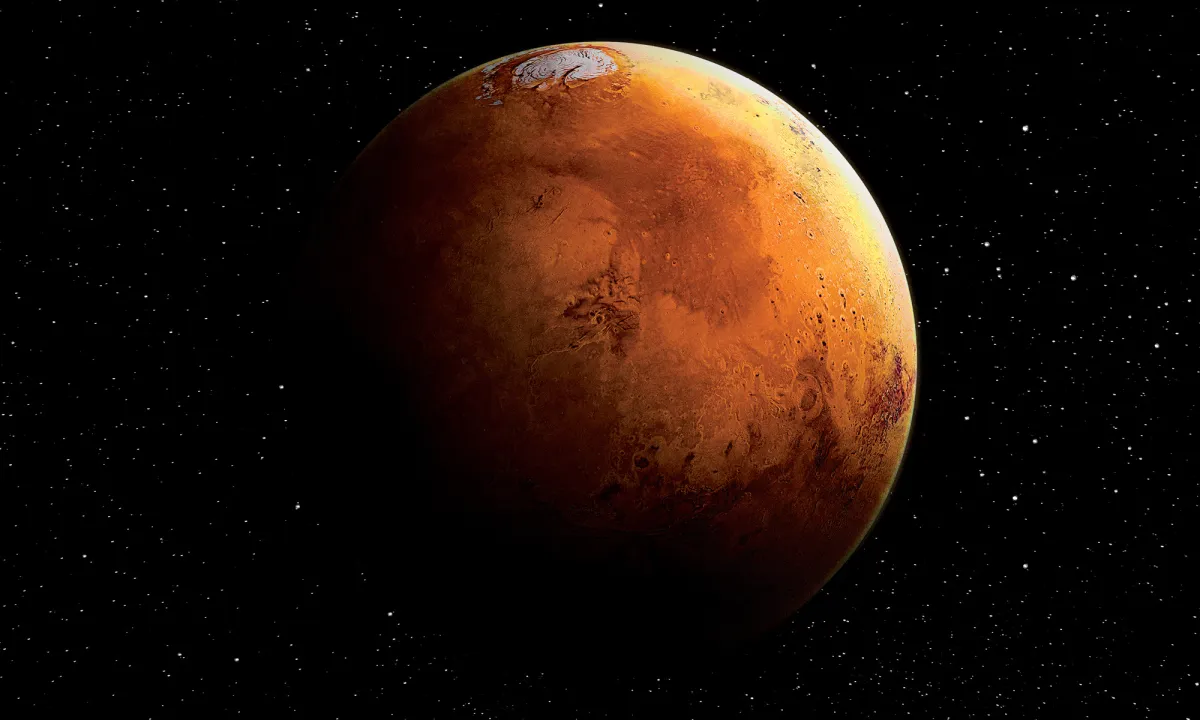
NASA’s Europa Clipper Snaps Striking Infrared View of Mars During Deep-Space Test

NASA’s Europa Clipper Captures Striking Infrared Views of Mars During Critical Flyby Test

NASA’s Europa Clipper spacecraft recently captured an impressive infrared image of Mars as it performed a gravity-assist flyby during its voyage to Jupiter’s icy moon Europa. This close encounter took place on March 1, 2025, when the spacecraft flew just 550 miles (885 kilometers) above the Martian surface. The maneuver was designed to adjust the spacecraft’s speed and trajectory for the next leg of its interplanetary journey. During the flyby, the mission team tested the spacecraft’s E-THEMIS instrument—a sophisticated thermal imager meant to study Europa’s surface for potential signs of life.

The Mars flyby was not only a navigational milestone but also served as a key calibration opportunity for E-THEMIS. According to NASA, the instrument captured over 1,000 infrared greyscale images during an 18-minute data-gathering window. These images began reaching Earth on May 5. Researchers are now comparing the new thermal snapshots with legacy thermal maps from NASA’s Mars Odyssey Orbiter, which has been monitoring the Red Planet since 2001. This comparison helps validate the performance and accuracy of E-THEMIS, ensuring it will deliver reliable data once the spacecraft reaches Europa.

One of the primary functions of E-THEMIS is to detect subtle variations in surface temperature, which can indicate recent geologic activity. At Europa, such thermal mapping will be used to identify “hotspots” where the icy shell may be thinner or more dynamic. These regions could provide crucial clues about the moon’s subsurface ocean—an environment that scientists believe has the potential to support life. The instrument’s ability to pinpoint areas of recent or ongoing activity could direct future landing missions to the most promising locations for astrobiological exploration.

This Mars flyby also marked the first time Europa Clipper’s radar instrument was tested in space. While initial results are promising, further analysis is underway. Looking ahead, the spacecraft is scheduled for another gravity-assist maneuver with Earth in 2026 before finally reaching the Jovian system. The Europa Clipper is expected to arrive at Jupiter in April 2030, where it will begin its main mission—studying the potential habitability of Europa and searching for signs of life beneath its icy crust.

SpaceX Conducts Static Fire Test of Starship Upper Stage Ahead of Ninth Flight

SpaceX has once again demonstrated progress with its next-generation Starship spacecraft by conducting a full-duration static fire test of the vehicle’s upper stage on May 12th at its Starbase facility in South Texas. During this important milestone, the 171-foot-tall upper stage fired all six Raptor engines for approximately 60 seconds, confirming the ship’s readiness as it undergoes final preparations. This test marks the third static fire for this particular Starship, highlighting SpaceX’s methodical approach to refining the vehicle before its highly anticipated ninth test flight. The company shared video and images from the test on social media, giving enthusiasts a closer look at the spacecraft’s development.

This static fire represents one of the last critical steps before the vehicle’s next launch, though SpaceX has yet to announce an official date. The booster designated for Flight 9 has also completed its own static fire test, fueling speculation that the launch could be imminent, possibly within weeks. Once fully assembled, the Starship system towers at 403.5 feet, making it the most powerful rocket ever built. Its design emphasizes full reusability for both the Super Heavy booster and the Starship upper stage—an essential feature for future missions to the Moon, Mars, and beyond.

To date, Starship has flown eight test missions, including two in 2025. While the launches themselves proceeded smoothly, the upper stage encountered failures shortly after reaching space during both 2025 flights. Notably, the Super Heavy booster executed impressive and precise landings back at Starbase, aided by the giant launch tower’s “chopstick” arms—a first-of-its-kind rocket-catching method. However, the upper stage exploded less than ten minutes post-launch on both occasions, raising questions about its stability and resilience.

Despite these setbacks, SpaceX continues to refine Starship, pushing closer to achieving a fully reusable spacecraft capable of supporting ambitious space exploration goals. With multiple static fire tests completed and ongoing improvements, the ninth launch is expected to come soon, provided the company maintains its rapid pace of testing and development at Starbase. Enthusiasts and space watchers alike remain eager to see how Starship progresses on its path toward becoming a cornerstone for humanity’s interplanetary future.