NOAA Warns of Increased Solar Storm Risk with Double CME Strike on Earth

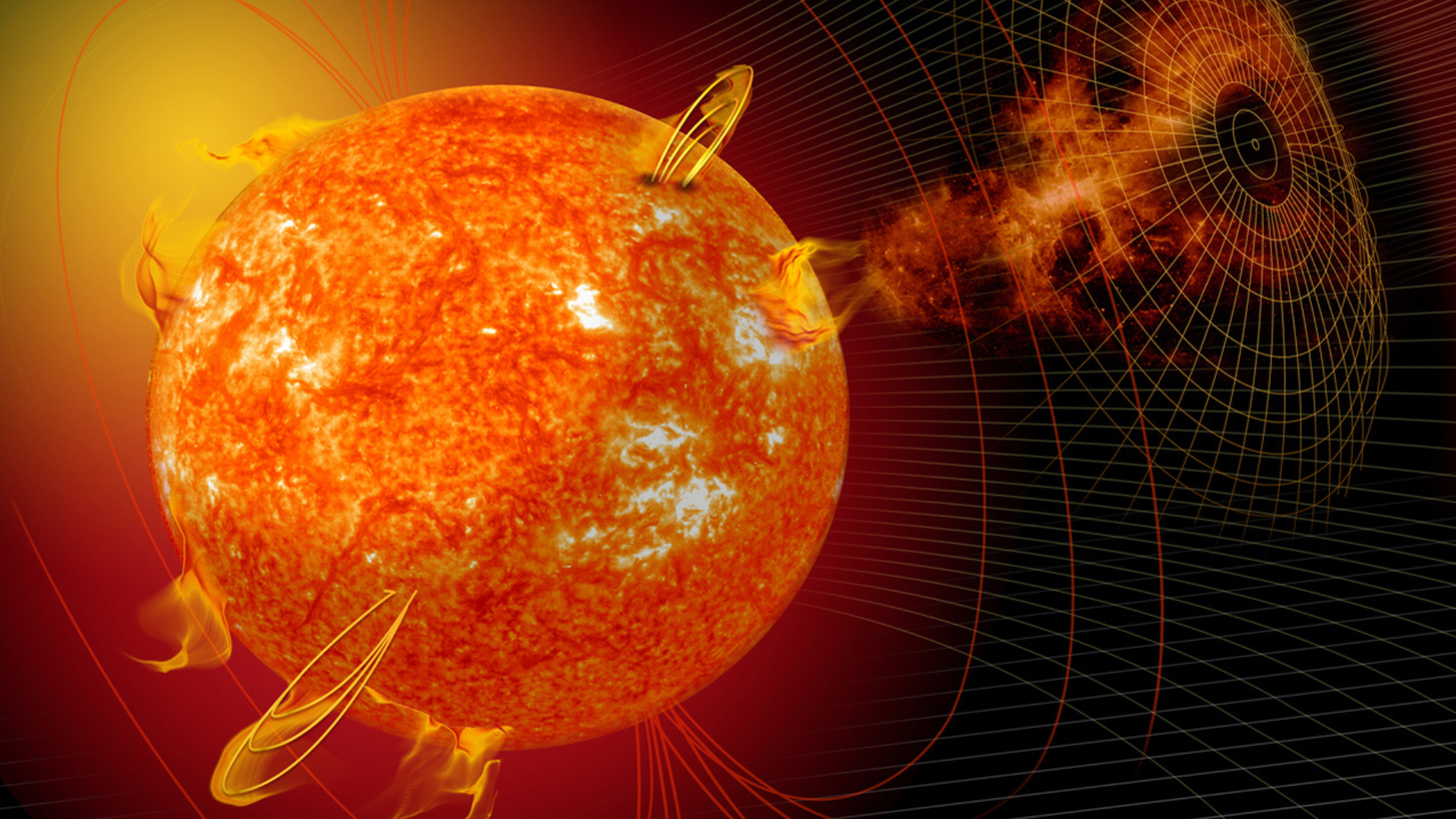
A rare and powerful event took place, as two separate coronal mass ejections (CMEs) erupted from the Sun, heading directly toward Earth. These solar eruptions are predicted to result in a spectacular display of auroras or northern lights, with the most intense show expected around April 16. However, the impact of these CMEs goes beyond just the visual beauty they may bring. Due to the magnitude and trajectory of the solar particles, the event is also anticipated to cause geomagnetic storms, which could affect various regions on Earth. The phenomenon was closely monitored by space agencies, who have deemed the likelihood of geomagnetic activity particularly high.

The CMEs originated from an unusually active sunspot region, known for producing both M-class and X-class solar flares in the preceding days. According to the National Oceanic and Atmospheric Administration (NOAA), these intense solar eruptions have prompted the issuance of a geomagnetic storm watch. The storm is expected to reach Earth on April 16, bringing with it the potential for moderate (G2) or even strong (G3) geomagnetic storms. While these types of storms can disrupt communications and power systems, they also offer a rare opportunity for skywatchers to witness extraordinary auroral displays. NOAA’s Space Weather Prediction Center is closely tracking the event to provide up-to-date information to the public.

Typically, auroras are visible in the polar regions, where geomagnetic storms are most intense. However, this particular event is expected to extend the auroral visibility much further south than usual. Regions like Canada, Minnesota, Michigan, Idaho, New York, and parts of Northern Europe may experience glimpses of the northern lights. Predictions from the European Space Agency (ESA) suggest that the incoming solar material could generate powerful auroras across these areas. According to space weather physicist Tamitha Skov, the solar storms are expected to travel slowly, but with their high density, they could still pack a significant punch, producing particularly vibrant and widespread displays.

CMEs are massive explosions of solar plasma and magnetic fields that, when directed toward Earth, interact with our planet’s magnetosphere. This interaction triggers a chain reaction, causing the charged particles to collide with Earth’s atmosphere. The result is the formation of colorful auroras, which are often seen as shimmering green, purple, and red lights. However, CMEs can also disrupt communication systems, such as radio waves and GPS signals, and even cause power outages by interfering with electrical grids. As scientists continue to study the Sun’s activity, they anticipate more solar storms throughout the remainder of the solar cycle, particularly as the Sun reaches its peak activity. These storms will likely become a more frequent phenomenon in the coming months.

Katy Perry and All-Female Crew Complete Successful Spaceflight Return

Blue Origin Successfully Completes Historic All-Female Spaceflight Featuring Katy Perry and Others

Blue Origin, the aerospace company founded by Jeff Bezos, marked a historic milestone on Monday, April 14, by completing the first-ever all-female crewed spaceflight. This landmark mission, NS-31, was the 31st overall launch and the 11th human spaceflight for Blue Origin’s reusable New Shepard spacecraft. Notably, it was the first time since 1963 — when Valentina Tereshkova became the first woman in space — that an all-female group journeyed to the edge of space together.

The crew included a dynamic mix of personalities: global pop icon Katy Perry, television journalist Gayle King, NASA rocket scientist Aisha Bowe, film producer Kerianne Flynn, civil rights advocate Amanda Nguyen, and journalist Lauren Sánchez, who is also Jeff Bezos’ fiancée. The initiative was largely spearheaded by Sánchez, and it celebrated the achievements of women from various walks of life. The team’s spirit was reflected in their specially designed mission patch, “the six taking up space,” featuring symbolic elements representing each astronaut’s background and contributions.

The New Shepard lifted off at 9:31 a.m. ET from Blue Origin’s West Texas launch site, reaching the Kármán line — the recognized boundary of space, situated roughly 100 kilometers above Earth. During their brief but unforgettable journey, the crewmembers experienced a few minutes of weightlessness, floating freely while marveling at the breathtaking views of the Earth below and the endless expanse beyond. One touching moment captured during the livestream was Katy Perry’s joyful reaction upon seeing the Moon, exclaiming, “Oh my God, that’s our pink Moon!”

The entire mission lasted approximately 11 minutes and concluded with a safe landing back at the launch site. This successful flight not only underlined Blue Origin’s focus on broadening space access but also symbolized a powerful message of female empowerment and achievement. The NS-31 mission stands as a tribute to how far space travel — and the role of women within it — has evolved over the past six decades.

Astronomers Discover Methane in Atmosphere of Nearest T Dwarf Star to Earth

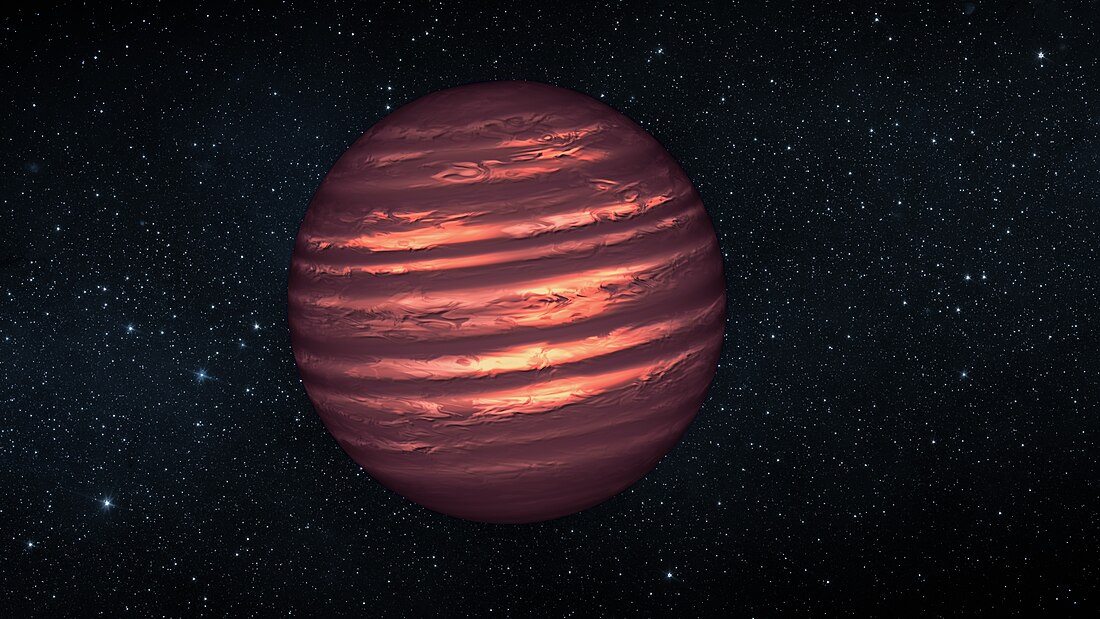
Astronomers have made an intriguing discovery in the atmosphere of WISEA J181006.18 −101000.5, a T dwarf star that holds the title of being the closest of its kind to Earth. Situated 29 light years away, this star has long intrigued scientists due to its peculiar characteristics. The most recent breakthrough came from a study published on March 28, with a revised version appearing on November 17. The research confirmed the presence of methane in the star’s atmosphere, adding another layer to its complex profile. Previously, WISEA J181006 was considered a metal-poor T dwarf, with an effective temperature range between 800–1,300 K.

This methane discovery has caught astronomers off guard, as it reshapes the classification of the star. The presence of methane was made possible through observations from the 10.4-meter Gran Telescopio Canarias (GTC), which provided the critical data. The detection of methane in the atmosphere strengthens the star’s classification as a T-type dwarf, overturning earlier suggestions that it might belong to the L-type category. The study also found that there were no detectable traces of carbon monoxide or potassium in the atmosphere of WISE1810, offering further clues about its composition.

In terms of chemical makeup, the research suggests that the carbon abundance in the star’s atmosphere is estimated to be -1.5 dex. The effective temperature is speculated to be around 1,000 K, but the star’s low metallicity might be a key factor in these readings. The absence of atomic potassium, a telltale sign of metallicity, points toward a lack of heavier elements. The study also considers how a lower temperature could potentially amplify this effect, making the star’s composition even more unusual. These findings mark a significant step forward in our understanding of T dwarfs and their atmospheric conditions.

Another interesting element in the study is WISE1810’s heliocentric velocity, recorded at -83 km/s. This gives insight into the star’s motion within the galaxy, which could be an essential piece in understanding its origin. Despite its low metallicity, the findings suggest that WISEA J181006 might be associated with the Milky Way’s thick disk, a region known for its older stars. Previous observations had hinted that the star’s atmosphere was primarily composed of hydrogen and water vapor, but the discovery of methane introduces a new dimension to its atmospheric chemistry. This breakthrough could ultimately help astronomers refine the criteria for classifying T dwarfs and offer fresh perspectives on the nature of distant celestial objects.