
German Startup’s Space Rocket Explodes After Takeoff from Norway

A test launch by the German space startup Isar Aerospace ended in failure on Sunday, with its Spectrum rocket exploding 40 seconds after liftoff from Norway’s Andøya Spaceport. The uncrewed rocket, designed for small and medium-sized satellites, was a part of an initial test intended to kickstart satellite launches from Europe, aiming to compete in the growing commercial space market.

The Spectrum rocket, which had no payload on its maiden flight, was designed to carry satellites weighing up to one metric tonne into orbit. Despite the failure, Isar Aerospace emphasized that the test generated valuable data to improve future launches. The company had previously warned that the first launch might end prematurely.

The test launch marked a significant step toward Europe’s ambition to establish a stronger presence in space exploration, especially as the continent seeks to reduce reliance on global space giants like SpaceX and ArianeGroup. Europe’s aspirations include ensuring greater autonomy in satellite launches, with countries like Sweden, the UK, and Norway working on establishing their own spaceports.

Despite the setback, industry observers, including the German aerospace association BDLI, remain optimistic. BDLI Managing Director Marie-Christine von Hahn highlighted the need for European sovereignty in space to provide alternatives to Musk’s Starlink service.

Isar Aerospace is among several European companies vying for a share of the satellite launch market, with rivals such as Sweden’s Esrange and the UK’s SaxaVord Spaceport also working on their first orbital missions. Isar’s next steps will be closely watched as it continues to refine its space launch technology.
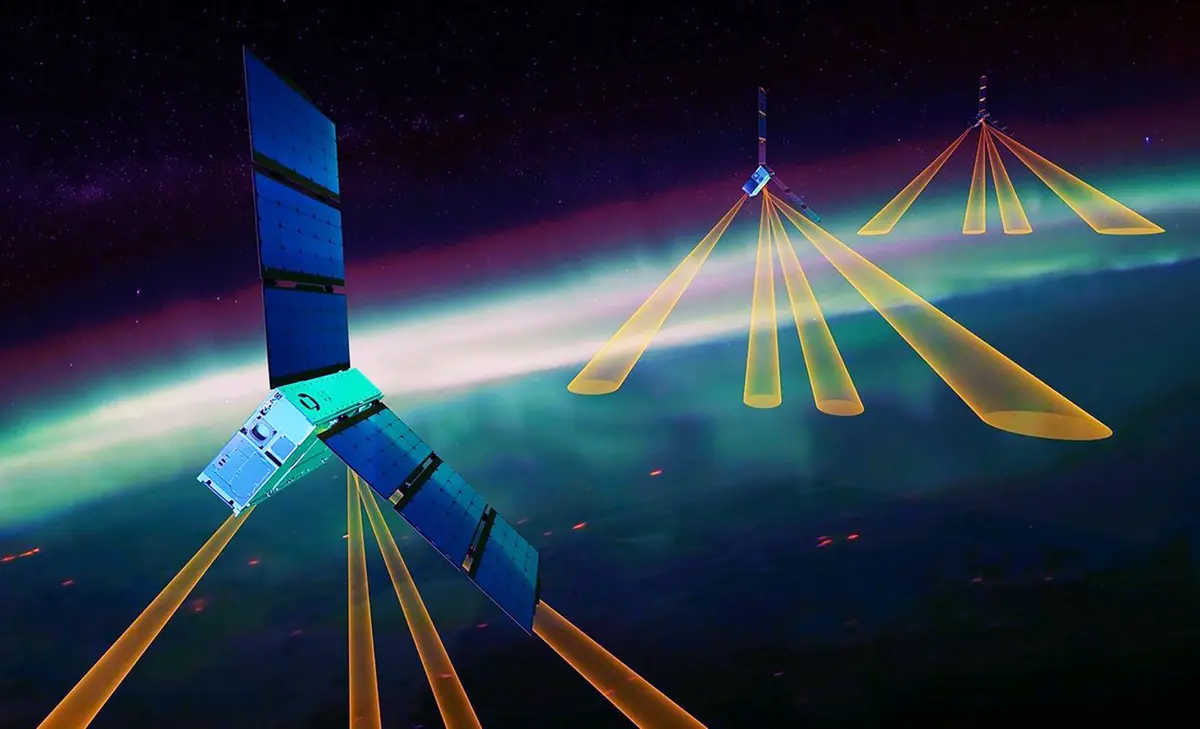

NASA’s EZIE Satellites Launch Mission to Study Auroral Electrojets and Space Weather

NASA’s Electrojet Zeeman Imaging Explorer (EZIE) mission successfully launched from Vandenberg Space Force Base in California on March 14, 2025, aboard a SpaceX Falcon 9 rocket. This launch marks the beginning of a groundbreaking mission designed to study auroral electrojets—intense electrical currents that flow through Earth’s upper atmosphere, particularly in polar regions. The mission’s three small satellites were deployed into orbit shortly after launch, with signals confirming their proper deployment by 2 a.m. PDT on March 15. Over the next several days, the satellites will undergo testing to ensure they are fully operational before beginning their 18-month mission.

The primary goal of the EZIE mission is to map the auroral electrojets and better understand their role in space weather. These currents, which are closely tied to solar storms, have a direct impact on Earth’s magnetic field and auroras. They also influence satellite communications and operations. The EZIE satellites will fly in a unique “pearls-on-a-string” formation, orbiting between 260 and 370 miles above Earth. This innovative approach will allow researchers to track the currents more precisely, potentially improving forecasting of space weather events that affect modern technology. As Jared Leisner, Program Executive for EZIE, noted, small-scale missions like EZIE offer invaluable scientific insights despite the inherent risks, contributing to broader research on planetary magnetic fields beyond Earth.

In contrast to traditional propulsion systems, the EZIE satellites will rely on atmospheric drag to adjust their orbits. This method of orbit control is a departure from previous studies of auroral electrojets, which have typically used either large or small-scale observations. By employing this new technique, EZIE will offer fresh perspectives on how these electrical currents form and evolve over time, providing key insights into the dynamics of space weather. NASA’s Goddard Space Flight Center’s Larry Kepko emphasized how this approach will yield valuable data to further understand the complex magnetic interactions in Earth’s atmosphere and beyond.

To enhance public engagement and educational outreach, NASA is distributing EZIE-Mag magnetometer kits to students and science enthusiasts. These kits allow participants to collect data on Earth’s electrical currents, which will then be integrated with measurements taken by the EZIE satellites. This collaboration between space-based research and citizen science aims to deepen understanding of the planet’s electrical environment. The EZIE mission is managed by NASA’s Goddard Space Flight Center’s Explorers Program Office, with support from the Johns Hopkins Applied Physics Laboratory, Blue Canyon Technologies, and NASA’s Jet Propulsion Laboratory.

Antarctic Ice Melt Slows Earth’s Strongest Ocean Current, Disrupting Global Circulation

The Antarctic Circumpolar Current (ACC), one of the planet’s most powerful ocean currents, is reportedly losing strength due to the increasing influx of cold meltwater from Antarctica. This weakening of the ACC could have profound consequences for global ocean circulation, with scientists predicting it could slow by as much as 20 percent by 2050. The ACC plays a crucial role in regulating heat exchange between the oceans and influencing global climate patterns. As it weakens, it could trigger a series of changes, affecting sea levels, ocean temperatures, and marine ecosystems across the globe.

A recent study published in Environmental Research Letters sheds light on how the Antarctic ice melt is influencing the ACC. Led by Bishakhdatta Gayen, a fluid mechanist at the University of Melbourne, the research utilized one of Australia’s most advanced climate simulators to examine the complex interactions between the ice sheet and the surrounding ocean waters. The study found that the addition of fresh, cold meltwater into the ocean disrupts the density of the water, weakening the convection processes that typically drive deep ocean circulation. This alteration reduces the efficiency of the ACC, leading to a slowdown in its overall movement.

The consequences of a slower ACC could be far-reaching. One major concern is that as convection weakens, warm ocean water could travel deeper into Antarctic waters, accelerating ice melt and contributing to the rising sea levels. This process would exacerbate the impacts of climate change, as rising sea levels pose a direct threat to coastal communities and ecosystems worldwide. Moreover, the weakening current could allow invasive species to penetrate the Antarctic coastline, disrupting delicate marine ecosystems. Gayen likened the change to a “merry-go-round,” suggesting that slower currents could enable faster migration of marine organisms toward Antarctica, further altering the region’s biodiversity.

As scientists continue to monitor the changes in the ACC, it is becoming clear that the impact of this shift will extend beyond Antarctica. The weakening current is expected to affect global ocean circulation patterns, potentially altering weather systems, nutrient flows, and marine life distributions across the planet. Long-term monitoring and further research will be essential to understanding the full scope of these changes, as scientists are only beginning to study the detailed behavior of the ACC and its role in Earth’s climate system. The disruption of this powerful ocean current could be one of the more significant challenges in understanding how global climate change will unfold in the coming decades.