
Close Menu
  • Home
  • Technology
  • Devices
  • Business
  • Science
  • Gadgets
  • Startups
Ayaksız
  • Home
  • Technology

    Lucid and Bolt Plan 25,000 Robotaxis for Europe

    Eylül 18, 2026

    AMD Gives PC Builders More Choice With New Ryzen 5 Desktop Chips

    Eylül 11, 2026

    Apple Expands Device Protection With a $49.99 Family Plan

    Eylül 11, 2026

    Snapdragon 8 Elite Extreme Gen 6 Reportedly Beats MediaTek’s Next Flagship Chipset

    Eylül 11, 2026

    Pinterest CFO Julia Donnelly to Step Down in October

    Ağustos 30, 2026
  • Devices

    iQOO 16 Design and Colour Options Unveiled With Major Camera Upgrade Confirmed

    Eylül 11, 2026

    Lava Bold N4 Pro 5G India Launch Date, Design and Key Specs Confirmed

    Eylül 11, 2026

    Xiaomi 18 Pro Max Geekbench Listing Reveals Key Specifications

    Eylül 10, 2026

    Samsung Galaxy Tab S12 Ultra, Tab S12+ Design Leaks in New Renders

    Eylül 10, 2026

    Vivo X500 Series Designs Revealed Ahead of September Launch

    Eylül 10, 2026
  • Business

    Google Pixel 11 Pro Leaked Renders Indicate It Might Sport Thinner Bezels Than the Pixel 10 Pro

    Mart 30, 2026

    Motorola Edge 70 Debuts With Snapdragon 7 Gen 4, Ultra-Slim 5.99mm Body

    Kasım 5, 2025

    Samsung Galaxy S26 Series Could See Price Increase Amid Rising Component Costs: Report

    Kasım 4, 2025

    Amazon’s AWS Partners with NBA to Power New AI Basketball Platform

    Ekim 4, 2025

    Billionaire-Backed Bitcoin Firm OranjeBTC to List on Brazil’s B3 Exchange

    Ekim 4, 2025
  • Science

    SpaceX’s $1.75 Trillion Valuation Raises Questions Ahead of IPO

    Nisan 11, 2026

    US Moves to Ease Satellite Power Limits, Boosting Space Broadband

    Nisan 10, 2026

    iPhone 17 Pro Max NASA Approves iPhone 17 Pro Max for Use on Artemis 2 Deep Space Mission

    Nisan 6, 2026

    Spain’s First Private 5G Satellite Mission

    Şubat 17, 2026

    Eutelsat Signs Launch Deal With MaiaSpace for LEO Satellites

    Ocak 17, 2026
  • Gadgets

    Vivo Buds Debut in India With Up to 50-Hour Battery Life

    Eylül 10, 2026

    Moto Buds 2 Fusion India Launch Date Confirmed, Features Teased

    Eylül 10, 2026

    Sennheiser Unveils Accentum Clip Earbuds With Up to 36 Hours of Total Battery Life

    Temmuz 2, 2026

    Nothing Ear 3a and CMF Buds Neo Appear in Regulatory Filings, Hinting at Upcoming Launch

    Haziran 2, 2026

    OnePlus Watch 4 Leak Hints at Launch With Snapdragon W5 and OxygenOS Watch 8

    Nisan 22, 2026
  • Startups

    Glean Reaches $7.2 Billion Valuation Amid AI Investment Surge

    Haziran 15, 2025

    How I Built a $2 Billion Super App: The Journey of Grab’s Anthony Tan and ’20-Hour’ Workdays

    Ekim 7, 2024

    Tupperware Files for Bankruptcy as Demand Declines

    Eylül 18, 2024

    Wildfire Detection Device Wins UK James Dyson Award

    Eylül 12, 2024

    Japan and Tokyo Governments Eye $4.7 Billion Valuation for Tokyo Metro in Upcoming IPO

    Ağustos 19, 2024
Ayaksız
Anasayfa » Blog » NASA’s EZIE Satellites Launch Mission to Study Auroral Electrojets and Space Weather
Science

NASA’s EZIE Satellites Launch Mission to Study Auroral Electrojets and Space Weather

By ayaksızNisan 3, 2025Yorum yapılmamış3 Mins Read
Facebook Twitter Pinterest LinkedIn Tumblr Email
Share
Facebook Twitter LinkedIn Pinterest Email

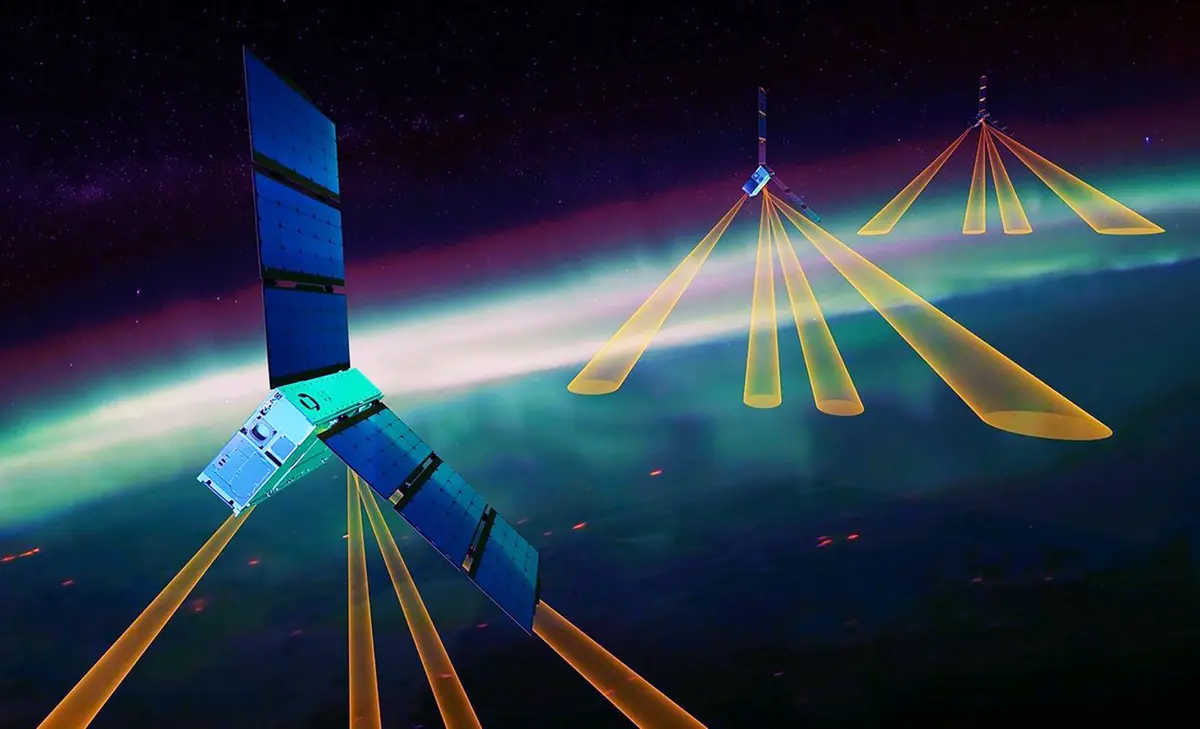
NASA’s Electrojet Zeeman Imaging Explorer (EZIE) mission successfully launched from Vandenberg Space Force Base in California on March 14, 2025, aboard a SpaceX Falcon 9 rocket. This launch marks the beginning of a groundbreaking mission designed to study auroral electrojets—intense electrical currents that flow through Earth’s upper atmosphere, particularly in polar regions. The mission’s three small satellites were deployed into orbit shortly after launch, with signals confirming their proper deployment by 2 a.m. PDT on March 15. Over the next several days, the satellites will undergo testing to ensure they are fully operational before beginning their 18-month mission.

The primary goal of the EZIE mission is to map the auroral electrojets and better understand their role in space weather. These currents, which are closely tied to solar storms, have a direct impact on Earth’s magnetic field and auroras. They also influence satellite communications and operations. The EZIE satellites will fly in a unique “pearls-on-a-string” formation, orbiting between 260 and 370 miles above Earth. This innovative approach will allow researchers to track the currents more precisely, potentially improving forecasting of space weather events that affect modern technology. As Jared Leisner, Program Executive for EZIE, noted, small-scale missions like EZIE offer invaluable scientific insights despite the inherent risks, contributing to broader research on planetary magnetic fields beyond Earth.

In contrast to traditional propulsion systems, the EZIE satellites will rely on atmospheric drag to adjust their orbits. This method of orbit control is a departure from previous studies of auroral electrojets, which have typically used either large or small-scale observations. By employing this new technique, EZIE will offer fresh perspectives on how these electrical currents form and evolve over time, providing key insights into the dynamics of space weather. NASA’s Goddard Space Flight Center’s Larry Kepko emphasized how this approach will yield valuable data to further understand the complex magnetic interactions in Earth’s atmosphere and beyond.

To enhance public engagement and educational outreach, NASA is distributing EZIE-Mag magnetometer kits to students and science enthusiasts. These kits allow participants to collect data on Earth’s electrical currents, which will then be integrated with measurements taken by the EZIE satellites. This collaboration between space-based research and citizen science aims to deepen understanding of the planet’s electrical environment. The EZIE mission is managed by NASA’s Goddard Space Flight Center’s Explorers Program Office, with support from the Johns Hopkins Applied Physics Laboratory, Blue Canyon Technologies, and NASA’s Jet Propulsion Laboratory.

Auroral Electrojets Earth’s Magnetosphere EZIE Falcon 9 Johns Hopkins APL NASA Solar Storms Space Weather SpaceX Vandenberg
Share. Facebook Twitter Pinterest LinkedIn Tumblr Email
ayaksız
  • Website

Related Posts

US Revises China Hacking Claims, Says Agencies Were Targets Rather Than Confirmed Victims

Ağustos 30, 2026

OpenAI to Cut Off AI Models for SpaceX-Owned Cursor as Musk Feud Escalates

Ağustos 30, 2026

US Says Chinese Hackers Targeted Justice Department, NASA, Federal Reserve and Senate

Ağustos 28, 2026
Add A Comment

Comments are closed.

Recent Posts
  • Lucid and Bolt Plan 25,000 Robotaxis for Europe
  • AMD Gives PC Builders More Choice With New Ryzen 5 Desktop Chips
  • Apple Expands Device Protection With a $49.99 Family Plan
  • Snapdragon 8 Elite Extreme Gen 6 Reportedly Beats MediaTek’s Next Flagship Chipset
  • iQOO 16 Design and Colour Options Unveiled With Major Camera Upgrade Confirmed
Tags
AI AI Chips AI Infrastructure Amazon Android Apple Artificial Intelligence Bitcoin ChatGPT China Cryptocurrency Cybersecurity data centers DeepSeek Donald Trump Electric Vehicles Elon Musk Ether Generative AI Google Huawei India Investment Iphone Meta Microsoft NASA National Security Nvidia OnePlus OpenAI Oppo Realme Samsung semiconductor industry Social media Sony SpaceX Technology Tesla Tether TikTok Vivo WhatsApp Xiaomi
Ayaksız
Instagram
© 2026 Ayaksız.

Type above and press Enter to search. Press Esc to cancel.