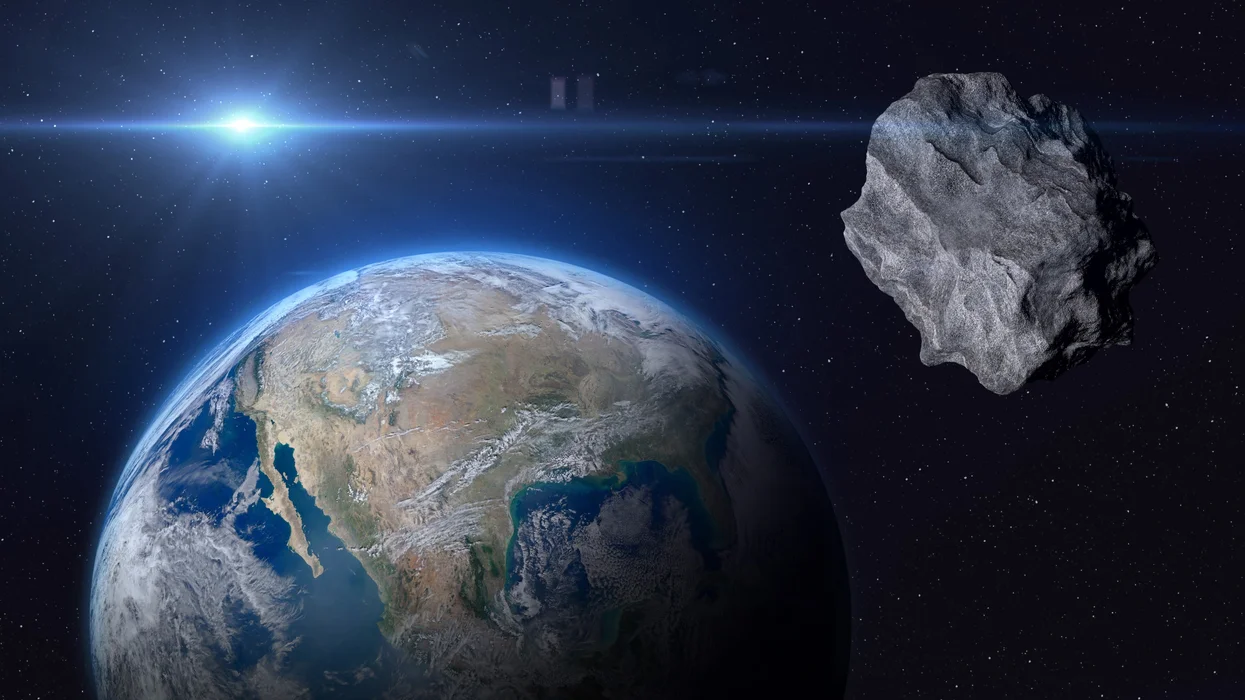
NASA Revises Impact Risk for Asteroid 2024 YR4 Following New Data Analysis

NASA has significantly revised its assessment of the impact probability of asteroid 2024 YR4, following new observational data. Initially flagged as a potential threat due to its estimated 55-meter size and destructive potential, the asteroid’s risk level peaked at a 3.1% chance of impact. However, with continued tracking and refined calculations, NASA now estimates the probability of collision in 2032 at just 0.28%. The dramatic fluctuation in risk assessment was expected, as early observations often lack precision and improve with additional data.

Impact Probability and Scientific Assessment

Asteroid 2024 YR4 was briefly classified as a Level 3 threat on the Torino Impact Hazard Scale, indicating a potential for localized destruction. However, as additional observations were made, it was downgraded to Level 1, meaning there is no cause for public concern. Richard Binzel, an MIT planetary scientist and creator of the Torino Scale, explained that such adjustments are routine as more precise tracking becomes available. Favorable observational conditions in mid-February allowed NASA to refine its calculations, leading to the significant reduction in impact probability.

Potential Consequences and Planetary Defense

Had 2024 YR4 been on a collision course, its impact could have caused significant localized devastation or even triggered tsunamis if it landed in the ocean. Although its risk has now diminished, NASA’s Planetary Defense Coordination Office remains vigilant in monitoring near-Earth objects (NEOs). The International Asteroid Warning Network (IAWN) plays a key role in coordinating efforts to detect, track, and, if necessary, develop asteroid deflection strategies to mitigate potential future threats.

Advances in Detection and Risk Mitigation

The case of 2024 YR4 highlights the increasing precision of asteroid detection and risk assessment. As technology advances, astronomers are identifying more potentially hazardous space objects, allowing for earlier intervention if necessary. Binzel noted that as observational capabilities improve, previously undetected asteroids will be added to tracking databases, ensuring that potential threats are identified long before they pose an actual danger to Earth.

Tomb of Pharaoh Thutmose II Unearthed in Egypt After a Century of Search

The tomb of Thutmose II, the ancient Egyptian pharaoh who ruled approximately 3,500 years ago, has been discovered west of the Valley of the Kings, marking an extraordinary find after a century of searching. This discovery, announced by Egypt’s Ministry of Tourism and Antiquities, is a significant milestone in Egyptology. The tomb, while largely devoid of treasures, provides invaluable information about ancient Egyptian burial practices. Initial examinations suggest that flooding shortly after the burial led to the removal of grave goods, leaving the chamber empty of artefacts and the pharaoh’s mummy. Despite the tomb’s empty state, ceramics inscribed with Thutmose II’s name were found, which helped confirm the tomb’s royal ownership.

While the tomb itself had been untouched by looters, the absence of grave goods and the mummy led archaeologists to consider the possibility of a second, undiscovered burial site where these items were relocated after the flooding. Some experts speculate that a mummy found in a cache at Deir el-Bahari could belong to Thutmose II, though discrepancies in the estimated age of death cast doubt on this theory. Further research is ongoing to explore the potential of finding his remains and the missing burial artifacts, which could shed light on the royal burial customs of ancient Egypt.

The tomb was first identified in October 2022, but it wasn’t until late 2024 and early 2025 that researchers, using analysis of pottery fragments, were able to definitively link it to Thutmose II. Piers Litherland, an Egyptologist from the University of Cambridge who co-led the excavation, shared that a pottery shard bearing a label indicating natron—a substance used in mummification—provided further evidence that the site was once a burial location. This discovery, although still in its early stages, has the potential to unlock deeper understanding of the burial practices of one of Egypt’s long-reigning pharaohs.

The find holds immense historical significance not only for uncovering the tomb of a pharaoh but also for offering new clues about the royal burial rituals of ancient Egypt. Despite the lack of traditional burial riches, the discovery of ceramics and the presence of natron provide critical insights into the embalming and mummification processes, which continue to intrigue researchers and historians alike. As the investigation progresses, there is hope that further revelations about Thutmose II’s final resting place and the royal burial practices of the time will emerge.

Mysterious Fast Radio Bursts Emanate from Ancient Dead Galaxy, Puzzling Scientists

A distant galaxy, which ceased star formation billions of years ago, has been found emitting strange fast radio bursts (FRBs), leaving scientists puzzled and scrambling for answers. These bursts, typically associated with young, active galaxies undergoing star formation, are now being detected in an ancient, dead galaxy—posing a serious challenge to current theories on the origin of FRBs. The phenomenon, which has been observed at the outskirts of this inactive galaxy, suggests that something beyond the usual stellar explosions like supernovae might be at play.

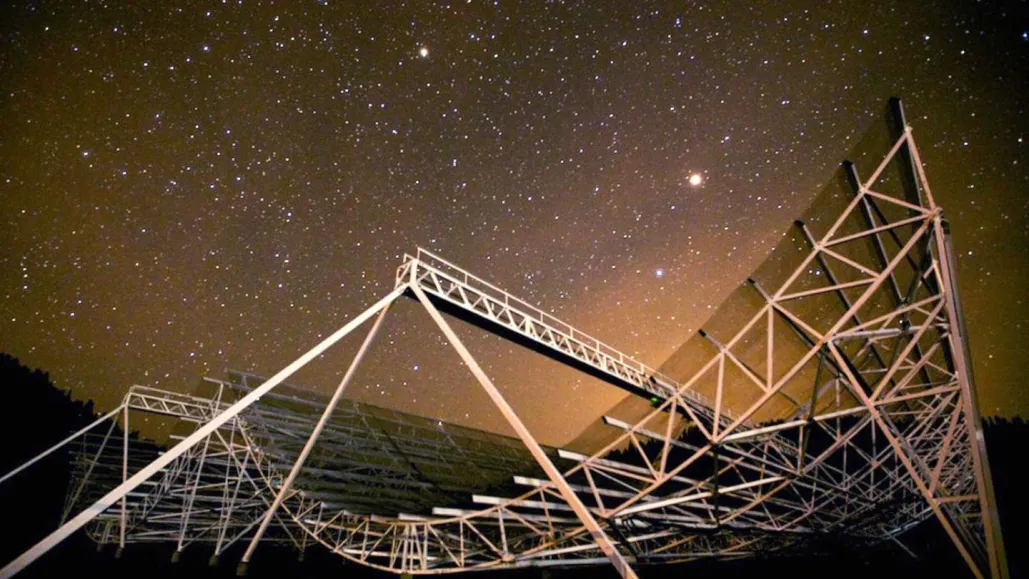
The findings, detailed in two studies published in The Astrophysical Journal Letters on January 21, 2025, reveal that astronomers detected 22 fast radio bursts between February and November 2024 using the Canadian Hydrogen Intensity Mapping Experiment (CHIME) telescope in British Columbia. These bursts were traced back to an 11-billion-year-old galaxy that had long ceased to form new stars. This discovery is especially perplexing, as FRBs are typically linked to galaxies still in the throes of stellar creation, making this ancient galaxy an unlikely source for such energetic signals.

This groundbreaking discovery forces astronomers to reconsider existing theories about FRBs. Traditionally, these bursts are thought to originate from supernovae or other energetic events in star-forming galaxies. However, this new observation raises the possibility of other unknown mechanisms that could be generating these bursts in an otherwise quiet galaxy. This revelation has opened up a new avenue of research into the nature of FRBs and their origins.

Tarraneh Eftekhari, an astronomer at Northwestern University and co-author of the study, explained in an interview with Live Science that only about a hundred FRBs have been definitively linked to their host galaxies, most of which are in regions where active star formation is occurring. The new discovery challenges the idea that FRBs are exclusively tied to such environments, suggesting that we may need to revise our understanding of these mysterious signals and explore other potential sources. This study underscores the complexity of the universe and the many phenomena still waiting to be understood.