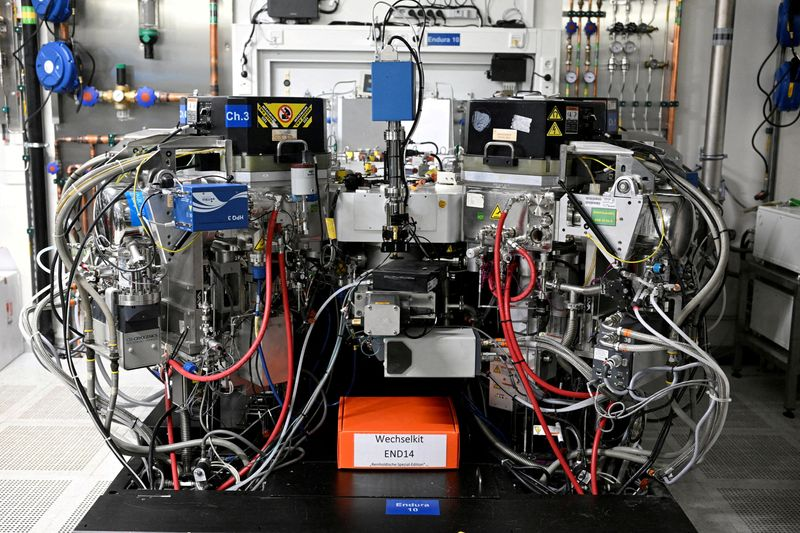
China Grants Export Exemptions on Nexperia Chips to Ease Global Supply Strain

China’s Commerce Ministry announced on Sunday that it has granted exemptions to export restrictions on Nexperia-manufactured chips intended for civilian use, a move expected to ease supply shortages that have disrupted the global automotive industry.

The decision marks Beijing’s most significant step yet toward de-escalating the standoff with the Netherlands over control of Nexperia, a Dutch-based chipmaker owned by China’s Wingtech Technology. The export curbs, imposed after the Dutch government seized control of Nexperia on September 30, had caused widespread shortages of chips essential for carmakers and suppliers worldwide.

China did not specify what qualifies as “civilian use,” but the announcement follows reports from German and Japanese automakers that deliveries of Nexperia’s Chinese-made chips have resumed.

The dispute began when the Dutch government accused Wingtech of planning to relocate Nexperia’s European production to China, citing risks to Europe’s economic security. In response, Beijing halted exports of Nexperia’s packaged chips, most of which are produced in China.

Following an October 30 meeting between U.S. President Donald Trump and Chinese President Xi Jinping, Beijing said it would begin reviewing applications for export exemptions — a process that appears to have now taken effect.

Despite this thaw, analysts warn that China-EU relations remain strained, and tensions will persist until the ownership and operational control of Nexperia are fully resolved.

“China welcomes the EU to continue leveraging its influence to urge the Netherlands to promptly rectify its erroneous actions,” the Commerce Ministry said, calling for an end to the Dutch intervention.

Peloton Shares Surge as CEO Peter Stern’s Turnaround Strategy Shows Early Success

Peloton Interactive’s shares rose 7% on Friday after the fitness technology company beat Wall Street’s revenue expectations, driven by its revamped product lineup, AI-powered features, and price hikes across both hardware and subscriptions. The results have strengthened investor confidence in CEO Peter Stern’s turnaround strategy, aimed at returning the brand to profitability.

Peloton reported quarterly revenue of $550.8 million, exceeding analyst forecasts of $539.82 million, according to LSEG data. The company’s renewed focus on cash flow improvement, debt reduction, and streamlined operations has begun to resonate with investors after several years of financial turbulence.

Since taking over in January 2025, Stern has prioritized reshaping Peloton’s identity beyond its pandemic-era boom, repositioning it as a sustainable, subscription-based fitness ecosystem. The latest relaunch introduced AI-driven workout recommendations and upgraded connected fitness equipment, marking Peloton’s most significant product refresh in years.

Analysts at J.P. Morgan called the results “encouraging,” citing improvements in profitability and free cash flow, while cautioning that it remains to be seen if these changes will deliver “durable revenue growth.”

The positive earnings sent Peloton’s stock to one of its best weekly performances this year. The company currently trades at a price-to-earnings ratio of 79.95, reflecting investor expectations of sustained earnings momentum.

Rivian Awards CEO RJ Scaringe a $4.6 Billion Pay Package Modeled on Musk’s Tesla Deal

Electric vehicle maker Rivian has unveiled a massive $4.6 billion compensation plan for CEO RJ Scaringe, mirroring the structure of Elon Musk’s Tesla pay package. The deal, announced Friday, is one of the largest executive awards in history, tying Scaringe’s payout to ambitious profit and share price milestones over the next decade.

The move signals Rivian’s determination to retain its founder and keep him focused on growth as the company prepares to launch its smaller, more affordable R2 SUV next year — a key model aimed at competing with Tesla’s Model Y.

Rivian said the new plan replaces an earlier one issued in 2021 that was unlikely to be met. The updated package includes options to purchase 36.5 million shares at $15.22 each, vesting if Rivian’s stock hits price targets ranging from $40 to $140 a share over the next ten years. The company’s previous plan required share prices between $110 and $295, thresholds now deemed unrealistic amid market pressures and the removal of EV tax credits that have slowed sales.

The award also introduces operating income and cash flow goals over seven years. Rivian shares closed at $15.22 on Thursday — exactly the strike price for Scaringe’s new options.

“This plan keeps RJ incentivized to scale Rivian efficiently while aligning his success with shareholder returns,” said a company statement.

The EV startup recently laid off 600 employees, or 4.5% of its workforce, as part of cost-cutting efforts. Still, the company insists it is on track to improve profitability and expand production.

Separately, Scaringe was granted 1 million common units in Mind Robotics, a new Rivian spinoff focused on industrial AI technology. He will serve as chairman of its board and could earn up to a 10% stake once the venture turns a profit.