OpenAI’s Sam Altman Urges U.S. to Expand Chips Act Tax Credit for AI Development

OpenAI CEO Sam Altman on Friday called for the United States to broaden eligibility under the Chips Act’s Advanced Manufacturing Investment Credit (AMIC), arguing that expanding the incentive to include AI data centers, server production, and grid infrastructure is essential for maintaining U.S. leadership in artificial intelligence.

Altman’s comments follow a letter sent by OpenAI’s Chief Global Affairs Officer Chris Lehane on October 27 to White House Office of Science and Technology Policy Director Michael Kratsios, formally requesting that the AMIC cover AI infrastructure beyond semiconductor fabrication.

“The U.S. needs re-industrialization across the entire stack — fabs, turbines, transformers, steel, and much more,” Altman said on X (formerly Twitter). “That will help everyone in our industry, and other industries, including us.”

Altman emphasized that the request was “very different from loan guarantees to OpenAI,” clarifying that the company is not seeking direct federal funding for its operations. Earlier this week, he confirmed that OpenAI had discussed potential federal loan guarantees for chip factory construction, but not for data centers.

OpenAI has pledged to invest $1.4 trillion over the next eight years to expand its computational infrastructure, reflecting the skyrocketing demand for AI models and chips that power applications like ChatGPT.

As AI becomes a cornerstone of global technology competition, the Biden administration faces growing pressure to balance industrial policy and fiscal discipline. White House AI and crypto czar David Sacks recently reiterated that there will be no federal bailout for AI companies, underscoring Washington’s cautious stance despite mounting private-sector investment.
Nvidia CEO Jensen Huang Reports Surging Demand for Blackwell Chips

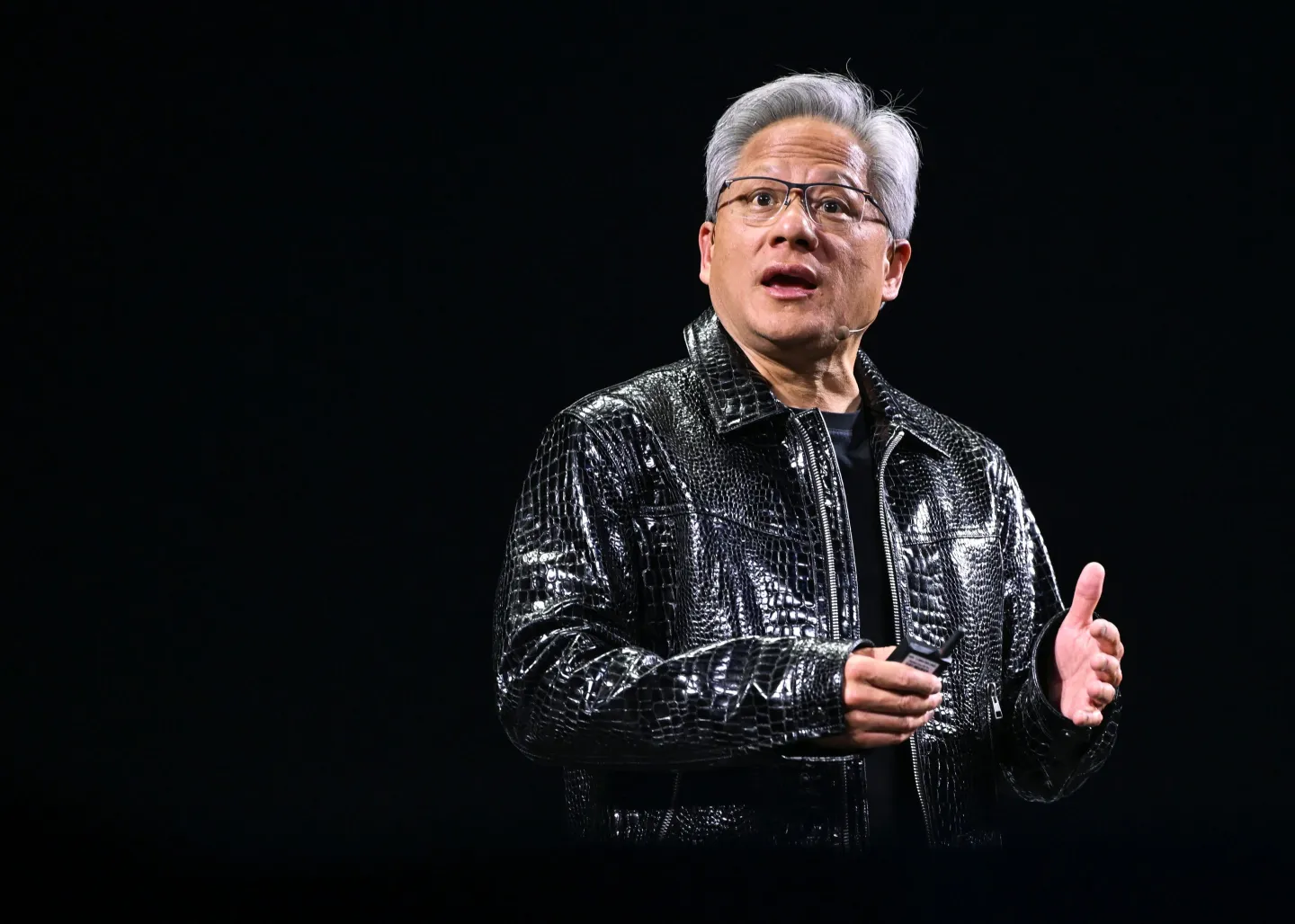
Nvidia CEO Jensen Huang said on Saturday that demand for the company’s cutting-edge Blackwell AI chips is “very strong,” as the semiconductor giant deepens its partnership with Taiwan Semiconductor Manufacturing Co (TSMC) to meet soaring global demand.

Speaking at an event hosted by TSMC in Hsinchu, Taiwan, Huang said Nvidia’s Blackwell platform — which integrates GPUs, CPUs, networking, and switching systems — requires an extensive supply of wafers and components. “We build the GPU, but we also build the CPU, the networking, the switches… there are a lot of chips associated with Blackwell,” he explained.

TSMC CEO C.C. Wei confirmed that Huang had “asked for wafers,” but declined to disclose quantities. “TSMC is doing a very good job supporting us,” Huang said, emphasizing that Nvidia’s record-breaking success “would not be possible without TSMC.”

In October, Nvidia became the first company to surpass a $5 trillion market value, prompting Wei to call Huang a “five-trillion-dollar man.”

When asked about supply challenges, Huang acknowledged there would be “shortages of different things,” though memory makers SK Hynix, Samsung, and Micron have expanded capacity to meet demand. Nvidia has already received next-generation memory samples from all three suppliers.

SK Hynix recently said it had sold out all production for 2026, forecasting a long-lasting chip “super cycle” driven by AI growth. Samsung is also in “close discussion” to supply HBM4 memory to Nvidia.

Huang reiterated that Nvidia has no active discussions to sell Blackwell chips to China, as U.S. restrictions remain in place.

South Korea’s Qcells Cuts Pay and Hours for Georgia Workers Amid U.S. Customs Delays

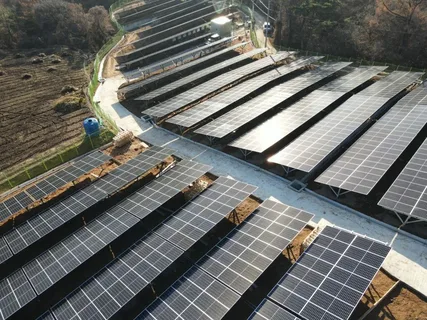
South Korean solar manufacturer Qcells is cutting pay and working hours for about 1,000 employees at its Georgia plants, citing a shortage of imported materials detained by U.S. customs officials. The company will also lay off 300 temporary workers, it said on Friday.

The U.S. Customs and Border Protection (CBP) agency has been holding shipments of solar panel components over concerns that they may contain materials made with forced labor in China. The detentions are part of stepped-up enforcement of the Uyghur Forced Labor Prevention Act, which restricts goods linked to China’s Xinjiang region.

Qcells — a subsidiary of Hanwha Solutions — says none of its materials come from China and that it maintains robust supply chain audits and third-party documentation proving compliance. “Our latest supply chain is sourced completely outside of China,” said company spokesperson Marta Stoepker, adding that some detained shipments have already been released.

With production still slowed at its Dalton and Cartersville facilities, Qcells said the temporary cuts were necessary “to improve operational efficiency until production capacity returns to normal.” Employees will keep their benefits during the reduced schedule.

Despite the disruption, Qcells reaffirmed its commitment to expanding U.S. manufacturing. The company is completing a $2.3 billion solar plant in Cartersville, designed to produce solar ingots, wafers, and cells from polysilicon refined in Washington state — a move aimed at reducing reliance on imports.

“Our commitment to building the entire solar supply chain in the United States remains,” Stoepker said. “We will soon be back on track with the full force of our Georgia team delivering American-made energy.”