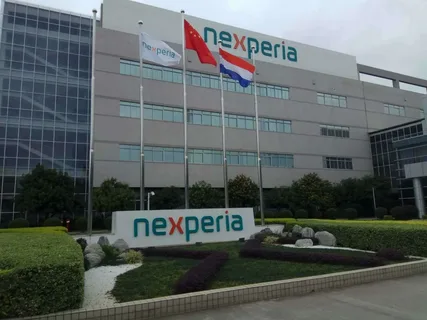
Nexperia China Says It Has Ample Inventories After Dutch Parent Halts Wafer Supplies

Nexperia’s China division said on Sunday it has built up sufficient inventories and secured its supply chain after the Dutch parent company suspended wafer shipments to its Chinese assembly facilities. The unit assured customers that production and deliveries would continue as planned despite the disruption.

The Dutch chipmaker halted wafer supplies on October 26, citing what it called the Chinese unit’s failure to comply with agreed payment terms. Nexperia China, however, rejected the accusation, calling the move “unilateral” and “extremely irresponsible,” and describing the payment-related claims as “misleading and highly deceptive.”

The dispute follows months of political tension after Dutch authorities took control of Nexperia from its Chinese owner, Wingtech, in September over national security concerns about potential technology transfers. In response, Beijing temporarily blocked the company’s products from being exported.

Nexperia China said it has “proactively initiated contingency plans” and is working to qualify new wafer suppliers, adding that existing inventories would sustain production “through year-end and beyond.” The company expects to meet full customer demand starting next year.

Nexperia produces inexpensive but essential power-control chips — such as transistors and diodes — widely used across consumer electronics and the automotive industry. Automakers have warned that any prolonged supply disruption could affect production.

The Global AI Buildout Accelerates as Tech Titans Drive Record Investment

The global race to build artificial intelligence infrastructure shows no sign of slowing, as technology giants and industrial firms alike pour trillions into data centers, chips, and computing power. Nvidia’s market value soared past $5 trillion this week — a milestone that underscores how central AI has become to the global economy.

In a whirlwind week for the tech sector, Microsoft and OpenAI struck a landmark deal expanding the ChatGPT maker’s fundraising capacity, while Amazon announced 14,000 corporate job cuts just days before its cloud division reported its fastest growth in nearly three years. Together, these developments highlight AI as the defining engine of modern corporate spending and stock market momentum.

AI’s impact now extends beyond Silicon Valley. Over 100 non-tech companies — from Honeywell and GE Vernova to Caterpillar — referenced data centers in their earnings calls, signaling how deeply AI demand is reshaping industrial supply chains. Caterpillar’s data center equipment sales jumped 31% last quarter, reflecting the sector’s explosive growth.

Goldman Sachs projects global AI-related infrastructure spending could reach up to $4 trillion by 2030. Microsoft, Amazon, Meta, and Alphabet are expected to collectively invest around $350 billion this year alone. Meanwhile, AI investment is fueling international trade, with the U.S. importing vast quantities of semiconductors from Taiwan, South Korea, and Vietnam.

Despite talk of an AI “bubble,” companies continue to ramp up spending. Apple plans to significantly boost AI investments, and Amazon is projecting capital expenditures of $125 billion in 2025. Economists say this phase of the AI revolution remains in its early stages — with innovation advancing faster than any technology cycle in recent history.

Getty and Perplexity Sign Multi-Year Deal to Integrate Licensed Images into AI Search Tools

Visual content leader Getty Images has signed a multi-year licensing agreement with AI search startup Perplexity, allowing the platform to display Getty’s licensed images across its AI-powered search and discovery tools. The announcement boosted Getty’s shares by 5% on Friday, underscoring growing investor confidence in partnerships between traditional media and artificial intelligence companies.

Under the deal, Perplexity will integrate Getty’s visuals through an API, granting users access to Getty’s vast image library with proper attribution and licensing details. Each image will include credits and source links, ensuring legal compliance and transparency in AI-generated content.

The partnership comes amid growing scrutiny over AI firms’ use of copyrighted materials for training and output generation. Getty, which also licenses images to iStock and Unsplash, previously sued Stability AI over alleged image scraping. Perplexity itself has faced multiple copyright lawsuits from publishers including Japan’s Nikkei and Asahi Shimbun but has since adopted a revenue-sharing model with media partners such as TIME and Der Spiegel.

Legal experts say AI licensing agreements like this one could reshape the industry by legitimizing data use, though they note that a full licensing model may not be viable for all online content. The move aligns with Getty’s broader effort to promote safe, rights-cleared visual generation in the AI era.