James Webb Reveals Secret Star Nurseries in Sagittarius B2
The James Webb Space Telescope (JWST) has captured breathtaking new images of one of the Milky Way’s most prolific star-forming regions: Sagittarius B2 (Sgr B2). Situated about 25,000 light-years from Earth near the galactic center, this enormous cloud stands out for its dense network of massive star-forming filaments. Unlike many other giant clouds that struggle to form stars due to gas scarcity, Sgr B2 continues to churn out stellar nurseries at an impressive rate. Astronomers suggest that a spiraling gas filament flowing into the Milky Way may be fueling this cosmic powerhouse.
Sagittarius B2 is essentially a giant laboratory of star formation. Composed of gas and dust, it has become a hub where new stars are continuously emerging. Despite containing only a fraction of the gas found elsewhere in the galactic center, it operates like a star-making dynamo, defying expectations about how efficiently stars can form in seemingly resource-limited regions.
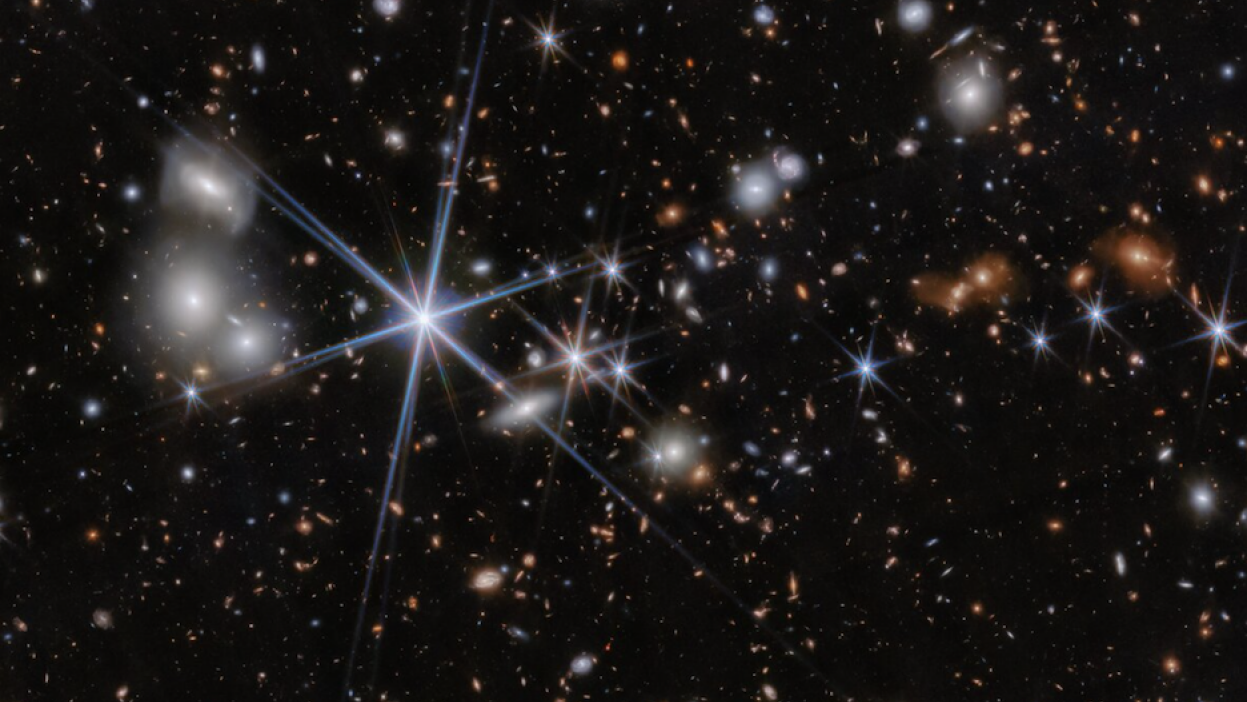
JWST’s mid-infrared imaging allows astronomers to peer through the dense clouds of interstellar dust that normally conceal much of the action in Sgr B2. These new images reveal intense pockets of star formation previously hidden from view, providing the most detailed look yet at this corner of our galaxy. The telescope’s ability to cut through the cosmic veil is offering unprecedented clarity on the dynamic processes shaping these stellar nurseries.
One of the enduring mysteries of Sgr B2 has been its remarkable star production despite the relatively small amount of remaining gas. By studying this prolific cloud, astronomers hope to uncover the fundamental rules governing star formation, shedding light not only on our own galaxy but also on how stars might form in other galaxies across the universe.