Yazılar

U.S. Treasury’s Bessent to Meet China’s He Lifeng in Madrid on Trade, TikTok, and Money Laundering

U.S. Treasury Secretary Scott Bessent will meet Chinese Vice Premier He Lifeng in Madrid next week for high-level talks covering trade, TikTok, and illicit finance, the Treasury said Thursday. The meetings, set for September 12–18, coincide with Bessent’s trip to Spain and Britain, ahead of his participation in President Donald Trump’s state visit to the UK (Sept. 17–19).

Focus Areas

  • Trade and Tariffs: The talks mark the fourth major in-person meeting between Bessent and He this year, as Washington and Beijing seek to uphold a fragile trade truce. A July meeting in Stockholm resulted in a 90-day tariff pause extension, approved by Trump until November 10. U.S. tariffs on Chinese goods remain steep at ~55%, with agriculture a sticking point. Washington accuses China of shifting farm imports to Brazil and Argentina, undercutting U.S. soybean farmers.

  • TikTok Deadline: ByteDance’s short-video platform faces a U.S. ban unless it is sold to U.S. ownership. Trump extended TikTok’s divestment deadline to September 17. Treasury confirmed the app will be discussed in Madrid, after not featuring in July’s talks.

  • Money Laundering Cooperation: Both sides will address illicit finance, which Washington links to Chinese banks allegedly enabling Russia’s access to military technologies amid the Ukraine war. Treasury retains the authority to sanction Chinese banks involved in such transfers, though it has not yet exercised it.

Broader Context

The Madrid meeting comes as the world’s two largest economies attempt to stabilize relations:

  • Rare earth exports from China to the U.S. were restored under the current truce.

  • However, agriculture and tariffs remain unresolved, with U.S. farmers facing a shrinking share of the Chinese market.

  • Trump has maintained high tariffs on Chinese goods, including those tied to fentanyl supply chain disputes.

The outcome of the Madrid talks remains uncertain, particularly on farm trade or tariff relief, but the inclusion of TikTok and money laundering suggests Washington is broadening the agenda beyond traditional trade disputes.
US-South Korea Trade Talks Focus on Big Tech Regulation, Agriculture, and Strategic Cooperation

The United States and South Korea continue negotiations aimed at resolving trade issues, including tariffs, digital services regulation, agriculture, and strategic investments. South Korea is seeking to extend a 90-day pause on 25% U.S. tariffs set to expire on July 9 as talks progress.


Key Issues in the Negotiations:

1. Digital Services and Big Tech Regulation

  • South Korea is advancing legislative proposals to regulate major tech companies like Google, Apple, Facebook, and local firms Naver and Kakao, aiming to curb market dominance and protect smaller businesses.

  • U.S. lawmakers have expressed concern that South Korea’s laws mirror the EU’s Digital Markets Act and unfairly target American tech firms while exempting Chinese giants such as ByteDance and Alibaba.

  • The ruling Democratic Party in South Korea is reportedly slowing down antitrust legislation to balance trade sensitivities.

2. Content Providers and Data Restrictions

  • South Korea requires content providers like Netflix to pay network usage fees.

  • Restrictions on exporting location-based data by Google and other providers are a sticking point, linked to national security concerns related to North Korea.

  • South Korea plans to rule on Google’s renewed request to use detailed mapping data outside the country by August 11.

3. Agriculture Access and Market Sensitivities

  • The U.S. seeks greater access to South Korea’s agriculture sector, particularly beef, apples, and potatoes.

  • South Korea restricts imports of beef from animals older than 30 months over mad cow disease concerns.

  • Although tariffs on beef will drop to zero by 2026 under a 2007 pact, farmers remain concerned about further market liberalization.

  • South Korea’s heavy tariff on rice imports (over 500%) has not been raised recently in talks.

4. Defense Costs and Foreign Exchange Policies

  • Discussions on foreign exchange policy and cost-sharing for approximately 28,500 U.S. troops stationed in South Korea are ongoing but handled separately from trade talks.

5. Industrial Cooperation and Investments

  • Both sides emphasize industrial cooperation, particularly in shipbuilding, as a way to revitalize U.S. manufacturing and reduce trade deficits.

  • South Korea is noted as a leader in AI, semiconductors, chips, batteries, and automotive industries.

6. Alaska LNG Project

  • South Korea is cautiously considering energy purchases linked to the $44 billion Alaska LNG project, awaiting more technical details from the U.S. later this year.

Ancient Egyptian Tomb of Meketre Yields Exquisite Wooden Diorama of Granary and Scribes

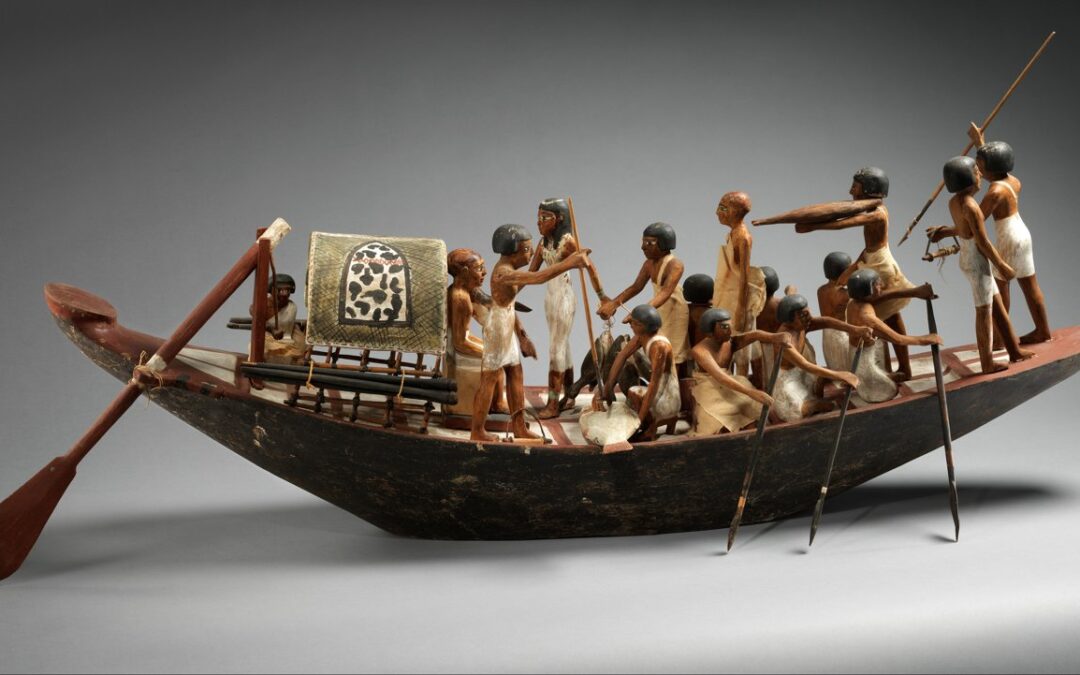
A remarkable wooden diorama depicting a granary with scribes was uncovered in the tomb of Meketre, an influential official from Egypt’s Middle Kingdom. Discovered in 1920 in a concealed chamber within his tomb at Thebes (modern-day Luxor), the model dates back to around 1980 B.C. This artifact provides valuable insight into the role of grain storage and record-keeping in an ancient agricultural society where wheat and barley were essential commodities. Today, this well-preserved model is housed at the Metropolitan Museum of Art in New York, where it continues to captivate historians and visitors alike.

The diorama, meticulously crafted from wood, measures approximately 74.9 by 56 by 36.5 cm. It showcases a granary divided into two primary sections: one for storing grain and the other for administrative tasks. Inside, 15 miniature figurines, each around 20 cm tall, are arranged to depict various activities. Some figures are shown carrying sacks of grain, while others diligently record inventory on wooden tablets and papyrus scrolls. The model also illustrates architectural elements designed to protect stored grain from theft and rodent infestations, highlighting the sophisticated grain management practices of the time.

The discovery of this diorama sheds light on the economic foundation of ancient Egypt, which was heavily dependent on agricultural production. The Nile Valley’s fertile lands allowed for abundant cereal harvests, making grain a vital resource for both sustenance and trade. Pharaohs exercised strict control over grain distribution, ensuring food security and stability throughout the kingdom. Meketre, as the chief steward, played a crucial role in overseeing royal estates and managing the storage and allocation of grain supplies.

Beyond its historical significance, this model offers a glimpse into the daily operations of an ancient Egyptian granary, emphasizing the importance of administrative roles in maintaining a well-functioning economy. The presence of scribes in the diorama underscores the meticulous record-keeping that was integral to managing resources efficiently. As one of the best-preserved examples of ancient Egyptian craftsmanship, the granary model remains an invaluable artifact that continues to deepen our understanding of life and labor in the Middle Kingdom.