Yazılar

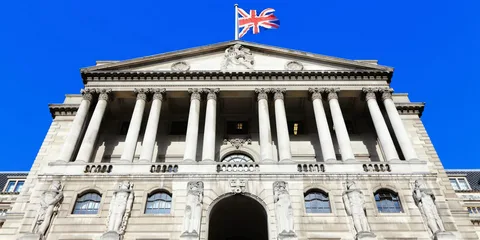
Bank of England’s Bailey: AI can help regulators uncover the ‘smoking gun’

Bank of England Governor Andrew Bailey said financial regulators should adopt artificial intelligence to better detect misconduct and risks within firms they oversee. Speaking at the London School of Economics on Monday, Bailey stressed the need to invest heavily in data, data science, and AI techniques to make full use of the vast information regulators already collect.

Bailey warned that supervisors face a recurring problem: crucial evidence of wrongdoing may exist within their own datasets but remain undetected until it is too late. “It also creates the danger for the authorities that you’ve got the evidence in the building and you haven’t been able to use it and it subsequently comes out that somewhere in your system was the smoking gun,” he said.

The BoE governor reiterated his opposition to rolling back financial rules in the name of business competitiveness. He said easing oversight could risk a return to the kind of behavior that destabilized the economy during the 2008 financial crisis.

His comments come amid ongoing debate over how much regulation is appropriate for the UK’s financial sector. In July, Bailey pushed back against Finance Minister Rachel Reeves’ claim that regulation was a “boot on the neck of businesses,” defending the BoE’s prudential framework for banks and other institutions.

The BoE is now exploring how AI might strengthen its supervisory role, potentially helping regulators spot early-warning signs of fraud, mismanagement, or systemic vulnerabilities hidden in mountains of financial data.

FTC Probes AI Chatbots from Alphabet, Meta, OpenAI and Others

The U.S. Federal Trade Commission (FTC) announced on Thursday that it has launched an inquiry into major providers of AI-powered consumer chatbots, including Alphabet (Google), Meta Platforms, OpenAI, Character.AI, Snap, and xAI.

Focus of the Inquiry

The FTC is demanding details on:

  • How chatbots are tested, measured, and monitored for potential negative impacts.

  • Monetization strategies, including how companies profit from user engagement.

  • Processing of user inputs and the generation of responses.

  • Use of conversation data, and whether it is exploited for advertising, training, or other commercial purposes.

Rising Scrutiny

Generative AI tools have recently drawn criticism following safety scandals:

  • Reuters revealed internal Meta policies that allowed chatbots to engage in romantic conversations with children.

  • OpenAI is facing a lawsuit alleging ChatGPT contributed to a teenager’s suicide.

  • Character.AI is under a separate lawsuit tied to another teen death.

Company Responses

  • Character.AI: said it will cooperate, highlighting new safety features rolled out over the past year.

  • Snap: welcomed the FTC’s focus, saying it supports policies that balance innovation with community protection.

  • Meta: declined to comment.

  • Alphabet, OpenAI, xAI: did not immediately respond.

Bigger Picture

The inquiry reflects Washington’s growing concern over AI risks, especially for children and vulnerable users. Regulators are looking to balance innovation with consumer protection, while lawsuits and scandals raise urgency for stricter oversight.

RBI Committee Recommends AI Framework for India’s Financial Sector

A Reserve Bank of India (RBI) committee has proposed a comprehensive framework to develop AI capabilities in the country’s financial sector while managing associated risks. The recommendations, released Wednesday, aim to balance innovation with security and governance.

Key proposals include creating digital infrastructure for building indigenous AI models, establishing a multi-stakeholder committee to assess risks and opportunities, and setting up a fund to support homegrown AI solutions tailored to India’s financial services. The report contains 26 recommendations across six areas: infrastructure, capacity, policy, governance, protection, and assurance.

Other notable suggestions include integrating AI with digital public platforms such as the Unified Payments Interface (UPI) and designing audit frameworks for responsible AI adoption. The committee, led by IIT Bombay computer scientist Pushpak Bhattacharyya, was tasked with developing the Framework for Responsible and Ethical Enablement of AI (FREEAI). The RBI emphasized that regulating AI requires balancing societal benefits with risk mitigation.