Yazılar

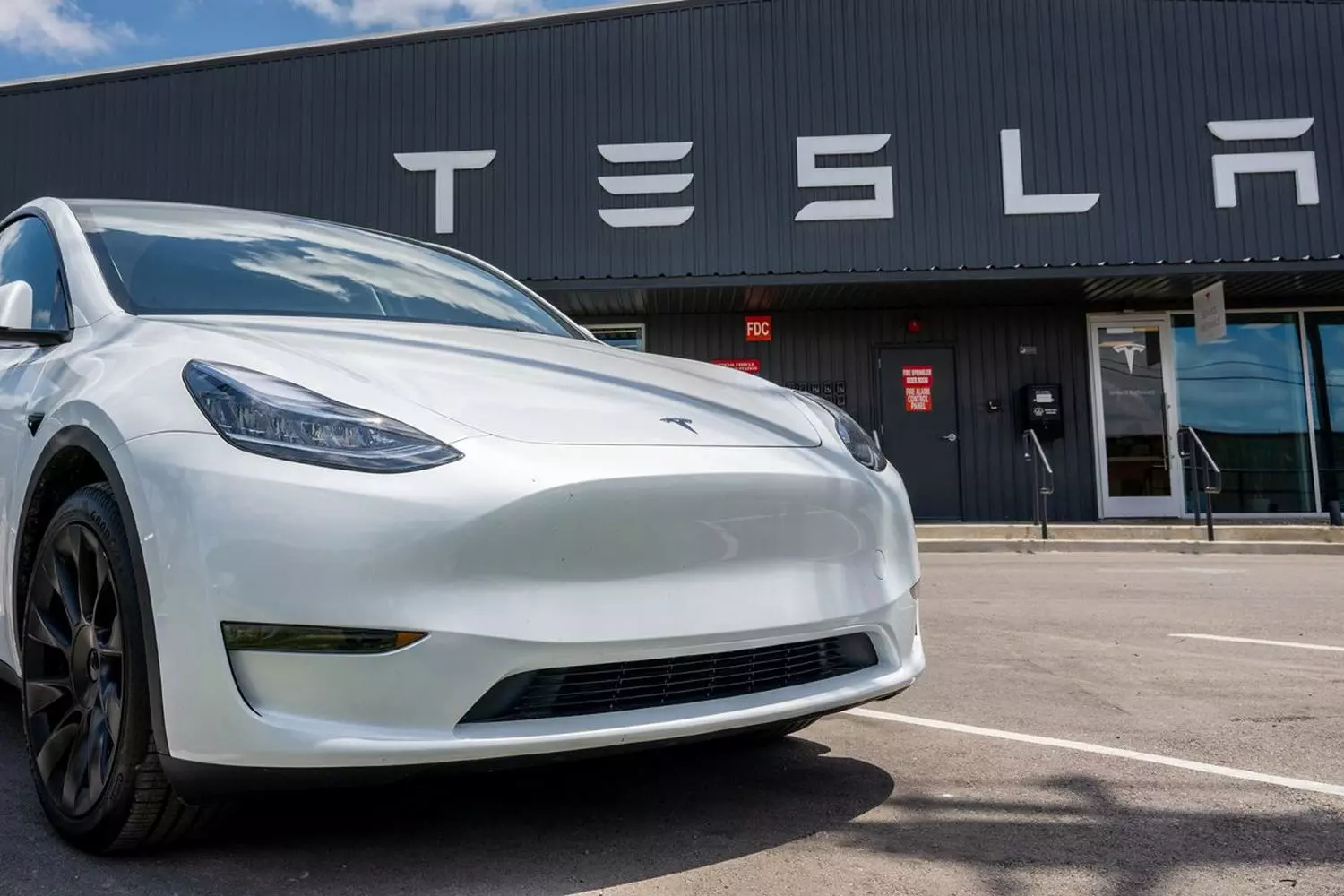
Tesla Profit Misses Expectations Despite Record Sales and Revenue

Tesla posted record third-quarter revenue of $28.1 billion, surpassing analyst estimates of $26.37 billion, but profits fell short due to rising costs, tariffs, and shrinking regulatory credit income. Shares dropped 4% in extended trading as investors reacted to the weaker earnings and fading government incentives that have long supported electric vehicle demand.

Profit per share came in at 50 cents, below the expected 55 cents. The company cited over $400 million in tariff-related costs and a 50% increase in R&D spending, largely tied to AI and robotics projects. Regulatory credit sales fell to $417 million from $739 million a year earlier, signaling continued decline.

Tesla’s gross margin stood at 18%, slightly above estimates, while automotive margins excluding credits reached 15.4%. To sustain demand amid expiring U.S. tax credits, Tesla launched lower-cost “Standard” versions of its Model 3 and Model Y, though analysts warned the move could compress profits further.

Despite the short-term challenges, Tesla remains focused on expansion. CEO Elon Musk said production of the Cybercab robotaxi, Semi truck, and Megapack 3 battery is set for 2026. The company’s energy division grew 81% in storage deployments, and Musk confirmed plans for mass production of the humanoid robot Optimus by late 2026.

Nvidia and Abu Dhabi’s TII launch first AI & robotics research hub in Middle East

Nvidia and Abu Dhabi’s Technology Innovation Institute (TII) have unveiled a joint artificial intelligence and robotics laboratory in the United Arab Emirates, the first Nvidia AI Technology Center in the Middle East. The hub will combine Nvidia’s cutting-edge computing power with TII’s applied research to accelerate work on advanced AI models and robotics platforms.

Najwa Aaraj, CEO of TII, said the lab will leverage Nvidia’s new Thor chip, designed for next-generation robotic systems. The collaboration will support TII’s work on humanoids, quadruped robots, and robotic arms, with both existing staff and new hires contributing to the effort.

TII is the applied research arm of Abu Dhabi’s Advanced Technology Research Council, which drives the UAE’s long-term strategy to become a global AI leader. The Gulf nation has poured billions into AI initiatives, including plans for one of the world’s largest data center hubs in Abu Dhabi, built with U.S. technology and Nvidia’s most advanced chips. That project, announced during President Donald Trump’s May visit, remains pending amid U.S. security concerns over the UAE’s ties with China.

Aaraj noted that TII has been using Nvidia’s GPUs to train large-scale language models for some time, with discussions on the joint lab beginning about a year ago. The new hub will host researchers from both organizations and expand staff as projects scale.

The initiative underscores both Nvidia’s push into global AI partnerships and the UAE’s ambition to position itself at the forefront of artificial intelligence and robotics innovation.

Meta’s TBD Lab: Small, Talent-Dense Team Driving Next-Gen AI Models

Meta’s TBD Lab, a research group within its Superintelligence Labs, consists of only “a few dozen” researchers and engineers, CFO Susan Li told investors at the Goldman Sachs Communacopia + Technology conference on Tuesday.

Key Details

  • Team size: “A few dozen” researchers and engineers, highly talent-dense.

  • Focus: Developing next-generation foundation models at the AI frontier over the next 1–2 years.

  • Name origin: “TBD” began as a placeholder (“to be determined”) but stuck, reflecting the exploratory nature of the group.

Meta’s AI Reorganization

  • Earlier this year, Meta split its AI efforts under Superintelligence Labs into four groups:

    1. TBD Lab – new, frontier-focused models.

    2. Products team – including the Meta AI assistant.

    3. Infrastructure team – scaling compute and systems.

    4. FAIR (Fundamental AI Research) – long-term research.

  • This restructuring followed senior staff exits and lukewarm reception for Meta’s Llama 4 model.

Leadership & Talent Push

  • CEO Mark Zuckerberg has been personally driving talent acquisition, reportedly reaching out to startup founders and top researchers directly — even via WhatsApp — with million-dollar offers.

  • The company’s AI ambitions are positioned as a long-term bet, combining frontier R&D, consumer AI products, and infrastructure scaling.

Strategic Significance

  • The compact size of TBD Lab emphasizes high-leverage innovation rather than large-scale manpower.

  • Its work will likely feed into both open-source and proprietary models, shaping Meta’s response to OpenAI, Google DeepMind, and Anthropic in the race for AI dominance.

  • If successful, TBD Lab could be key in restoring Meta’s competitive credibility in foundation models.