Yazılar

Flock Safety Raises $275 Million to Fund Manufacturing and R&D Expansion

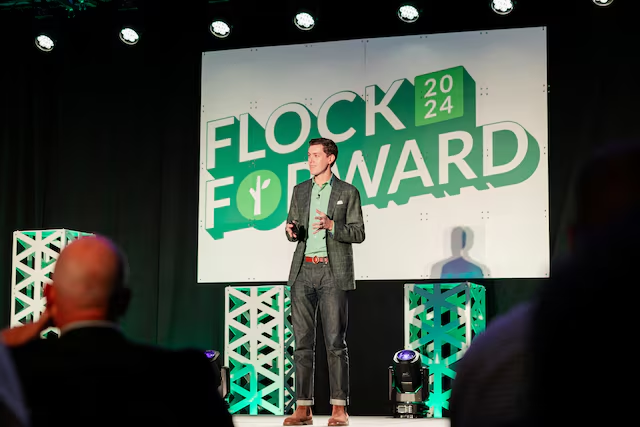
Flock Safety, a U.S.-based startup specializing in surveillance technology, has secured $275 million in new funding, led by Andreessen Horowitz, to expand its operations. The funding will be used to support the development of a manufacturing plant and to further explore new products, including drones.

The investment has valued Flock Safety at $7.5 billion, a significant increase from its previous valuation of $4.8 billion in the previous funding round last year. With this latest funding, the startup’s total capital raised exceeds $950 million, positioning it among the most well-funded startups in the region, according to PitchBook data.

This marks the third investment by Andreessen Horowitz in Flock, a notable move by the venture capital firm. Greenoaks Capital and Bedrock Capital also participated in the funding round.

Flock Safety provides security cameras and software aimed at helping law enforcement agencies and businesses combat crime. The company has reported surpassing $300 million in annual recurring revenue (ARR), reflecting a 70% year-over-year growth. In preparation for an eventual public listing, Flock has brought in Brandon Simins as its new CFO this year, although it has not set a specific timeline for the listing.

A significant part of the funding will go toward the construction of a 100,000-square-foot manufacturing facility in Georgia, where Flock plans to begin the production of U.S.-manufactured drones by 2025. Garrett Langley, CEO of Flock, expressed excitement about bringing more manufacturing to the U.S., stating that it would provide better control over the supply chain and further their mission to combat crime.

Founded in 2017, Flock Safety’s surveillance system leverages artificial intelligence (AI) to provide insights for investigations, such as identifying car plates. The company now serves over 4,800 law enforcement agencies and nearly 1,000 businesses, including major retailers and healthcare providers. Enterprise businesses account for approximately 30% of its revenue.

Investing in startups that sell to law enforcement is somewhat uncommon for Silicon Valley investors, but David George, general partner at Andreessen Horowitz, highlighted Flock’s growth as evidence of the large market for such solutions. “Flock Safety has one of the most compelling ROI (return on investment) equations we’ve ever seen in software or hardware markets,” said George. He added that Flock’s widespread penetration into police departments and its high market share position it for a venture-scale outcome.

Singapore Prosecutors Link $390 Million Fraud Case to U.S. Server Supply

In a significant fraud case involving Singapore-based firms, prosecutors revealed that $390 million worth of transactions are at the center of allegations that the companies falsely supplied U.S. servers to Malaysia. Three individuals have been charged with defrauding Dell and Super Micro by misrepresenting the final destination of the servers, which may have contained sensitive components such as Nvidia’s artificial intelligence (AI) chips.

The case has raised concerns due to potential links to DeepSeek, a Chinese AI firm under investigation by the United States for possibly utilizing banned Nvidia chips. The chips in question, if used by DeepSeek, could be the high-end semiconductors restricted by U.S. export controls. Although Singapore authorities have acknowledged the servers might have contained Nvidia chips, they have not confirmed if the chips were subject to U.S. export restrictions.

The three suspects—Aaron Woon (41), Alan Wei (49), and Li Ming (51)—are facing charges of fraudulent misrepresentation. Prosecutors also allege that Wei paid himself dividends totaling millions of dollars, while Woon reportedly received a substantial bonus. The case forms part of a broader investigation in Singapore into false representation, with 22 individuals and companies under suspicion and six others arrested in connection with the matter.

At this stage, Singapore authorities have not offered further details on whether the chips involved were high-end models, nor have they commented extensively on the potential connection to DeepSeek. Singapore’s Law and Home Affairs Minister K Shanmugam declined to speculate on the link between the two cases.

In response to the charges, Shashi Nathan, Wei’s lawyer, has requested proof from the prosecutors regarding the alleged fraudulent transactions. Lawyers for Li and Woon have not made public comments yet. Malaysia is also conducting its own investigation into whether its laws were violated in the case.

US Wind and Solar Still Have Room to Grow for Data Centers, Microsoft VP Says

At the CERAWeek energy conference in Houston on Wednesday, Bobby Hollis, Vice President of Energy at Microsoft, shared his insights on the significant potential for growth in U.S. wind and solar energy development, especially in powering the growing demand for data centers. According to Hollis, the Midwest wind corridor and the sunny southwest remain key areas with substantial untapped opportunities for renewable energy production.

The rapid expansion of data centers driven by Big Tech companies, fueled by AI and cloud technologies, has dramatically increased power consumption, raising concerns about the sustainability of relying on renewable energy sources. As these energy-intensive centers continue to proliferate, there are mounting questions about whether they will rely more on carbon-free renewable energy or switch to gas-fired power.

“We still think there is a very long road ahead that keeps renewables an important part of the mix in the places where that makes sense,” Hollis emphasized. Despite challenges, Microsoft remains committed to expanding its use of renewable energy to power its data centers. The company has pledged to become carbon negative by 2030 and is investing a staggering $80 billion this year alone in data center expansion. This massive investment will require vast amounts of electricity, which Microsoft plans to source sustainably, despite the intermittency of solar and wind power.

Since solar and wind are intermittent energy sources, only producing power when conditions are favorable, data centers, which require constant electricity, face significant challenges. To address this, natural gas, a reliable 24/7 power source, has become an increasingly attractive option, despite its associated carbon emissions. Hollis noted, “Let’s add more gas when it’s necessary. Before we ever get to that place, let’s make sure that we’ve added the renewables.”

The Midwest, with its consistent and strong winds, and the sunny southeastern U.S. are identified as regions with great potential for expanding renewable energy infrastructure to meet the needs of data centers. Microsoft’s global renewable power procurement already exceeds 30 gigawatts, underscoring its commitment to driving the transition to cleaner energy sources.