
Yazılar

AI’s Groundbreaking Contributions to Science in 2024

In 2024, artificial intelligence (AI) reached a milestone, solidifying its role as a transformative tool in scientific research. The Nobel committee acknowledged AI’s impact by awarding the physics prize to John Hopfield and Geoffrey Hinton for their pioneering work in machine learning, which laid the foundation for modern AI applications. AI’s contributions this year have been far-reaching, from unlocking ancient texts to advancing our understanding of life at its most molecular level.

One of the most notable AI-assisted breakthroughs was in the decoding of the Herculaneum scrolls, ancient papyri that survived the eruption of Mount Vesuvius in AD 79. With the help of AI and high-resolution X-rays, researchers have now been able to decipher more than 2,000 characters from these nearly unreadable scrolls. The Vesuvius Challenge, a competition to expedite the deciphering process, has set a goal to unlock 90% of the scrolls by the end of 2024. AI’s ability to virtually flatten the charred scrolls and distinguish ink from carbonized papyri has made this remarkable feat possible, offering unprecedented insights into ancient Rome and Greece.

Another area where AI is making waves is in the study of animal communication. Machine learning has enabled scientists to begin understanding the complex “language” of sperm whales. By analyzing 9,000 click sequences, researchers have identified patterns that resemble human phonetics, such as rhythm, tempo, and ornamentation. While the meaning of these clicks remains elusive, AI’s ability to detect these intricate patterns is opening the door to potential communication with marine mammals. The same techniques are being applied to other species, offering a new way to understand animal languages.

In the field of archaeology, AI is helping to uncover ancient sites in remote and challenging environments. In the Nazca Desert, AI models trained on high-resolution imagery have nearly doubled the number of known geoglyphs in just a few months. While the models are not yet perfect, they hold immense potential for surveying hard-to-reach areas, making AI an indispensable tool for archaeologists. Similarly, AI is aiding in the identification of burial mounds in Mongolia, demonstrating its utility in archaeological research across diverse terrains.

AI is also revolutionizing the understanding of life at the molecular level. The development of AlphaFold by Google DeepMind has accelerated progress in protein structure prediction, solving a long-standing challenge in physical chemistry. This AI tool, now used by millions of researchers, predicts the 3D shapes of proteins from their amino acid sequences, speeding up advancements in biology and medicine. While there are limitations—such as the inability to predict the impact of certain mutations—AlphaFold remains a game-changer in biomedical research.

These examples reflect the growing influence of AI in scientific discovery. From unraveling ancient mysteries to decoding the language of animals and advancing medical research, AI is proving to be a superpower in science. As the field continues to evolve, its potential to solve complex problems and uncover the unknown remains boundless.

Pixel Studio 1.4 Update Introduces AI-Powered Sticker Creation and Gboard Integration

The Pixel Studio 1.4 update has begun rolling out to Google Pixel devices, bringing exciting new features to the app. One of the most notable updates is the integration of Pixel Studio with Gboard, Google’s popular keyboard app. This integration allows users to create and view AI-generated stickers directly within Gboard, making the process smoother and more convenient. Previously, stickers could only be created within Pixel Studio, and although they could be saved, they weren’t directly accessible in Gboard, limiting their practical use. The new functionality opens up greater usability for users by allowing them to both generate and share their custom AI stickers through the keyboard.

The Gboard integration was first teased in Google’s December 2024 Feature Drop, which introduced a series of enhancements for Pixel devices. While the announcement mentioned the integration of Pixel Studio with Gboard, it didn’t specify the ability to generate stickers directly within the keyboard app itself. The full details, including the sticker creation capabilities, were outlined in the Play Store changelog for the Pixel Studio app. Now, Pixel users can seamlessly create new stickers in Gboard’s “Stickers” tab or through the “My Projects” library, giving them more flexibility in how they create and store their content.

The My Projects library in Pixel Studio allows users to create and save stickers, though it is accessible only through the Pixel Studio app. Users can edit their stickers within this library, ensuring they have complete control over the final product. Once created, these custom stickers can easily be sent in any messaging app, thanks to their integration with Gboard. This feature makes it more convenient for users to personalize their messages with unique stickers without needing to switch between different apps or tools.

While this update adds significant functionality to Pixel Studio, it’s worth noting that the AI sticker creation feature currently supports English language prompts only. This limitation could change in future updates, but for now, users will need to ensure their prompts are in English to generate their desired stickers. Overall, the Pixel Studio 1.4 update represents a major step forward in enhancing the user experience on Pixel devices, offering more creative possibilities and improving the convenience of generating and sharing AI-driven content.

Solos AirGo Vision Smart Glasses Launch with ChatGPT Integration: Price and Features Revealed

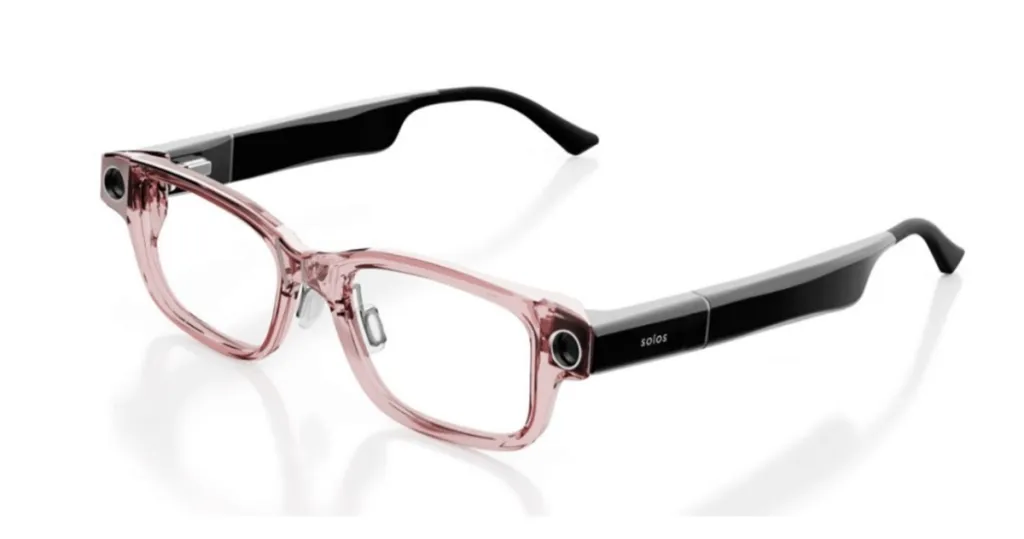
Solos has officially launched its new pair of smart glasses, the AirGo Vision, which are powered by artificial intelligence (AI) and designed to offer users a unique and interactive experience. These smart glasses come equipped with front cameras and utilize OpenAI’s GPT-4 AI model, allowing them to answer questions and provide information about the user’s surroundings. While they share some similarities with Meta’s Ray-Ban smart glasses, the Solos AirGo Vision does not feature video recording capabilities. The glasses also include virtual buttons for easy control and support USB Type-C charging for convenience.

The price of the Solos AirGo Vision starts at Rs. 25,878 in India (approximately $299 in the US), making it a relatively affordable option for AI-powered wearable tech. For those who require prescription lenses, additional costs will apply, with options for blue blocker, photochromic, or polarized lenses available. In the US, a bundle offer is available, which includes the smart glasses’ frames along with three interchangeable frame fronts for $349. This offer allows users to decide when to activate the front cameras or switch to regular frames for a more traditional look.

Solos plans to start shipping the AirGo Vision smart glasses on December 23, and the device will be available for purchase through the company’s official website. The glasses will be offered in three color options: Shiny Black, Dark Crystal Gray, and Shiny Crystal Brown, giving users a range of styles to choose from. The AI-powered features and customizable options make the AirGo Vision a promising addition to the growing smart eyewear market, catering to those seeking a blend of technology and style in their everyday accessories.

As the wearable tech market continues to evolve, the AirGo Vision presents an exciting opportunity for users looking to incorporate AI into their daily lives. Whether it’s for answering questions on the go, providing real-time information, or simply enhancing convenience, the Solos AirGo Vision smart glasses are set to offer a new level of functionality and versatility for consumers.