Yazılar

NASA Leverages Supercomputing to Advance Space Missions and Earth Science

NASA is at the forefront of leveraging supercomputing to enhance both space exploration and Earth-based research. The agency is utilizing high-performance computing (HPC) to drive innovations that stretch from groundbreaking space missions to addressing environmental concerns on Earth. At the International Conference for High Performance Computing (SC24), NASA is demonstrating how these advanced technologies are integral to its most critical endeavors, such as the Artemis program, sustainable aviation, and the study of cosmic phenomena. Dr. Nicola Fox, Associate Administrator for NASA’s Science Mission Directorate, will highlight these advancements in her keynote address, “NASA’s Vision for High Impact Science and Exploration,” on November 19.

One of the significant achievements of NASA’s supercomputing capabilities is the refinement of the Artemis launch systems. At NASA Ames Research Center, simulations using supercomputers have been instrumental in optimizing the Artemis II launch environment. Research revealed how pressure waves from the rocket’s exhaust gases damaged critical components during the Artemis I mission. These findings allowed engineers to redesign key infrastructure, such as the flame deflector and mobile launcher, ensuring greater safety for astronauts during the upcoming Artemis II mission in 2025.

In addition to space exploration, NASA’s supercomputing power is also playing a key role in the future of aviation. By utilizing advanced computational models, NASA researchers are working to optimize aircraft designs for improved fuel efficiency. Simulations of wing and fuselage shapes are helping to reduce drag, which could result in a 4% improvement in fuel efficiency. This aligns with NASA’s goals for sustainable aviation, contributing to efforts to reduce carbon emissions and support greener, more efficient air travel.

These advancements highlight the critical role of supercomputing in driving NASA’s mission to push the boundaries of scientific discovery. From improving space mission safety to advancing environmental goals on Earth, the agency’s supercomputing capabilities are enabling more accurate predictions, better designs, and deeper insights. With these technological tools, NASA is positioning itself to address the complex challenges of the future, whether in space or here on our planet.

NASA Teams Up with Microsoft to Launch Earth Copilot AI for Easier Earth Data Access

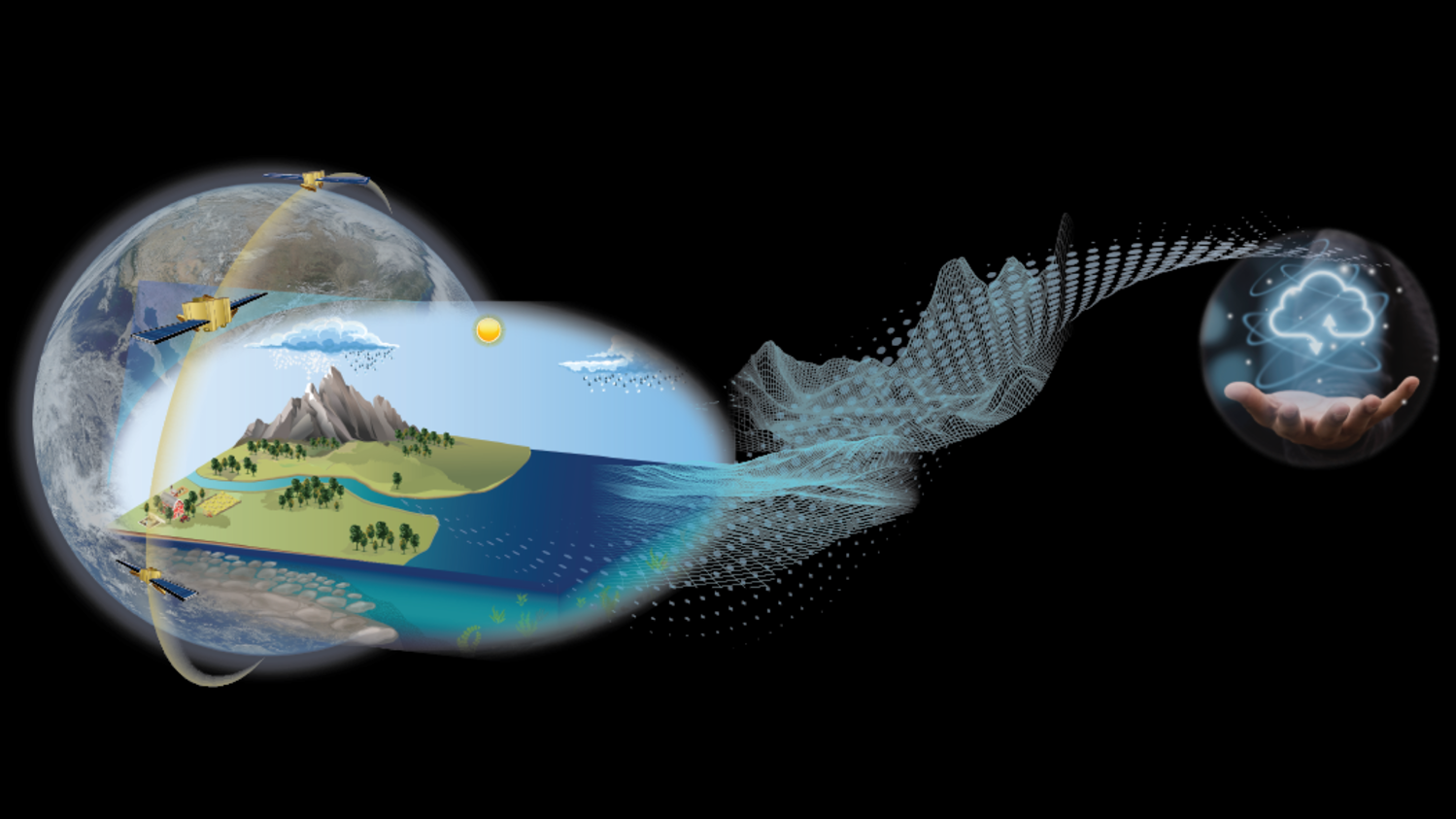
NASA, in partnership with Microsoft, has unveiled Earth Copilot, an AI-powered tool designed to simplify access to complex Earth science data. This innovative chatbot leverages artificial intelligence to interpret and summarise NASA’s vast geospatial datasets, making them easier for the public to understand and utilise. By providing answers to user queries on topics like air quality changes or the environmental effects of natural disasters, Earth Copilot bridges the gap between NASA’s scientific expertise and users who may lack technical knowledge. The tool’s primary aim is to democratise access to data, empowering a broader audience to engage with Earth science insights.

This initiative aligns with NASA’s broader mission to make its scientific resources more widely accessible. Tyler Bryson, Corporate Vice President for Health and Public Sector Industries at Microsoft, highlighted the challenges many users face in navigating NASA’s technical databases. These repositories often require advanced geospatial knowledge to extract meaningful insights. Earth Copilot addresses this issue by harnessing AI to deliver concise, accurate answers within seconds, removing barriers that previously limited access to critical Earth science information.

Currently, Earth Copilot is undergoing rigorous testing by NASA scientists and researchers to ensure its accuracy and reliability. Once validated, the tool will be integrated into NASA’s existing Visualisation, Exploration, and Data Analysis (VEDA) platform. VEDA is already a hub for public access to NASA’s datasets, and Earth Copilot’s capabilities could significantly enhance the platform’s usability, especially for non-expert users seeking quick and straightforward insights from complex data.

By merging cutting-edge AI with NASA’s unparalleled Earth science expertise, Earth Copilot represents a major step forward in data accessibility. The tool not only simplifies the way users interact with scientific data but also supports NASA’s goal of fostering a more informed and engaged global community. Whether for researchers, policymakers, or curious individuals, Earth Copilot has the potential to transform how people explore and understand the dynamic changes happening on our planet.

Google is reportedly enhancing Gemini Live to enable support for user-uploaded files.

Google is reportedly enhancing its Gemini AI with a new feature that will allow Gemini Live, the two-way verbal conversation tool, to interact with uploaded files. Currently, users can engage with content via text, but the upcoming update will enable Gemini Live to handle voice interactions with files as well. This new functionality is expected to make the chatbot even more versatile by allowing users to verbally discuss and manipulate files, providing a more hands-free, efficient experience for those using the platform.

Gemini Live, which is designed for real-time, interactive conversations, will soon allow users to upload and discuss files through voice commands. The new feature has been uncovered through an APK teardown of the Google app’s beta version, revealing several code strings that point to its development. Phrases like “Open Live,” “Talk about attachment,” and “Open Live with attachment” suggest that Gemini Live will soon support files in a more dynamic way, making it easier for users to engage with documents, images, and other content during verbal exchanges.

The introduction of this file-upload support is a significant development for the Gemini platform, which is already gaining attention for its advanced conversational AI capabilities. By integrating this feature, Google is not only improving Gemini Live’s functionality but also expanding its potential use cases, particularly in professional environments where file sharing and voice communication are crucial for productivity.

Although there has been no official confirmation from Google regarding the exact release date for this feature, the inclusion of file-handling capabilities in Gemini Live could significantly elevate its value. Users will soon be able to seamlessly upload, discuss, and interact with files using voice commands, streamlining workflows and providing a more natural user experience. If this feature is successfully rolled out, it could help set Gemini apart from other conversational AI tools by blending voice and file management into one cohesive interface