Yazılar

Europe’s Ageing Power Plants Set for AI-Driven Data Centre Transformation

Big tech firms, including Microsoft and Amazon, are eyeing Europe’s retiring coal and gas plants as prime locations for new data centres — tapping into their existing power grid connections, water infrastructure, and cooling systems to meet surging AI energy demands. Utilities such as Engie, RWE, and Enel see these conversions as a way to offset decommissioning costs, secure lucrative long-term power contracts, and underwrite future renewable projects.

Many of the EU’s and UK’s 153 remaining hard coal and lignite plants are scheduled to close by 2038, joining the 190 that have shut since 2005. Repurposing these sites offers utilities stable, high-margin revenues, with tech companies reportedly paying up to €20/MWh in “green premiums” for low-carbon electricity. Depending on scale — some data centres can require up to a gigawatt — such premiums could translate into contracts worth hundreds of millions to billions of euros over decades.

The approach also addresses one of Europe’s key data centre bottlenecks: grid connection delays, which can stretch over a decade. Converting old plants offers “speed to power,” significantly accelerating deployment timelines. Projects range from retrofitting existing sites to building “energy parks” pairing renewable generation with direct supply to data centres.

Engie is actively marketing 40 potential sites worldwide, including its decommissioned Hazelwood coal plant in Australia, while EDP, EDF, Enel, and Britain’s Drax are pursuing similar strategies. Some developments, such as a planned 2.5 GW facility at a former German coal plant and multiple UK sites, are already in motion — though details remain scarce for security reasons.

Industry analysts say the trend represents a diversification of utility business models, creating new revenue streams and fostering long-term tech–energy partnerships. For hyperscalers, the premium is worth paying if it secures earlier market entry in the AI race.

UN Report Calls for Stronger Measures to Detect and Combat AI-Driven Deepfakes

The United Nations’ International Telecommunication Union (ITU) has urged companies to adopt advanced tools to detect and eliminate misinformation and deepfake content, highlighting the growing threats these pose to elections and financial security. The call was made in a report released on Friday during the ITU’s “AI for Good Summit” in Geneva.

Deepfakes—AI-generated images, videos, and audio that convincingly mimic real people—are increasingly used to spread false information, the ITU warned. To tackle this, the report recommended robust standards for combating manipulated multimedia and urged platforms like social media sites to implement digital verification tools to authenticate content before sharing.

Bilel Jamoussi, head of the ITU’s Standardization Bureau’s Study Groups Department, noted that public trust in social media has dropped sharply because users struggle to distinguish truth from fake. Generative AI’s ability to fabricate realistic multimedia makes combating deepfakes a particularly pressing challenge.

Leonard Rosenthol from Adobe, a leading digital editing software company addressing deepfakes since 2019, emphasized the need for content provenance—information about the origin of digital media—to help users judge trustworthiness. “When scrolling feeds, users want to know: ‘Can I trust this image or video?’” he said.

Dr. Farzaneh Badiei, founder of Digital Medusa, a digital governance research firm, stressed the need for a coordinated global response, noting the lack of a single international body focused on detecting manipulated media. She warned that fragmented standards could make harmful deepfakes more effective.

The ITU is developing standards for watermarking videos—which constitute 80% of internet traffic—to embed provenance data such as creator identity and timestamps.

Tomaz Levak, founder of Swiss firm Umanitek, called on the private sector to proactively adopt safety measures and educate users. “AI will become more powerful and faster… We must upskill people to avoid them becoming victims,” he said.

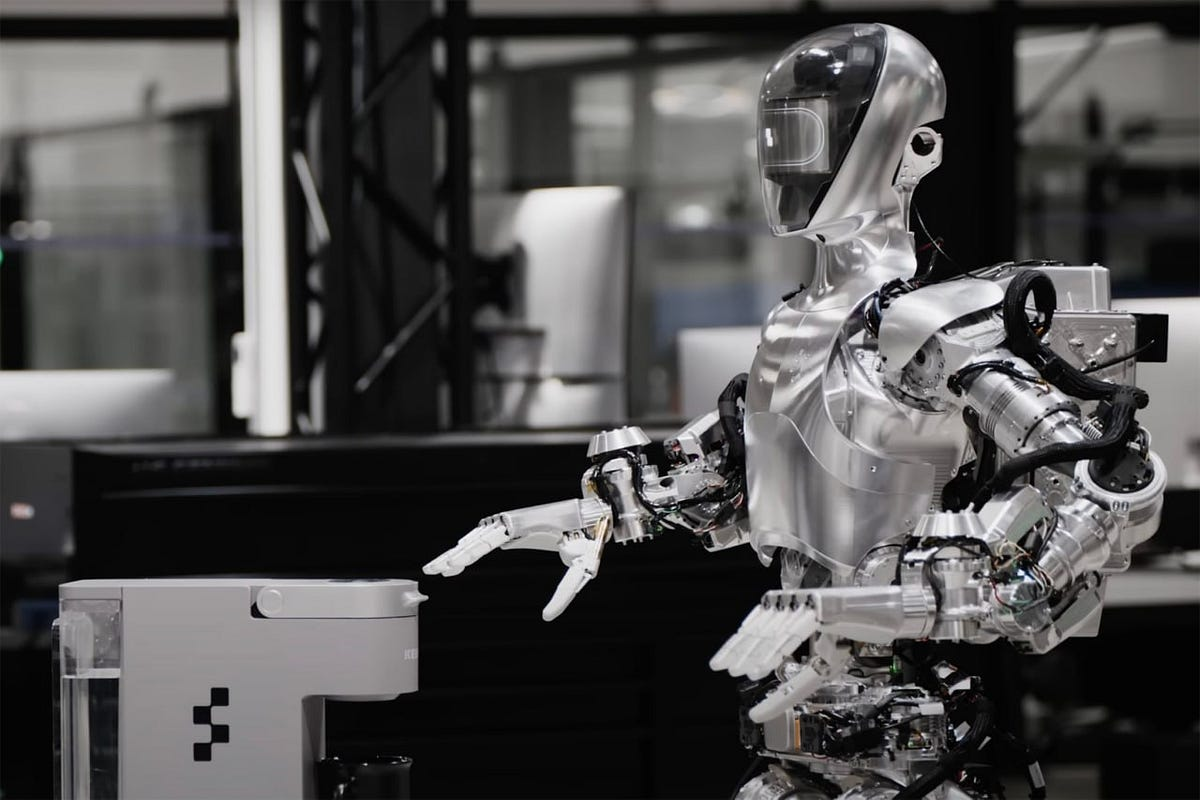
Diligent Robotics Recruits Cruise Executives to Expand Beyond Healthcare

Diligent Robotics, known for its humanoid robot Moxi that supports hospitals by handling tasks like delivering supplies and lab samples, is gearing up to broaden its focus beyond healthcare logistics. On Thursday, the company announced the addition of two senior executives from Cruise, the autonomous robotaxi firm, signaling a strategic push into wider commercial markets.

Rashed Haq, formerly head of AI and robotics at Cruise, has joined Diligent as chief technology officer. He will lead the development of the company’s AI strategy, leveraging his experience in deploying large-scale autonomous systems. Todd Brugger, Cruise’s former chief of operations, steps in as Diligent’s chief operations officer, where he will be responsible for scaling the company’s operations and commercial growth across various industries.

Andrea Thomaz, CEO of Diligent Robotics, highlighted the value of their expertise, stating that Haq and Brugger’s backgrounds in autonomous vehicle technology are vital as the company expands its robotic solutions beyond hospitals.

Since its launch, Moxi has completed over one million deliveries in more than 30 hospitals across the United States, saving nearly 600,000 staff hours. Looking ahead, Diligent plans to be a leader in embodied AI, targeting the deployment of more than 3,000 robots by 2030.